Everyday dark-chocolate shoppers
For a snack, a few squares with coffee or a cupboard refill, start by checking plain 70%–72% bars. Divine, Lindt, Green & Black’s and M&S each have a product in that range; pack size and allergen wording differ.


For a straightforward dark-chocolate top-up, a plain 70%–72% bar is a useful starting point if you want a sweetened bar with a pronounced cocoa flavour. Choose a flavoured bar when you want its inclusions, or an 85%–100% bar when you already prefer a more intense cocoa profile. If an allergy matters, check the current pack: “dark” and “vegan recipe” do not establish allergy suitability.
For a snack, a few squares with coffee or a cupboard refill, start by checking plain 70%–72% bars. Divine, Lindt, Green & Black’s and M&S each have a product in that range; pack size and allergen wording differ.
If you want fruit, spice or texture rather than a plain bar, check the specific inclusions. Montezuma’s, for example, lists flavoured dark options, but ingredients and allergen statements need checking product by product.
Check both the recipe and the current pack’s allergen statement. Lindt says its Excellence 70% bar is made to a vegan recipe but is not suitable for people with a milk allergy; other dark bars also carry precautionary warnings.
Decide whether the bar is for eating, sharing or baking, then compare cocoa level, inclusions and the exact pack’s allergen information.
| Priority | What to check | Your needs |
|---|---|---|
| Cocoa intensity | Read the cocoa percentage and ingredient list. Plain 70%–72% examples are sweetened; Lindt’s Excellence 100% bar has no added sugar. | I want a dark bar for a routine top-up, rather than taking a chance on the more intense taste of an 85%–100% bar. |
| Flavour and use | Check for fruit, spice, nuts or other inclusions. For baking, consider whether those flavours belong in the recipe; M&S positions its plain 70% cooking chocolate for cakes, cookies and desserts. | A flavoured bar appeals when I’m eating it as it is; for a recipe or mixed household preferences, I’d rather choose a plain one. |
| Allergens and recipe | Read the current ingredients, allergy advice and any “may contain” statement. A vegan recipe does not rule out milk cross-contact. | If an allergen matters to me, the specific pack’s wording takes precedence over its dark-chocolate or vegan description. |
| Format | Check bar weight and whether the product is a single bar or individually portioned. Divine lists both a 90 g 70% bar and a separate 12.5 g mini-bar format. | For one immediate top-up, I may want a single bar; individually portioned chocolate makes more sense when I need separate pieces to share or keep. |
| Keeping the bar | Follow the pack’s storage instructions. M&S specifies a cool, dry place away from sunlight for its Swiss Extra Fine dark chocolate. | If the bar is going in the cupboard rather than being eaten today, I need somewhere that meets its storage instructions. |
A 100% cocoa bar is a different choice from a sweetened 70% bar. Lindt’s 100% product has no added sugar, so it may not suit someone looking for a familiar sweetened top-up.
Choose the cocoa level around the taste you want now; try a very high-cocoa bar when that more intense profile is the point of the purchase.
Lindt describes Excellence 70% as made to a vegan recipe while stating that it is not suitable for people with a milk allergy. Other dark bars carry milk or nut precautionary statements.
For a relevant allergy, read the current physical pack’s ingredients and precautionary wording rather than relying on the recipe description.
Fruit, spice or other inclusions change the flavour of a recipe or shared bar and can change which allergens need checking.
Use a plain bar when you need a neutral chocolate flavour; choose inclusions for a known preference and check that product’s label.
These examples show different dark-chocolate formats and cocoa levels; check the individual product rather than applying a range description to every bar.
Tesco lists a plain 90 g organic 70% dark bar with Fairtrade claims.
Divine lists a 90 g 70% dark bar and a separate 12.5 g mini-bar format.
Lindt Excellence includes a plain 100 g 70% bar and a separate 50 g 100% bar.
The dark range includes flavoured bars; its Black Forest bar combines 70% dark chocolate with cherry.
Its dark range lists 70% slabs and batons alongside 80% and 85% options.
M&S positions one 70% dark chocolate for baking and lists a separate 72% Swiss Extra Fine bar.
These bars cover plain 70%–72% top-ups, one raspberry-flavoured 70% option and two 85% choices for shoppers who already prefer a more intense cocoa taste.
 No image available
A plain single bar for a 70% cocoa top-up. The product information lists organic and Fairtrade claims; it also says the bar may contain nuts and milk, so check the current pack if either matters.
 No image available
A plain 72% bar described for eating or baking. The product information identifies soya and says it may contain milk, nuts, peanuts and cereals containing gluten; check the current pack for relevant allergens.
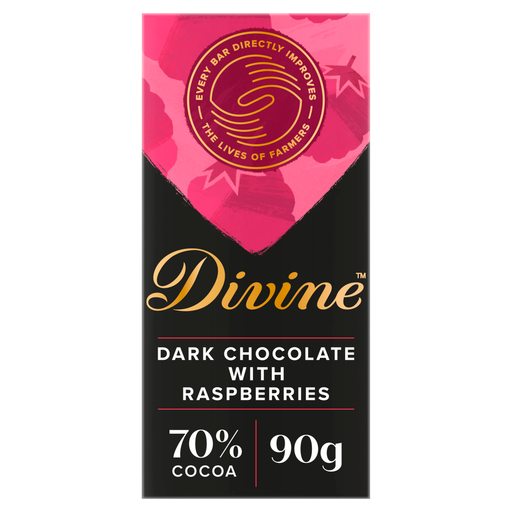 No image available
A fruit-flavoured alternative to a plain top-up, with 3% freeze-dried raspberry pieces stated in the product information. Its vegan-friendly wording conflicts with ingredient and allergen details that identify milk; do not rely on that wording for dietary or allergy suitability. Check the current pack, including its gluten and nut precautions.
 No image available
An 85% cocoa choice for someone seeking the more intense, bitter profile described in its product information. The listing also states organic and Fairtrade claims and says the bar may contain nuts and milk; check the current pack if relevant.
 No image available
An 85% cocoa bar for a deliberate high-cocoa choice, rather than an unspecified everyday preference. Its product information lists 13.8 g sugars per 100 g and says it may contain cereals containing gluten, milk, nuts and peanuts; check the current pack if relevant.
A sweetened 70%–72% bar is a practical starting point if you want a pronounced cocoa flavour without choosing the more intense 85%–100% route. For a sense of the difference between specific products, Lindt lists 29 g sugars per 100 g for Excellence 70% and 0.5 g per 100 g for its separate 100% bar.
No. Recipes and allergy warnings are separate checks: Lindt says its Excellence 70% bar is made to a vegan recipe but is not suitable for people with a milk allergy. Read the current pack for the exact bar you intend to buy.
GOV.UK and Food Standards Agency guidance describes precautionary allergen labelling as a warning used when a potential cross-contamination risk cannot be controlled. If the named allergen matters to you, do not treat a vegan claim or the absence of that ingredient from the recipe as a substitute for reading the warning.
Yes, if its ingredients and flavour suit the recipe. M&S positions its plain 70% dark chocolate for cakes, cookies and desserts, and Lindt describes its Excellence 70% bar as suitable for baking and cooking; a bar with fruit or other inclusions will affect the result.
Follow the chosen pack’s instructions. Tesco’s Green & Black’s listing says to keep its 70% bar dry and protect it from heat, while M&S specifies a cool, dry place away from sunlight for its Swiss Extra Fine bar.