What should you compare?
Start with the cocoa information if flavour intensity drives the choice, then compare the bar’s format and its current allergen label.
| Priority |
What to check |
Your needs |
| Cocoa strength |
Look for a minimum cocoa-solids percentage on the exact bar. Lindt Shop UK states at least 70% and 78% for its respective EXCELLENCE bars. KitKat’s figure of 67.2% describes how much of its wafer bar is dark-chocolate covering, not its cocoa-solids percentage. |
I want to choose a cocoa level deliberately, rather than treating every bar labelled “dark” as equivalent. |
| Sugars |
Compare sugars per 100g on the current labels, then check the amount you plan to eat. Lindt Shop UK lists 29g per 100g for EXCELLENCE 70% and 17g per 100g for EXCELLENCE 78%; that comparison applies to these two bars, not every 70% and 78% recipe. |
If sweetness affects my choice, I want figures measured on the same per-100g basis before deciding between two bars. |
| Portion and texture |
Check the pack size and whether you would break off a portion yourself. Cadbury describes Bournville Classic Dark as a 100g bar; KitKat describes its 4 Finger Dark as a 41.5g wafer bar with four fingers. |
For a film, I might prefer a few pieces from a plain bar, or I might want a crisp wafer bar that is already divided into fingers. |
| Allergen information |
Read the exact pack’s ingredients and precautionary statement. A vegan-recipe description is not a milk-allergy assurance: Lindt explicitly says its EXCELLENCE 70% bar is unsuitable for people with a milk allergy because it is made in a facility using milk. |
When an allergy matters, I need the information for the particular bar and pack, not an assumption based on its dark-chocolate description. |
Brand and product-line references
These named bars illustrate different ways to choose a TV-night snack; a brand name alone does not establish the cocoa percentage or allergen suitability of another product in its range.
Lindt EXCELLENCE
A plain-bar option when a declared cocoa-solids percentage is central to the decision. Lindt Shop UK lists 100g EXCELLENCE bars with minimum cocoa solids of 70% and 78%.
- The two named product pages give per-100g nutrition, allowing a like-for-like comparison of their listed sugars.
- The 70% bar is not suitable for people with a milk allergy according to Lindt; the 78% bar lists milk fat as an ingredient.
Cadbury Bournville
Cadbury describes Bournville Classic Dark as a rich, smooth 100g dark-chocolate bar and says it is vegetarian friendly.
- Its stated bar size makes it straightforward to compare the pack format with other plain bars.
- If you require a particular cocoa-solids minimum, check the current pack for that figure rather than relying on the word “dark”.
KitKat
KitKat 4 Finger Dark is a 41.5g, four-finger wafer bar for shoppers choosing a crisp, pre-divided format.
- KitKat specifies that dark chocolate makes up 67.2% of this bar.
- That coating figure is not a cocoa-solids percentage. The product’s ingredients include wheat and milk.
Dark chocolate bars on Joybuy
These Joybuy options are plain or raspberry-containing dark-chocolate bars with a stated cocoa percentage. Compare their labelled sizes and check the current pack if ingredients or allergens affect your choice.
 No image available
Morrisons The Best 72% Cocoa Dominican Republic Dark Chocolate 100g
Consider this 100g bar if you want a stated 72% cocoa level for a TV-night snack. If allergens matter, check the current pack’s ingredients and precautionary wording before choosing it.
View on Joybuy
 No image available
Green & Black's Dark Chocolate 70% 90g
This 90g bar gives you a stated 70% cocoa option when choosing by cocoa percentage. Check the current pack’s milk and nut precautionary information if those allergens are relevant.
View on Joybuy
 No image available
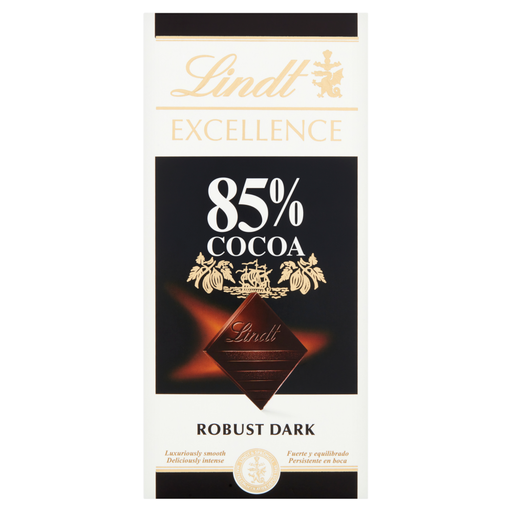
Lindt EXCELLENCE 85% Cocoa Dark 100g
The stated 85% cocoa level makes this 100g bar an option if you are choosing by a higher declared percentage. Check the current pack for the precise status of its nut, milk, soya and sesame allergen warnings.
View on Joybuy
 No image available
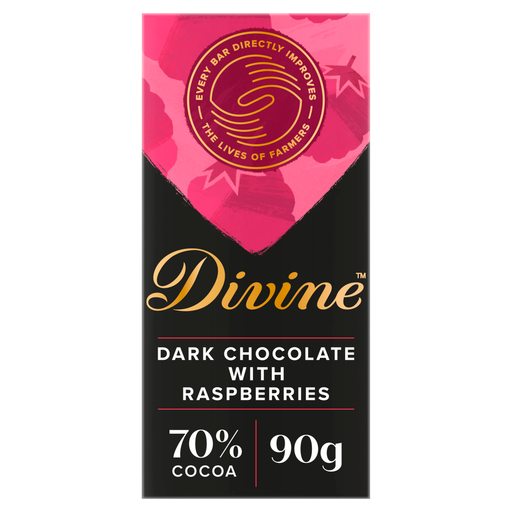
Divine Chocolate 70% Dark Chocolate with Raspberries 90g
Choose this 90g bar if you want a stated 70% dark chocolate with raspberries rather than an unflavoured bar. Its product descriptions conflict on milk and vegan suitability, so check the current ingredient and allergen label before buying, particularly for a milk allergy.
View on Joybuy
 No image available
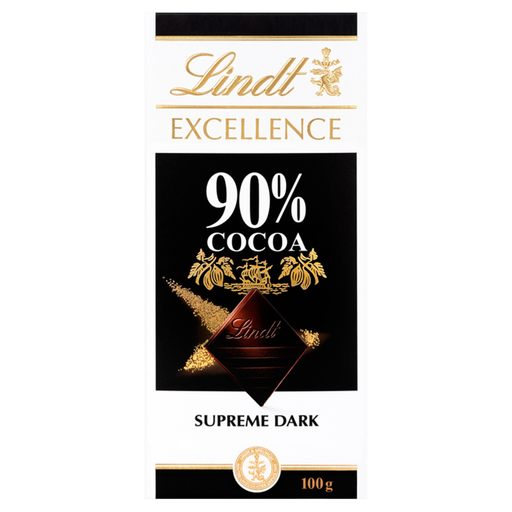
Lindt EXCELLENCE 90% Cocoa Supreme Dark 100g
This 100g bar is an option when you want to choose by a stated 90% cocoa level. Check the current pack’s precautionary allergen wording if nuts, milk or soya are relevant to your purchase.
View on Joybuy
Questions about choosing a bar
Does dark chocolate mean a bar is dairy-free?
No. Lindt says its EXCELLENCE 70% bar is made to a vegan recipe but is unsuitable for people with a milk allergy because it is produced in a facility using milk; its 78% bar lists milk fat. KitKat 4 Finger Dark also lists milk ingredients. Check the current pack of the exact bar you intend to buy.
Does a higher cocoa percentage always mean less sugar?
Not necessarily across different recipes. For the two named EXCELLENCE bars, Lindt Shop UK lists 17g sugars per 100g for the 78% bar and 29g per 100g for the 70% bar. Use the same per-100g measure on the exact packs you are comparing rather than applying those figures to other brands.
Should I choose a plain bar or a four-finger wafer for one TV night?
Choose by the amount and texture you want to serve. KitKat describes its 4 Finger Dark as a 41.5g wafer bar divided into four fingers; with a 100g bar such as Cadbury Bournville Classic Dark or Lindt EXCELLENCE 70%, you decide how much to break off. The format alone does not establish a nutritional advantage.
What does “may contain” mean on a chocolate label?
It is precautionary allergen information about possible unintended allergen presence, as the Food Standards Agency explains. Read it alongside the ingredients on the current pack; if you have an allergy, use advice appropriate to your condition when deciding whether that specific product is suitable.


