What should you check?
Choose the serving format first, then compare cocoa level, additions and the exact pack's ingredient information.
| Priority |
What to check |
Your needs |
| Sharing format |
Check whether the chocolate comes as loose buttons, truffles in a box or coated fruit or nuts. Compare pack weight and how you plan to serve the pieces: Montezuma's Chocolate lists 120g button bags, while Lindt Shop UK lists a 200g dark-truffle box. |
I'd like to put out a bowl that people can pass around without breaking up a bar. If a box works just as well for us, I can consider truffles too. |
| Cocoa and flavour |
Read the stated cocoa percentage and check for additions such as cherries, almonds or ginger. Montezuma's Chocolate lists 60%, 74% and 100% cocoa button bags; the percentage does not tell you which flavour your group will prefer. |
For a mixed group, I'll choose a cocoa level and flavour they already enjoy rather than pick the highest percentage automatically. |
| Allergens |
Read the ingredients, allergen declaration and may-contain statement on the exact pack before serving. The Lindt LINDOR Dark 70% product information lists barley, milk and soya and a may-contain-nuts statement; the M&S coated-almond product contains almonds. |
If a guest has an allergy, I need to check their requirements against the product itself before putting it in a communal bowl. |
| Product-specific claims |
Check claims such as organic, vegan or palm-oil-free on the product you intend to buy. Divine Chocolate describes its own dark range as Fairtrade and palm-oil-free, but a brand-level statement should not replace the selected pack's details. |
If a sourcing or ingredient claim matters to me, I'll check that it applies to this particular chocolate, not just to another product from the brand. |
Relevant brand ranges
These references describe particular dark-chocolate formats; check the selected product rather than assuming every item from a brand has the same ingredients or serving style.
Montezuma's
Montezuma's Chocolate lists 120g bags of Giant 60% Dark Chocolate Buttons, Organic 74% Dark Chocolate Buttons and Absolute Black 100% Cocoa Buttons.
- Loose button bags suit an informal bowl-sharing format.
- Check the chosen cocoa level, ingredients and allergens on the exact pack.
Lindt
Lindt Shop UK lists LINDOR Dark 70% Chocolate Truffles as a 200g boxed product, an alternative to a loose sharing bag.
- The box provides separate truffle pieces for sharing.
- Product information for the 200g truffles lists barley, milk and soya and says they may contain nuts.
M&S
Marks & Spencer lists 70% dark-chocolate coated sour cherries in a 130g pack and 70% dark-chocolate cocoa-dusted almonds in a 100g pack within its sharing-bag range.
- Fruit and almond options offer different additions to plain dark chocolate.
- The almond product contains almonds; check the exact pack and selected Foodhall for the product you want.
Hotel Chocolat
Hotel Chocolat lists 70% Dark Chocolate Puddles with Ginger alongside other dark-chocolate formats.
- The ginger puddles are an option when the group specifically wants that flavour.
- Check the pack size and ingredients rather than treating the puddles as a large loose sharing bag.
Divine
Divine Chocolate lists dark-chocolate bars and describes its own sourcing approach in terms of Fairtrade and farmer co-ownership.
- Its stated sourcing approach may matter if that is part of your product choice.
- Check the format and claims of the selected item; a dark bar is not the same serving format as a loose sharing bag.
Green & Black's
Green & Black's lists a Dark 70% 90g bar in a bulk-box format.
- The stated 70% cocoa level helps identify the bar format.
- A bar would need breaking into pieces for bowl sharing; check the product format before treating it as a bag alternative.
Joybuy product options
These boxed dark-chocolate options suit a TV night if you are happy to share from a box rather than pour a loose sharing bag into a bowl. Check how the pieces are arranged if serving format matters to your group.
 No image available
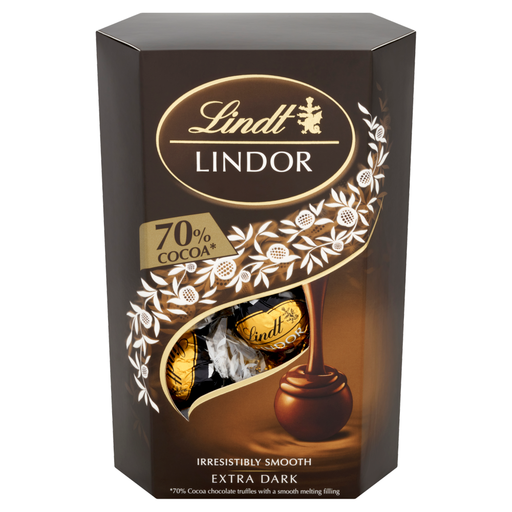
Lindt LINDOR Dark 70% Cocoa 200g
Consider this truffle box if a boxed treat works for your TV night instead of a loose bag. The stated cocoa level is 70% and the pack is 200g. Product information lists barley, milk and soya and says it may contain nuts; check the current pack before sharing. If individual wrapping matters, check the serving arrangement before buying.
View on Joybuy
 No image available
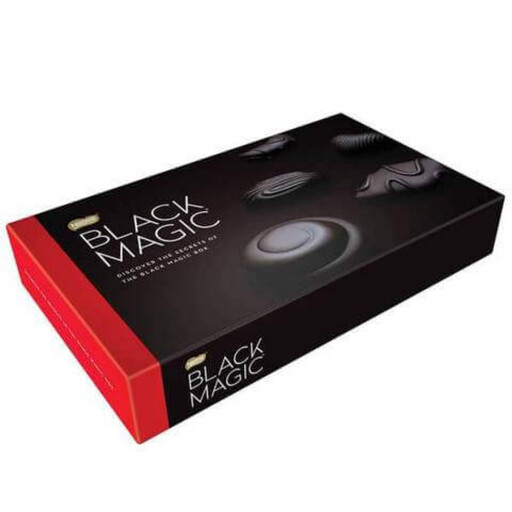
Nestle Black Magic Dark Chocolate Box 348g
This 348g dark-chocolate box is an option when a boxed assortment is acceptable instead of a sharing bag. Before serving it to a group, check the current pack for almonds, hazelnuts, eggs and milk, and for may-contain statements concerning peanuts, soya and other tree nuts. Check how the pieces are arranged if that affects how you plan to share them.
View on Joybuy
Questions about sharing dark chocolate
Should I choose buttons, truffles or chocolate-coated fruit and nuts?
Choose loose buttons if you want to pour chocolate into a bowl, or a truffle box if separate pieces in a box work for your group. Consider coated fruit or nuts when everyone wants those additions and can safely eat the exact product; check the pack rather than relying on the word “sharing”.
Does a higher cocoa percentage make a better TV-night choice?
No single cocoa percentage will suit every group. Montezuma's Chocolate lists button bags at 60%, 74% and 100% cocoa, while Lindt Shop UK lists 70% dark truffles; choose a stated level and product style your group wants to eat, rather than using the highest figure as a quality score.
Can I assume dark chocolate is vegan or suitable for someone avoiding milk or nuts?
No. Read the exact pack's ingredients and allergen statements: the Lindt LINDOR Dark 70% product information lists milk, barley and soya and says it may contain nuts. A product described as made without milk can still carry a may-contain-milk statement, so its precise wording matters.
Do HFSS promotion rules prevent me buying dark chocolate for a TV night?
No. GOV.UK guidance describes restrictions on how qualifying products are promoted by certain businesses in England, not a prohibition on a household buying chocolate for a private TV night. Do not assume an individual product's HFSS classification from the fact that it is dark chocolate.


