Organisers serving a mixed group
Look for portions that are easy to hand out, a cocoa level that does not assume everyone likes very intense chocolate, and an ingredient and allergen statement for the exact pack.


For a meeting with mixed preferences, a plain 70% dark chocolate is a practical starting point; offer a higher-cocoa option alongside it if you know some attendees prefer a more intense flavour. Choose individual portions for easy distribution or a shared format for an informal table, and check the exact pack’s ingredients and allergen information before serving.
The serving format and recipe matter as much as the cocoa percentage when several people will share the refreshments.
Look for portions that are easy to hand out, a cocoa level that does not assume everyone likes very intense chocolate, and an ingredient and allergen statement for the exact pack.
Batons or a tasting collection can provide a different presentation from a shared bar. Check every included recipe: a dark-chocolate collection may also contain milk chocolate or nut-containing pieces.
An 85% bar can be an additional choice when attendees are known to like a more intense cocoa flavour. Check its pack label just as you would for a 70% product.
Decide how the chocolate will be served, then compare the cocoa level and the information on each exact recipe. A collection needs checking piece by piece rather than by its box name alone.
| Priority | What to check | Your needs |
|---|---|---|
| Cocoa level | Read the stated cocoa-solids percentage where available. Consider a plain 70% option for mixed preferences; reserve 85% as an additional choice when guests are known to enjoy a more intense flavour. | I want to offer dark chocolate without assuming that everyone prefers the same cocoa intensity. |
| Serving format | Check whether portions are individually sized or wrapped. Divine lists 12.5g bars in a 160-pack; Montezuma’s lists a 120g bag of shareable buttons. A standard bar needs dividing for group service. | For refreshments left at each place, individual portions would be easier to distribute. At an informal table, I could use a shared format. |
| Ingredients and allergens | Read the current pack’s ingredients, declared allergens and any ‘may contain’ statement. The Food Standards Agency explains that precautionary wording signals possible unintended allergen presence. | I need to check the actual chocolate being served against attendees’ dietary requirements, rather than relying on ‘dark’ or ‘vegan recipe’ on its own. |
| Variety and presentation | Check every recipe in an assortment for inclusions such as milk chocolate, nuts or flavoured pieces. Lindt’s EXCELLENCE Tasting Collection, for example, contains both dark and milk chocolates. | A varied box may suit a client meeting, but I would choose a single-recipe option when simpler ingredient checking matters more. |
| Planning time | For customised chocolate, confirm the required quantity and production time before committing. Divine states a 50-unit minimum and approximately 12 working days’ lead time for its customisable 70% bar. | If the meeting is soon or I need only a small quantity, a standard format is more practical than a customised order. |
Lindt states that its EXCELLENCE 70% bar is made to a vegan recipe but is not suitable for people with a milk allergy because it is made in a facility that uses milk. Other dark products also carry allergen warnings.
Check the current label of every exact product and pack size. Do not use cocoa percentage or a vegan-recipe description to decide suitability for someone with an allergy.
Lindt’s EXCELLENCE Tasting Collection includes milk chocolate as well as dark recipes; Hotel Chocolat’s dark selections include recipes with fruit or nuts. Guests may need to know which pieces contain which ingredients.
Review the contents and allergen information for the particular box. Where straightforward ingredient checking is important, consider a single-recipe chocolate instead.
The cited M&S 85% bar offers a more intense cocoa option, but a mixed group may have different flavour preferences.
Consider a plain 70% option for general service and add a higher-cocoa bar when you know some attendees would welcome it.
Divine’s customisable 70% bar has a stated minimum order of 50 units and an approximate lead time of 12 working days. Those conditions may not fit a small or imminent meeting.
Check the quantity and lead time before planning refreshments around customisation; otherwise, use a standard product format.
These ranges illustrate different meeting formats, from individual bars to shared chocolate and assortments. Check the exact product rather than applying a range description to every recipe.
Divine lists 70% dark chocolate in individual mini bars and a separate customisable bar for corporate gifting.
Lindt’s EXCELLENCE range includes a plain 70% bar and a tasting collection with individually wrapped dark and milk chocolates.
Montezuma’s lists dark bars and a 120g bag of organic dark-chocolate buttons suited to a shared serving setup.
Hotel Chocolat lists dark batons, slabs, truffles and selections for hosts considering a more varied presentation.
M&S lists an 85% dark bar and other dark-chocolate products, including chocolate-coated fruit.
These products cover shared bars, a raspberry-flavoured bar and boxed truffles for different work-meeting serving plans. Check the current pack details before choosing chocolate for attendees with dietary requirements.
 No image available
A 100g bar to consider when a shared chocolate format suits the meeting. Its product information states 72% minimum cocoa solids. Check the current pack’s allergen information before serving.
 No image available
A 90g bar for a meeting where a raspberry-flavoured alternative to plain dark chocolate is wanted. The product information states 70% minimum cocoa solids and 3% freeze-dried raspberry pieces. Check the current pack’s ingredients and allergen statement before serving.
 No image available
A plain 90g bar to consider when guests can share chocolate divided into squares. Its stated cocoa level is 70%. Check the current pack’s milk and other allergen information before buying for anyone with dietary restrictions.
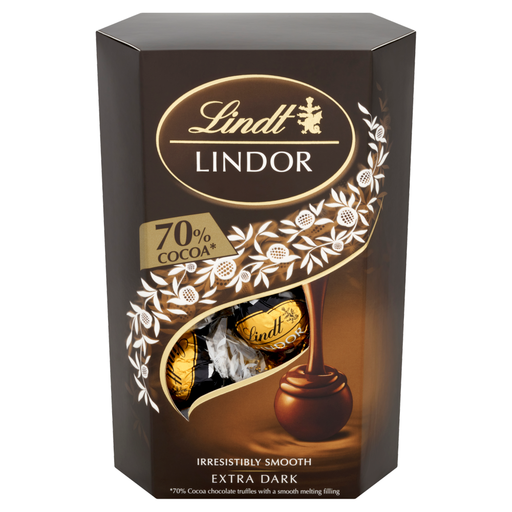 No image available
A boxed truffle format to consider instead of a shared bar for a meeting refreshment table. The product title says ‘70% Cocoa’; confirm the cocoa-solids statement and whether pieces are individually wrapped on the current pack if either detail matters to your serving plan. Check its ingredients and allergen information before serving.
 No image available
A 100g bar to consider as an additional option when attendees are known to prefer more intense dark chocolate. Its product information states 85% minimum cocoa solids. Check the current pack’s allergen information before serving.
A plain 70% option is a practical starting point when flavour preferences are unknown, without assuming it will suit every guest. Products listed by Divine and Lindt show that this cocoa level comes in different serving formats; consider an 85% bar as an additional choice if attendees are known to enjoy a more intense flavour.
Not necessarily. Individually wrapped or sized pieces make allocation at desks straightforward: Divine lists 12.5g mini bars, and Lindt describes its EXCELLENCE Tasting Collection as individually wrapped. Montezuma’s buttons offer a shared format when a communal serving setup suits the meeting.
Do not assume so from the words ‘dark’ or ‘vegan recipe’. Lindt says its EXCELLENCE Dark 70% bar is made to a vegan recipe but is not suitable for people with a milk allergy. Check the exact pack’s ingredients, allergen statement and any ‘may contain’ wording against each attendee’s requirements.
Read the current pack for declared allergens and precautionary wording such as ‘may contain’. The Food Standards Agency explains that precautionary allergen labelling communicates possible unintended presence of regulated allergens; a product’s cocoa percentage does not answer that question.
An assortment can suit a planned tasting or client-facing meeting when guests can choose between recipes. Check its exact contents first: Lindt’s EXCELLENCE Tasting Collection contains dark and milk chocolates, while Hotel Chocolat’s dark selections include varied ingredients such as fruit and nuts. A single-recipe bar is simpler to assess when ingredient requirements are the priority.