Classic tea-break shoppers
If you want a chocolate-topped wheat digestive with tea, the main flavour choice is between milk and dark chocolate coatings. McVitie’s describes both conventional varieties.


Choose a conventional milk chocolate digestive if you want a wheat biscuit with a milk chocolate coating alongside tea; choose a dark-coated version if you prefer that flavour. A cocoa-biscuit variety puts chocolate in the biscuit too, while bars and coated shortcake offer a different biscuit style. Check the particular pack’s ingredients and nutrition rather than assuming a dark coating makes it milk-free or changes its sugar content in a particular way.
If you want a chocolate-topped wheat digestive with tea, the main flavour choice is between milk and dark chocolate coatings. McVitie’s describes both conventional varieties.
McVitie’s, Tesco and Sainsbury’s list chocolate digestives. Compare the particular recipes and pack sizes rather than assuming biscuits with the same coating are identical.
If someone expects a digestive, distinguish it from a biscuit bar or coated shortcake. Check the delivered pack’s ingredients and allergen statements before serving.
Start with the biscuit style and coating you want, then compare the specific packs for ingredients, serving information and storage directions.
| Priority | What to check | Your needs |
|---|---|---|
| Biscuit style | Read whether the base is a conventional wheat digestive, a cocoa biscuit, a sandwich biscuit or shortcake. Check whether the coating is milk or dark chocolate. | I want a chocolate-topped digestive with tea, not a bar or a different biscuit base. If I want chocolate in the biscuit as well, a cocoa-biscuit variety is worth considering. |
| Ingredients | Check the actual pack’s ingredient list and precautionary allergen statements. McVitie’s lists milk-derived butter oil in its dark chocolate digestive recipe; Tesco says its dark variety may contain milk. | When serving someone with an allergy, I need the information for the particular pack, not an assumption based on the words ‘dark chocolate’. |
| Serving information | Check nutrition per biscuit for the named variety and use per 100g when comparing biscuits of different sizes. Do not transfer figures between recipes. | I want to decide how many biscuits to put out and compare like with like if the packs use different biscuit sizes. |
| Pack and storage | Check the pack weight and its storage directions. The checked Tesco and Sainsbury’s digestives advise keeping opened biscuits in an airtight container. | If a pack will last several tea breaks, I want a size I can use and somewhere suitable to keep it after opening. |
McVitie’s describes Penguin as a sandwich biscuit bar and Club Orange as a flavoured biscuit bar; Sainsbury’s identifies Fox’s Chocolatey Rounds as coated shortcake. Those bases differ from a conventional digestive.
Read the biscuit description as well as the chocolate flavour before choosing.
McVitie’s lists butter oil from milk in its dark chocolate digestive recipe, and Tesco states that its dark digestives may contain milk.
For anyone avoiding an allergen, check the ingredients and precautionary statements on the actual pack.
McVitie’s describes conventional milk and dark chocolate digestives, plus a Seriously Chocolatey cocoa-biscuit variety.
Tesco lists own-label milk and dark chocolate digestives.
Sainsbury’s lists an own-label milk chocolate digestive.
McVitie’s describes Penguin Original as a coated sandwich biscuit bar with a chocolate-flavoured cream centre.
McVitie’s describes Club Orange as an orange-flavoured coated biscuit bar.
The checked Fox’s Chocolatey Rounds listing describes milk-chocolate-coated shortcake.
These McVitie’s options cover milk chocolate, dark chocolate and flavoured chocolate digestives for a tea break. Check the pack size and recipe when choosing between them.
 No image available
A dark chocolate digestive choice when you want two 266g packs. Dark chocolate does not establish that a biscuit is milk-free; check this pack’s ingredients and allergen statements before serving.
 No image available
A 400g dark chocolate digestive pack for shoppers who prefer that coating. Check the pack’s ingredients and allergen statements rather than treating a dark coating as evidence that it contains no milk.
 No image available
A 400g milk chocolate digestive pack for the conventional wheat-biscuit-and-chocolate combination. Check the pack’s ingredient and allergen information if serving others.
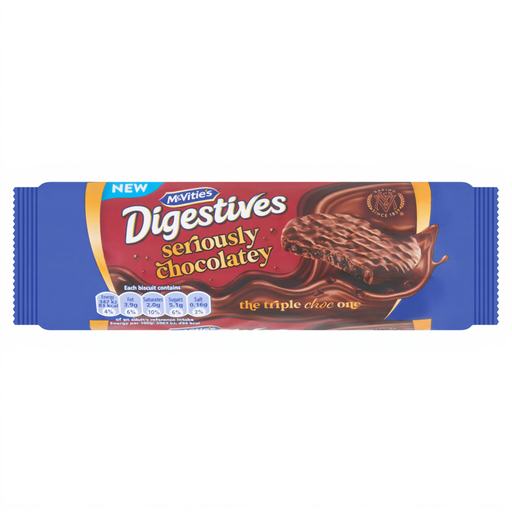 No image available
A 250g chocolate digestive option if you are considering a variety beyond the conventional milk or dark coating. Check this pack’s biscuit description and ingredients to see how its recipe differs.
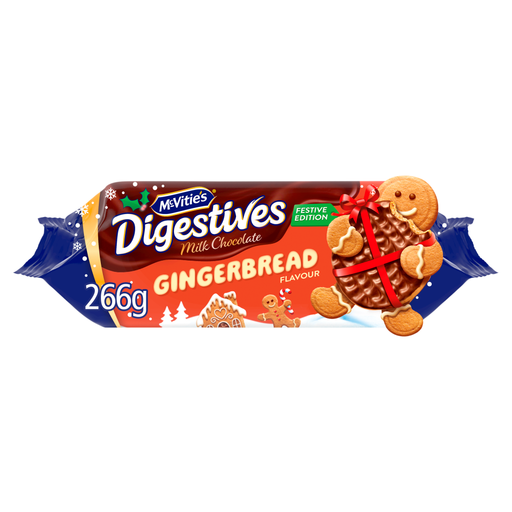 No image available
A 266g chocolate digestive pack with gingerbread flavour for a tea break where you want that spiced variation. Check the pack’s ingredients if the conventional chocolate digestive recipe is important to your choice.
Not as a general rule. McVitie’s lists 4.4g sugar per biscuit for its dark chocolate digestive and 4.8g for its milk chocolate digestive, with both listed at 83kcal per biscuit. Those figures describe the named recipes; check the packs and use per-100g figures if the biscuits you are comparing differ in size.
Follow the pack’s storage directions. The checked Tesco and Sainsbury’s chocolate digestive listings advise keeping opened biscuits in an airtight container; Tesco also specifies a cool, dry place.
No. Check the actual pack’s ingredients and precautionary statements before serving. McVitie’s lists a milk-derived ingredient in its dark chocolate digestive recipe, Tesco says its dark variety may contain milk, and Sainsbury’s milk chocolate digestives carry an oat-allergy warning relating to manufacturing methods.