Organisers buying ready-made treats
A labelled pack lets stall volunteers check the exact fudge’s ingredients and allergen warnings, then keep that information available when pupils and families ask.


Choose dark fudge for a school bake sale only if the school permits it and the ingredients and allergen warnings on the current pack fit its allergy policy. A dark or high-cocoa description does not establish that fudge is dairy-free or nut-free: the product matters more than the chocolate style. If volunteers cannot provide dependable ingredient information and keep relevant products separate during serving, leave that item off the stall.
A labelled pack lets stall volunteers check the exact fudge’s ingredients and allergen warnings, then keep that information available when pupils and families ask.
A nut-free area or an individual allergy plan can change which products may be sold and how they are displayed. Check the school’s requirements before choosing fudge.
Cocoa percentage can help you select a chocolate ingredient for the flavour you want. It does not tell you whether the finished fudge fits the school’s allergen rules.
Confirm what the school will allow before choosing between ready-made fudge and a homemade batch. Then check the exact ingredients and plan how the stall will handle each item.
Consider it when: The school permits the product and volunteers can keep its current ingredient information at the stall.
Trade-off: A readable label helps with screening, but the fudge may still contain milk or carry nut and peanut warnings.
Consider it when: The school accepts homemade items and the organiser can record every batch’s ingredients.
Trade-off: You can choose the chocolate ingredient, but must also manage preparation, labelling and cross-contact during serving.
Choose this when: The school’s restrictions exclude the product’s ingredients or warnings, or its current label cannot be checked.
Trade-off: Another dark-chocolate sweet needs its own ingredient check; a different product name does not resolve the allergy question.
| Priority | What to check | Your needs |
|---|---|---|
| School permission | Ask whether confectionery or homemade food is permitted at this event. Check the school’s food and allergy policy, including any nut-free area or individual plan. | I need to know which items the school will allow before I buy ingredients or finished fudge. |
| Ingredients and warnings | Read the exact product’s current ingredient list and precautionary allergen statement. Keep its pack or ingredient information available to stall helpers. | Families should be able to ask what is in the fudge and whether its pack carries a warning relevant to them. |
| Chocolate flavour | Check the stated cocoa percentage if it matters to the recipe. Review milk, nut and other allergen information separately; a dark description cannot answer those questions. | I want a darker chocolate flavour without mistaking cocoa percentage for an allergen declaration. |
| Serving setup | For homemade or unpackaged portions, record ingredients by batch. Plan wrapping, display space, utensils and helpers so products do not come into contact unnecessarily. | Volunteers need a workable way to answer ingredient questions and serve different bakes without mixing them. |
Smudge's Fudges lists milk and soya in its dark chocolate fudge and warns that it may contain peanuts and nuts. Roly's Fudge also declares milk and soya in its Chocolate Fudge, with precautionary nut and peanut warnings.
Check both the ingredients and the precautionary statement on the exact pack against the school’s allergy policy.
M&S lists ground hazelnuts in its Dark Chocolate Selection and marks it unsuitable for nut and peanut allergy. A dark-chocolate assortment is not necessarily plain fudge.
Check every selected product and keep an excluded nut-containing item out of a nut-free area.
Separate preparation alone does not prevent contact between items once volunteers display, cut and serve them. Anaphylaxis UK’s bake-sale guidance recommends giving families allergen information.
Keep batch ingredients available and plan separate display space, utensils and helpers for an item presented as allergy-friendly.
Sainsbury's advises customers that ingredients can change and to check product packaging. The pack brought to the sale is the one volunteers need to describe.
Recheck it before the event and keep the pack or a clear copy of its ingredient panel at the stall.
These product and retailer examples show why the exact variant and its current label matter; a brand name alone cannot establish suitability for a school sale.
Its Chocolate Fudge is described by the maker as using dark chocolate.
The maker publishes ingredients and allergen information for its dark chocolate fudge.
Its listed fudge chunks and high-cocoa dark chocolate are different products that require separate checks.
Its Dark Chocolate Selection illustrates why an assortment needs checking piece by piece and against its full ingredient declaration.
The retailer provides allergen information for its own-brand and in-store prepared products.
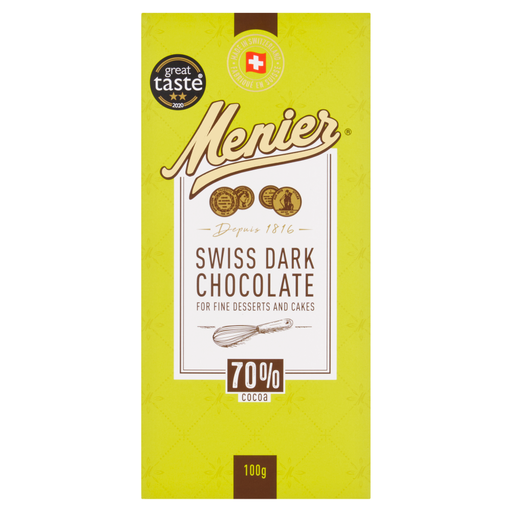
This cooking chocolate is an ingredient for making a high-cocoa fudge batch, not finished fudge to put straight on the stall. Check that the school accepts homemade items before choosing it for the event.
 No image available
For a homemade fudge recipe when you want to choose a 70% cocoa cooking chocolate. This is not ready-made fudge: the batch still needs preparing and portioning. The product information notes milk and precautionary warnings including tree nuts, eggs, other milk products and gluten; check the current pack and the school’s requirements before using it.
No. Dark describes the chocolate style, not its allergen status. Smudge's Fudges lists milk and soya in its dark chocolate fudge and warns of possible peanuts and nuts; Roly's Fudge declares milk and soya in its Chocolate Fudge and carries nut and peanut warnings. Check the exact pack before offering either at a school event.
Keep the original pack, or a clear copy of its current ingredient and allergen information, available for questions. Sainsbury's advises that ingredients can change, so check the packaging of the product actually brought to the sale rather than relying only on an earlier online listing.
Not on that check alone. Read any may-contain statement, confirm the school’s allergy controls and consider how the fudge will be prepared and served. Roly's Fudge, for example, lists precautionary nut and peanut warnings for its Chocolate Fudge; Anaphylaxis UK recommends giving families allergen information at bake sales.