What should you check?
Choose the flavour and preparation style you want first, then check the pack and the ingredients you will add to make the drink.
| Priority |
What to check |
Your needs |
| Cocoa flavour |
Look for a stated cocoa percentage and the maker’s flavour description. Marks & Spencer describes its 72% dark drinking chocolate as bold; its dark flakes state 70% cocoa solids. A percentage alone does not measure the flavour of a prepared mug. |
I want the cocoa to come through rather than choose a drink mainly for its sweetness. A dark drinking chocolate is a starting point, but I still need to consider how I will prepare it. |
| Preparation |
Check whether the product calls for hot milk, hot water or another method, and use its stated portion. Tesco’s listing for Cadbury Drinking Chocolate, for example, says to mix three teaspoons with hot milk. |
On some evenings I want to mix a drink quickly; on others, I would rather make one with hot milk or melt chocolate flakes. The method matters as much as the name on the front of the pack. |
| Bedtime timing |
Do not treat dark, classic or light-positioned hot chocolate as caffeine-free. Check product-specific caffeine information if it is available; Doncaster and Bassetlaw Teaching Hospitals NHS Trust advises limiting or avoiding caffeine before bed and includes chocolate among its sources. |
If caffeine tends to affect my sleep, I would consider having hot chocolate earlier or choosing a different warm drink close to bedtime. |
| Prepared nutrition |
Compare sugars, saturated fat and energy on the same basis, including the portion used and any milk or toppings. NHS food-label guidance distinguishes per-100g information from per-serving figures. |
I want to know what is in the mug I will actually drink, not just what is in the dry mix. A light-positioned name or a higher cocoa percentage cannot answer that on its own. |
| Ingredients and allergens |
Read the current pack’s ingredients, highlighted allergens and any precautionary statements. Check the preparation milk separately: changing the milk does not remove ingredients already in the chocolate. |
When an ingredient matters to me, I need to check both the hot chocolate and everything I add to it, rather than relying on the drink’s flavour or format. |
Brand and retailer references
These references describe particular hot-chocolate products or ranges; they do not imply that every product from a brand has the same flavour, ingredients or preparation method.
M&S Collection
Marks & Spencer describes two dark options for shoppers seeking a cocoa-led drink: 70% Belgian dark hot-chocolate flakes and 72% dark drinking chocolate.
- Both products state a cocoa percentage, giving you a clear recipe detail to consider alongside their preparation instructions.
- The brand’s descriptions of deep or bold flavour are not independent sensory comparisons and do not establish caffeine content.
Cadbury
A classic drinking-chocolate option for shoppers who prefer a hot-milk preparation.
- Tesco’s Cadbury Drinking Chocolate listing gives a method of three teaspoons mixed with hot milk.
- That preparation instruction does not establish how its cocoa flavour compares with a stated-percentage dark drinking chocolate.
Galaxy
Tesco lists Galaxy Frothy and Galaxy Light among its hot-chocolate options.
- The named variants offer different product styles to investigate if dark drinking chocolate is not your preference.
- A frothy or light-positioned name does not establish cocoa intensity or the nutrition of a prepared serving.
Options
Tesco lists Options Belgian Chocolate in its hot-chocolate range and includes Options products in its reduced-sugar and low-calorie category.
- The range is relevant if flavour choice or a light-positioned product matters more to you than a stated dark-cocoa percentage.
- Check the exact variant’s pack; category placement does not establish its prepared nutrition, allergens or cocoa intensity.
Tesco
Tesco’s hot-chocolate categories show classic, instant and light-positioned drinks from different brands.
- Its product listings can help identify the format and preparation instructions of an individual drink.
- A category label is not a substitute for checking that product’s ingredients and nutrition panel.
Joybuy hot chocolate options
These options include Costa Hot Chocolate alongside the light-positioned Cadbury Highlights and Galaxy Light drinks. If a stated dark-chocolate cocoa percentage is central to your choice, compare each product’s current pack details with the dark drinking-chocolate formats discussed above.
 No image available
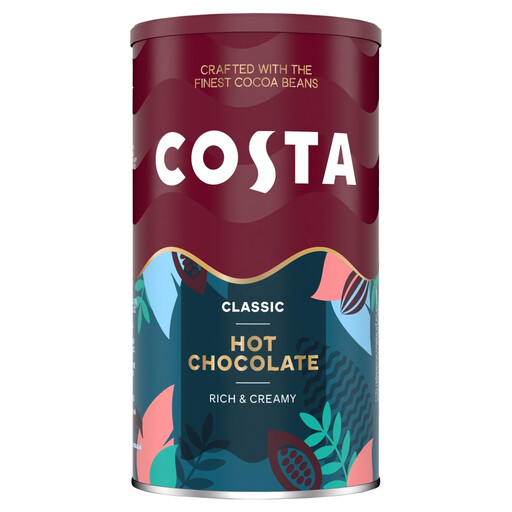
Costa Hot Chocolate 300g
Consider this hot-chocolate powder if you want to choose the milk used for an evening drink. Check the pack’s preparation instructions and account for that milk when comparing the finished mug; do not assume the drink has a particular cocoa intensity or caffeine content from its name.
View on Joybuy
 No image available
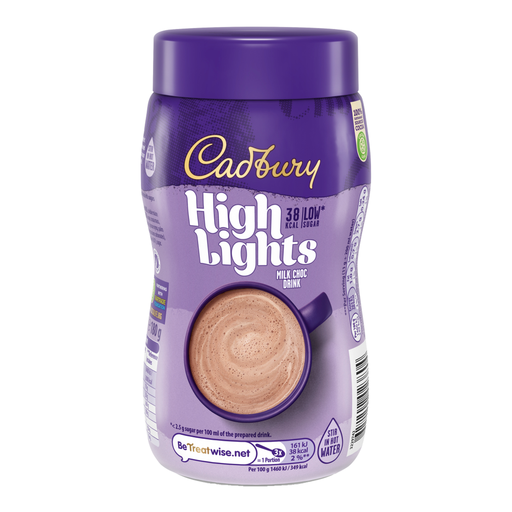
Cadbury Highlights Milk Chocolate Drink 180g
This light-positioned milk-chocolate drink is an option when that style matters more than a stated dark-chocolate cocoa percentage. Check the current pack for its preparation method, prepared-serving nutrition and milk allergens before choosing it for your evening routine.
View on Joybuy
 No image available
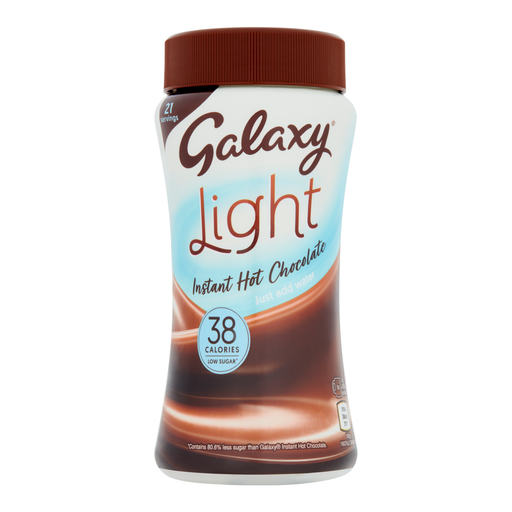
Galaxy Light Instant Hot Chocolate 210g
This light-positioned instant drink suits a shopper comparing quick-preparation formats, rather than relying on the name as a promise of bold cocoa flavour. Check the preparation instructions and current pack for barley, milk and soya ingredients; milk added to the drink will also affect the finished serving.
View on Joybuy
Questions about late-night hot chocolate
What should I look for if I want a strong cocoa flavour?
Start with a stated cocoa percentage and the maker’s description, then consider how you will prepare the drink. Marks & Spencer describes its 72% dark drinking chocolate as bold and not overly sweet, while its dark flakes state 70% cocoa solids. Those details are more informative for this choice than words such as “frothy” or “classic”, but they do not predict everyone’s taste.
Is dark hot chocolate necessarily suitable just before bed?
No. Chocolate can contribute caffeine, and Doncaster and Bassetlaw Teaching Hospitals NHS Trust includes it among caffeine sources to limit or avoid before bed. A dark label or cocoa percentage does not tell you the caffeine amount in your mug; if you are sensitive to caffeine, check the individual product information and consider the timing of your drink.
How do I compare sugars and saturated fat?
Compare like-for-like figures on the pack, including per 100g and the portion you intend to prepare, then account for milk and toppings. NHS food-label guidance covers sugars and saturated fat alongside other nutrition information; a dry-product figure alone may not describe the finished mug.
Can I use plant milk with dark drinking chocolate?
Check the individual product’s preparation instructions first. Marks & Spencer suggests that oat, almond and coconut milks bring different flavours to hot chocolate. The chocolate product’s own ingredients and allergens still matter, regardless of which milk you add.
What should I check for a milk, soya or nut allergy?
Read the current physical pack’s ingredients, emphasised allergens and any precautionary statement, and check the milk or toppings separately. If the information does not resolve your question, contact the manufacturer rather than relying only on an online product description.


