Hosts serving a group
Compare the stated cake count and pack weight before deciding how many packs to buy. A multipack name alone does not tell you how many cakes you can put out.


Choose by how you plan to serve the cakes: a larger pack for a shared plate, mini cakes or snack packs for smaller portions, or a pack with an explicit cocoa-solids statement if the coating matters most. Check cake counts as well as pack weights, and keep the packet available for allergen information. The percentage of a cake made from dark chocolate is not its cocoa-solids percentage.
Compare the stated cake count and pack weight before deciding how many packs to buy. A multipack name alone does not tell you how many cakes you can put out.
If a stated cocoa level matters to you, look for a cocoa-solids figure for the chocolate itself. Tesco states a minimum for the coating in its checked twin pack; a dark-chocolate ingredient percentage answers a different question.
Keep the exact packet so guests can inspect its current ingredients and precautionary statements. Allergen advice differs between the checked products.
Start with the serving format and quantity you need, then check the coating label, allergens and storage directions for the exact pack.
| Priority | What to check | Your needs |
|---|---|---|
| Chocolate label | Look separately for a cocoa-solids statement and the proportion of the cake made from dark chocolate. Tesco states at least 50% cocoa solids in the chocolate of its checked twin pack; chocolate makes up 16% of those cakes. | If the cocoa level of the coating matters to me, a stated minimum is more useful than assuming every dark-chocolate description means the same thing. |
| Serving quantity | Check cake count, pack weight and whether the cakes are mini, standard-sized or grouped in snack packs. A Waitrose listing specifies 30 cakes for the checked McVitie’s triple pack; its count should not be assumed for another listing. | For a shared plate, I need enough individual cakes to replenish it. For smaller servings, mini cakes or packs grouped by portion may fit the plan better. |
| Allergen information | Read the current ingredients and precautionary statements on the exact packet. The checked M&S product warns against use by people with nut or peanut allergies, while Waitrose says its mini cakes may contain milk. | Guests need to be able to check the label for themselves, especially when the cakes are served out of their packaging. |
| Outdoor serving | Follow the chosen pack’s storage directions. Check its guidance on cool, dry storage, sunlight and keeping opened cakes in an airtight container. | I can put out a plate for guests while keeping the remaining packs according to their label directions rather than leaving all the cakes on a sunny table. |
A statement that dark chocolate makes up 16%, 19% or 24% of a cake does not give the cocoa-solids level of that chocolate.
If cocoa level is your criterion, look for a separate statement about cocoa solids in the coating. Neither figure establishes how one product will taste beside another.
The checked M&S cakes carry a nut and peanut warning, while Waitrose’s mini cakes carry a milk precaution. Advice can also differ between products from the same brand.
Read the current packet for every product you serve and keep the packaging available to guests.
Pack formats differ: the checked products include a 125 g mini pack, a 2 × 150 g twin pack and a retailer-listed 30-cake triple pack.
Plan using the count or serving basis stated for the exact pack you intend to buy, alongside its weight.
These details describe particular checked products, not every Jaffa cake sold under each brand.
Tesco’s checked orange Jaffa cake twin pack is labelled 2 × 150 g.
M&S lists dark-chocolate orange Jaffa cakes in a checked 125 g pack.
Waitrose’s checked mini Jaffa cakes come in a 125 g pack.
A checked Waitrose listing describes a McVitie’s Original Triple Pack containing 30 Jaffa cakes.
Sainsbury’s lists standard-sized orange Jaffa cakes in a checked 150 g pack.
Asda lists standard-sized Jaffa cakes in a checked 150 g pack.
These McVitie’s formats offer different ways to serve a garden-party group: a box with a stated cake count, a triple pack and snack packs grouped into smaller portions. Check the exact packet for allergen and storage information before serving.
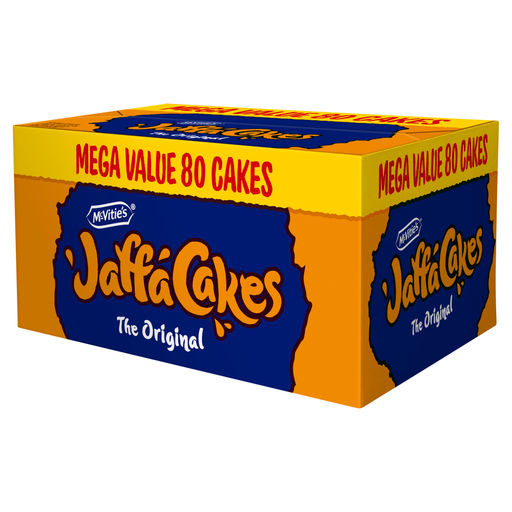 No image available
The stated 80-cake count gives hosts a quantity to plan around when serving a larger group. Check the packet’s coating, allergen and storage information for the cakes you receive.
 No image available
The triple-pack format can be put out in stages for a shared plate. Joybuy lists 19% dark chocolate for this 330 g product; that is the chocolate’s proportion of the cakes, not its cocoa-solids level. Check the cake count for this exact pack if you need a set number.
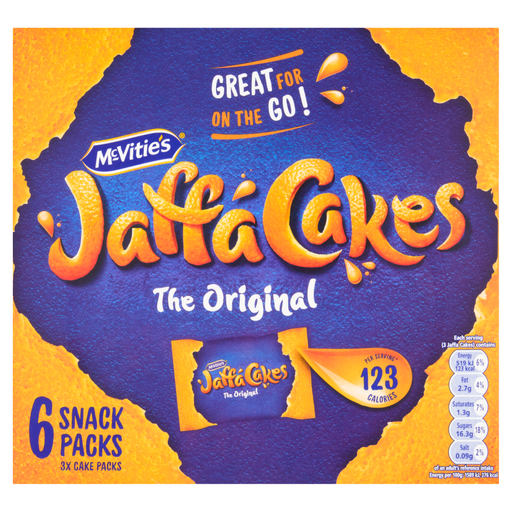 No image available
Six packs of three cakes let guests take a grouped portion rather than serving from one shared packet. The stated total weight is 198 g. Check the exact pack’s coating description and allergen advice if those details affect your choice.
No. On the checked listings, 19% describes how much of the cake is dark chocolate. Tesco separately states that the chocolate in its checked twin pack contains at least 50% cocoa solids; that minimum applies to the chocolate, not the complete cake.
Follow the directions on the chosen pack. The checked product information calls for cool, dry storage, with some packs specifying protection from sunlight or heat and an airtight container after opening.
Keep the exact current packet available so guests can read its ingredients and precautionary statements. The checked products differ: for example, M&S warns against its product for people with nut or peanut allergies, while Waitrose says its mini cakes may contain milk. Food Standards Agency guidance for community events also recommends keeping prepacked-food packaging for people checking ingredients.
The Department for Education’s England school-food guidance concerns food provided in state-funded schools, not a private garden party. Department of Health and Social Care guidance on HFSS retail promotions concerns qualifying retailers’ promotions and placement, rather than a host serving purchased cakes. Neither point classifies every Jaffa cake as HFSS; food provided through an actual school arrangement needs to be considered in its own context.
Food Standards Agency guidance says food supplied at community or charity events must be safe to eat. Depending on what organisers do, they may be considered a food business and may need to register with their local authority; organisers who are unsure should contact that authority. This is not a requirement imposed on every private garden-party host.