Choose a bar with a declared cocoa percentage if that is central to your choice; M&S Collection Dark Chocolate with Mint states 85% cocoa solids, but its vegan label does not make it suitable for people with milk, nut or peanut allergies. For serving or gifting, consider batons, assortments or filled truffles instead, checking whether any cocoa percentage applies to the chocolate shell rather than the whole sweet. If you need a milk- and gluten-free option, Sainsbury’s describes its Free From Dark Chocolate Mints that way; check the current pack against your requirements.
Who is shopping for dark mints?
Shoppers comparing cocoa declarations
If you want mint-flavoured dark chocolate rather than a hard mint, check the percentage on the exact product. Tesco lists Lindt Excellence Mint Intense at 47% minimum cocoa solids, while Marks & Spencer lists its Collection mint bar at 85% minimum. Those declarations distinguish the bars without telling you which flavour you will prefer.
After-dinner hosts and gift buyers
Batons, assortments and boxed truffles offer different ways to serve or share dark mints. Check whether you are choosing a chocolate-coated centre, a selection of pieces or a bar, as well as the ingredients and allergen wording for the exact product.
Shoppers avoiding particular ingredients
A dark-chocolate description is not a milk-free or nut-free statement. Sainsbury’s describes its Taste the Difference Free From Dark Chocolate Mints as milk and gluten free; other dark-mint products list milk or soya or carry precautionary allergen warnings. Use the current pack to check your specific requirement.
What should you check first?
Choose the format you want, then compare cocoa declarations on the part of each product to which they apply and check the current ingredients. The brand-attitude figures below come from a Statista online survey of 1,246 UK adults aged 18–64, conducted from 17 June to 24 July 2025; respondents could select more than one attitude about chocolate and confectionery bars, not dark mints specifically.
| Priority |
What to check |
Your needs |
| Cocoa declaration |
Read the cocoa-solids percentage on the exact product. For a filled sweet, check whether it describes the chocolate shell rather than the whole piece. |
I want to compare declared cocoa content, so I need to know what each percentage measures. Waitrose describes the 70% cocoa figure for Lindor Dark Mint truffles as applying to their dark-chocolate shell. |
| Serving format |
Compare a bar with batons, a filled truffle box or an assortment. Check the pack size and whether the pieces suit how you plan to serve them. |
A bar suits my plan to portion the chocolate myself; for guests or a gift, I would consider a boxed or after-dinner format. |
| Ingredients and allergens |
Read the current ingredients, highlighted allergens, precautionary statements and any free-from wording. Do not infer dietary suitability from the word “dark”. |
If I need to avoid an ingredient, the exact pack must meet that requirement. A milk- and gluten-free statement does not establish suitability for every other allergy. |
| Brand and recipe |
Use a familiar brand to identify a product, then compare its current cocoa declaration, format and ingredient label with any alternative. |
I might return to a familiar brand or try something new. In Statista’s wider-category survey, 43% said they mainly buy favourite chocolate and confectionery-bar brands, while 31% said they always try new products when possible; neither response establishes a preference for dark mints. |
What is easy to overlook?
-
Treating “dark” as a fixed cocoa percentage
Product declarations differ, and the 70% figure on Lindor Dark Mint truffles applies to their chocolate shell. Comparing that figure with a bar’s declaration as though both described the whole sweet could give the wrong impression.
Read the percentage and what it describes on each exact pack before using it to compare products.
-
Assuming dark chocolate meets an allergen requirement
Some dark-mint products list milk or soya, while others carry nut-related warnings. The word “dark” does not establish that a product is suitable for avoiding those ingredients.
Check the current ingredient list, allergen emphasis and precautionary wording for the product you intend to eat.
Which brand ranges are relevant?
These ranges illustrate different dark-mint formats and label claims; check the exact product rather than assuming every item from a brand has the same recipe.
M&S Collection / M&S Food
Marks & Spencer lists an 85% cocoa mint bar, a dark-mint selection whose chocolate states 56% minimum cocoa solids, and after-dinner batons whose chocolate states 50% minimum.
- The named products offer a choice between a bar, an assortment and batons.
- M&S lists the 85% bar as vegan but says it is not suitable for people with milk, nut or peanut allergies. Check each format’s own label.
Lindt
The Lindt Excellence Mint Intense bar states 47% minimum cocoa solids; Lindor Dark Mint truffles have a dark-chocolate shell described as 70% cocoa.
- The bar and filled truffles serve different portioning and presentation needs.
- The bar lists milk fat and soya and may contain nuts. The truffles also contain milk and soya and may contain nuts; check the current pack.
Sainsbury’s Taste the Difference Free From
Sainsbury’s describes its dark chocolate mints as having a peppermint-flavoured fondant centre and being milk and gluten free.
- The stated free-from wording offers a product-specific check for shoppers avoiding milk or gluten.
- Check the current pack for your full ingredient requirements; the product cannot be placed in a cocoa-percentage comparison without a declaration.
Dark mint options on Joybuy
These options cover mint-flavoured dark-chocolate bars and filled sweets, including packs that may suit after-dinner serving. Check each product’s format and allergen information against the choice you are making.
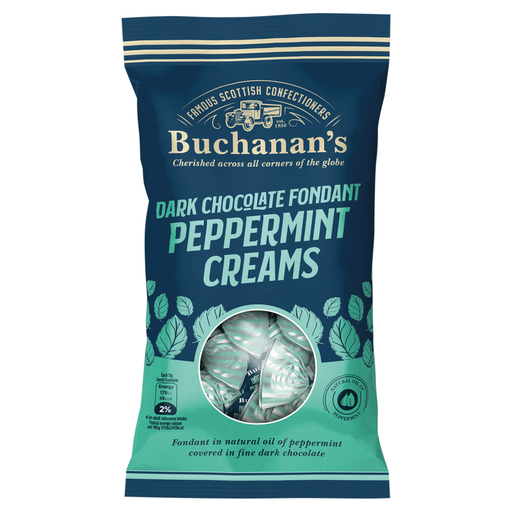 Image unavailable
Buchanans Dark Chocolate Peppermint Creams 120 g
A 120 g pack of dark-chocolate peppermint creams to consider for after-dinner serving. Check the current pack if avoiding eggs or soya, or if the precautionary milk information matters to you.
View on Joybuy
 Image unavailable
Summerdown Dark Chocolate Peppermint Creams 200 g
A 200 g pack of dark-chocolate peppermint creams for shoppers choosing a filled mint sweet. Check the current pack for soya and for precautionary milk or nut information.
View on Joybuy
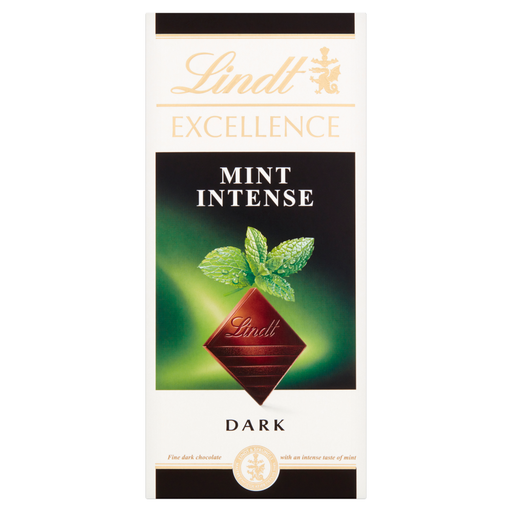 Image unavailable
Lindt Excellence Mint Intense 100 g
Choose this bar format if you want mint-flavoured chocolate rather than filled creams. Tesco lists the same Lindt bar at 47% minimum cocoa solids and identifies milk fat and soya in its ingredients; check the current pack if managing allergens.
View on Joybuy
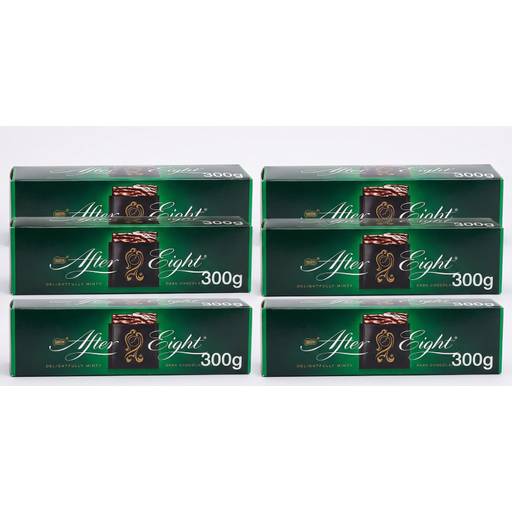 Image unavailable
After Eight Mints 300 g × 6
The six-box format is worth checking if you are planning to serve dark-chocolate mints to a group. Check the current pack for milk and soya and for precautionary nut or gluten information; check its cocoa declaration separately if that matters to your choice.
View on Joybuy
Common questions
Does “dark mint chocolate” always mean a high cocoa percentage?
No. Tesco lists Lindt Excellence Mint Intense at 47% minimum cocoa solids, while Marks & Spencer lists its Collection mint bar at 85% minimum. Read the declaration on the exact product, including whether a percentage describes a shell rather than the whole sweet.
Should I choose a bar or filled mints for after dinner?
Choose by how you intend to serve them: batons, truffles and assortments offer separate pieces, while a bar lets you portion it yourself. Check fillings and allergens as well as the cocoa declaration, since the formats do not necessarily use comparable recipes.
Can I assume dark chocolate mints are milk-free?
No. Tesco lists milk fat in Lindt Excellence Mint Intense, whereas Sainsbury’s describes its Taste the Difference Free From Dark Chocolate Mints as milk and gluten free. Check the current pack for the exact ingredients and allergen wording relevant to you.
What allergen wording should I check?
Read the current pack’s ingredients, highlighted allergens and any precautionary “may contain” statements. Check the exact product and format rather than relying on a brand name, a dark-chocolate description or another product in the same range.


