Choose a high-cocoa dark bar for a stronger cocoa flavour, or white chocolate for a different flavour and texture; neither type alone establishes gluten suitability. Lindt says its EXCELLENCE 70%, 85%, 90% and 99% bars are made without cereal or barley malt, but its guidance is no substitute for checking the exact product’s current ingredients and allergen information, particularly for filled or seasonal varieties.
Who is this for?
Shoppers seeking high-cocoa dark chocolate
If you prefer a pronounced cocoa flavour, compare the stated cocoa percentage, then check the exact bar’s ingredients and precautionary allergen wording. A darker appearance is not evidence of gluten suitability.
People choosing gifts or filled chocolate
Truffles, assortments and white-chocolate treats need checks at product level. A filling, crisp inclusion or seasonal recipe can differ from a plain bar, even when the brand is the same.
Shoppers with additional dietary requirements
Check gluten information separately from milk, nut and soya information. Lindt’s EXCELLENCE 90% product page, for example, states that the bar may contain nuts, milk and soya; a dairy-free range is a different choice from a high-cocoa dark bar.
What should you check?
Decide whether dark or white chocolate fits the flavour you want, then assess gluten information for the exact product rather than the chocolate type. If you have other dietary requirements, read those allergen statements separately.
| Priority |
What to check |
Your needs |
| Gluten information |
Look for an explicit gluten-free claim and read the current ingredients and allergen wording. The Food Standards Agency defines a UK gluten-free claim as no more than 20 mg/kg of gluten in the food as sold. |
I want a product-level basis for choosing chocolate, rather than assuming that dark, white or plain chocolate is suitable. |
| Chocolate type |
Compare dark and white products by flavour preference. For a high-cocoa dark bar, check its stated cocoa percentage; Lindt identifies EXCELLENCE 70%, 85%, 90% and 99% in its dietary guidance. |
I’m looking for a pronounced cocoa flavour, or I’d rather choose a white-chocolate treat. The flavour choice does not settle the gluten check. |
| Ingredients and inclusions |
Read the exact variant’s label for cereals containing gluten and precautionary wording. Check fillings, wafers, biscuit pieces and pastry-based inclusions separately; Coeliac UK identifies kataifi in some Dubai-style chocolate as wheat-based pastry. |
A gift box or novelty bar appeals to me, but I need to assess its additions rather than rely on the ingredients of a plain bar. |
| Other dietary needs |
Check milk, nut and soya statements as well as gluten information. Lindt’s EXCELLENCE 90% page lists precautionary warnings for these allergens; Galaxy describes its Dairy Free range as made in a dairy-free and gluten-free environment. |
If I’m also avoiding dairy or another allergen, a gluten-related statement alone does not answer that separate question. |
| Current packaging |
Check the delivered pack before eating or gifting chocolate. Marks & Spencer advises customers to read product labels because ingredients and allergen information can change. |
I may shortlist a bar online, but I want to use the information on the product I receive for the final check. |
Common buying mistakes
-
Assuming darker chocolate is gluten-free
Cocoa percentage does not tell you whether a bar has cereal ingredients, additions or precautionary allergen wording.
Check for a gluten-free claim and read the current label on the exact bar; do not use its colour or brand as proof.
-
Using one dietary claim to answer every allergen question
Lindt’s EXCELLENCE 90% page states 90% minimum cocoa solids but also says the bar may contain nuts, milk and soya.
Read each allergen statement that matters to the person eating it. Consider a dairy-free range separately if dairy avoidance is also required.
-
Treating filled chocolate like a plain bar
Inclusions can change the ingredient check. Coeliac UK notes that kataifi used in some Dubai-style chocolate is wheat-based pastry.
Check every filled, seasonal or gift-box variant individually, and do not rely on imported chocolate when its ingredients or allergen information are unclear.
-
Relying on an online listing alone
A listing used to shortlist chocolate may not reflect the label on the pack received. Marks & Spencer advises that product and allergen information can change.
Recheck the physical pack before eating the chocolate or giving it to someone with coeliac disease.
Brand and retailer references
These examples show why an exact product or range matters more than a familiar brand name; they do not establish that every chocolate made by each brand has the same dietary information.
Lindt
A reference for comparing high-cocoa dark bars with separately listed gluten-free white-chocolate products.
- Lindt says EXCELLENCE 70%, 85%, 90% and 99% are made without cereal or barley malt. Its UK gluten-free collection also lists dark and white products.
- Use the exact pack for the final check. The EXCELLENCE 90% product page carries “may contain” warnings for nuts, milk and soya.
Galaxy
A separate range to examine when dairy-free or vegan suitability is also part of the choice.
- Galaxy states that its Dairy Free range is made in a dairy-free and gluten-free environment and is registered with the Vegan Society.
- Do not extend that range statement to every Galaxy bar. Galaxy’s standard Smooth Caramel 135g bar, for example, says it may contain wheat.
Cadbury
Bournville Classic Dark 100g is a dark-chocolate product to assess by its own current label.
- Cadbury identifies Bournville Classic Dark as a 100g dark chocolate bar.
- The Bournville name and dark-chocolate format do not establish gluten suitability. Check the current pack’s ingredients and allergen information.
M&S
A retailer reference for a stated high-cocoa dark bar and a separate gluten-free chocolate-gift category.
- Marks & Spencer lists a dark chocolate bar with 85% minimum cocoa solids and has a gluten-free chocolate-gift category.
- A category listing does not establish the status of every dark or white product. Marks & Spencer advises checking the current product label.
Joybuy dark chocolate option
This option represents the high-cocoa dark-chocolate route, rather than a choice between dark and white products. Check its current pack for the gluten and allergen information relevant to your purchase.
 No image available
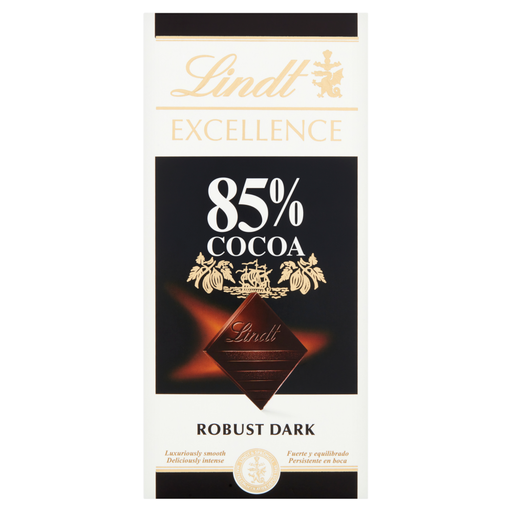
Lindt Excellence 85% Cocoa Dark 100g
An 85% cocoa dark bar for shoppers who prefer the high-cocoa route. Lindt identifies the EXCELLENCE 85% variant as made without cereal or barley malt; check this bar’s current pack for ingredients, precautionary cereal wording and any other allergens relevant to you.
Joybuy
Questions about choosing chocolate
What does “gluten-free” mean on chocolate sold in the UK?
The Food Standards Agency defines the claim as no more than 20 mg/kg of gluten in the food as sold to the final consumer. It does not answer separate questions about allergens such as milk or nuts, so read those parts of the label too.
Is plain dark chocolate automatically suitable for someone with coeliac disease?
No. Cocoa percentage and a plain appearance do not establish gluten suitability. For a bar without a gluten-free claim, check its current ingredients for cereals containing gluten and read any precautionary allergen statement, as Coeliac UK advises.
Can white chocolate replace a high-cocoa dark bar?
Not if the aim is a high-cocoa dark-chocolate flavour. White chocolate is a separate choice: Lindt lists white products in its gluten-free collection, while its dietary guidance identifies specific dark EXCELLENCE percentages. Check the exact product’s gluten information whichever flavour you prefer.
Do oat-containing chocolate inclusions need a separate check?
Yes. Coeliac UK says most people with coeliac disease can eat uncontaminated oats labelled gluten-free; an oat-containing inclusion is not automatically covered by that description. Read the information for the complete chocolate product.
What if an imported novelty chocolate has unclear labelling?
Do not treat unclear ingredients or allergen information as confirmation of suitability. Coeliac UK has warned about some imported Dubai-style chocolates and notes that kataifi, an inclusion used in this style, is wheat-based pastry.


