Dark-room map editors
If you spend evening sessions arranging assets and reading editor panels, look for controllable brightness, manageable reflections and a stand you can position for your desk.


Choose a 4K display if fitting detailed editor panels and asset work on screen matters most; consider a colour-focused creator model when your asset workflow also depends on consistent colour. Choose a high-refresh QHD gaming monitor if frequent, fast-moving playtests take priority over maximum pixel workspace. In a dark room, check brightness control, reflections and stand adjustment whichever route you take, and use dark-scene enhancement for gameplay checks rather than judging the lighting you created.
If you spend evening sessions arranging assets and reading editor panels, look for controllable brightness, manageable reflections and a stand you can position for your desk.
If one screen must handle detailed editing and regular game testing, weigh workspace and any colour-sensitive asset work against the refresh rate your computer can use.
If you repeatedly test visibility, navigation or lighting in dark areas, gaming display modes may help you inspect playability. Return to a known, neutral mode when judging the image you authored.
Decide whether editing space, colour judgement or playtest motion will most affect your choice, then check how the monitor fits your dark-room desk and computer connection.
| Concern | What to check | Who this matters to |
|---|---|---|
| Editing space and dark-room comfort | Check resolution, reflection treatment, usable brightness adjustment and stand movement against your editor layout and desk. | If I work through dense panels at night, I need readable space without a distracting screen or awkward viewing position. Around 36% of consumers would put this workspace and comfort need first. |
| Colour and image judgement | Check the exact model’s stated colour modes and calibration features, and whether your asset software uses colour management. | When I prepare textures or screenshots, I need a display mode I can use consistently to judge their appearance. Colour judgement would come first for around 29% of consumers. |
| Responsive playtesting | Check native resolution, refresh rate at your intended input and compatibility with your graphics output. | If I often test camera movement or fast gameplay, I care more about the motion I see during play than extra room for editor panels. Around 21% of consumers would prioritise playtest motion. |
| Laptop connection and desk setup | Check USB-C video support and, if charging matters, the monitor’s power delivery against your laptop’s requirements. | With a laptop at my map-making desk, I want a connection that handles the display and fits the way I use other peripherals. A simpler connection would be the primary need for around 14% of consumers. |
LG says its Black Stabilizer changes contrast on dark screens to reveal colour differences. That can be useful for a visibility playtest, but the altered presentation can mislead you when judging authored lighting or shadows.
Check whether you can switch easily between a known editing mode and a separate gameplay mode.
A monitor’s listed resolution and refresh rate do not mean your computer and connection will offer that combination in your game.
Check your graphics output, the intended port and cable, and the resolution and refresh mode you plan to use for editing and playtesting.
USB-C describes the connector, not every capability of the laptop port or the charging power a monitor supplies.
Confirm compatible USB-C video output or Thunderbolt support, then compare the monitor’s stated power delivery with your laptop’s requirement.
Screen position and reflections still matter during long editing sessions. For applicable UK workplace display-screen equipment, the Health and Safety Executive addresses workstation assessment, while UK display-screen equipment rules address screen adjustment and disturbing reflections.
Measure your desk, check the stand’s adjustment range and plan where the screen will sit relative to light sources.
The RD320U is a reference point for map editors considering a 4K screen with dark-room-oriented controls.
The PA279CRV illustrates the creator-display route for maps accompanied by colour-sensitive assets.
The AOC Q27G4X represents a QHD route for creators who spend substantial time playtesting.
The 27UP650K-W offers a model-specific example of 4K editing space alongside gaming-oriented controls.
The S2725QC is a 4K USB-C option to consider when editing and playtesting share one desk.
These choices span 4K editing and playtesting, a wide ultrawide layout and QHD gaming. For a dark room, compare each option’s brightness controls, reflections and physical fit before choosing.
 No image available
Consider this for 4K map editing alongside frequent playtesting, provided your computer can use the refresh mode you want.
The product name lists a Nano IPS panel, dual-mode 240Hz/480Hz refresh, DisplayPort 2.1 and HDMI 2.1; check which resolution applies to each refresh mode. Check brightness adjustment and reflections for your room, and use a neutral mode when judging authored lighting.
 No image available
Consider this if you want a large 4K editing display that also serves regular game testing, and check that the curved screen fits your desk.
The product name lists 3840 × 2160 resolution, 165Hz refresh and USB-C power delivery of 65W. Confirm your intended video mode and any laptop charging requirement, as well as usable brightness adjustment and reflections in your room.
 No image available
Consider the ultrawide layout if you want space to arrange editor windows and can accommodate the screen on your desk; it is a different layout from 4K.
The product name lists a 32:9 curved QD-OLED display and 240Hz refresh. Check whether your editor and games suit the format, and confirm brightness control and the output mode your computer can drive.
 No image available
Consider this creator-focused option if detailed maps and colour-sensitive assets take priority, while checking that its playtesting mode meets your needs.
The product name lists an IPS Mini LED panel, 120Hz refresh, hardware calibration and a Delta E < 1 claim. Treat the colour figure as a model-specific claim, check the mode relevant to your workflow, and confirm the lowest comfortable brightness for your dark room.
 No image available
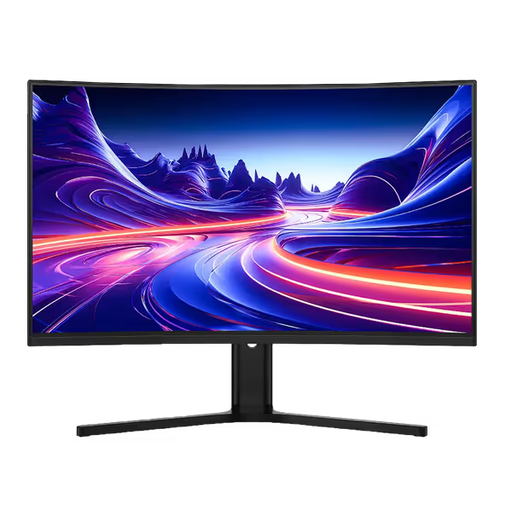
Consider this if fast playtesting matters more to you than fitting the most pixels into a dense map-editor layout.
The product name lists 2560 × 1440 resolution, a VA panel, 180Hz refresh and DisplayPort 1.4. Check the refresh mode available through your chosen connection, along with desk fit, brightness adjustment and reflections.
Start with editing space you can read comfortably, adjustable brightness and a screen position that works without distracting reflections. If you also playtest frequently, check the refresh mode your computer can deliver rather than choosing on resolution alone.
It matters most during moving gameplay tests, not while reading static editor panels. AOC lists 180Hz and Adaptive Sync for the Q27G4X, while Dell lists 4K at 120Hz for the S2725QC; check your graphics output, connection and game performance before relying on either mode.
Use it to inspect gameplay visibility, but switch to a known, neutral display mode when judging the lighting or screenshots you authored. LG says its Black Stabilizer increases contrast on dark screens, so the image you see with it enabled has been altered.
If UK workplace display-screen equipment requirements apply to your work, workstation setup involves more than the monitor’s gaming specifications. The Health and Safety Executive says employers must assess applicable display-screen workstations and reduce risks, including through breaks or changes of activity; discuss your working arrangement and setup with your employer rather than assuming a particular monitor fulfils those duties.