Dark-scene puzzle explorers
If you spend much of a game examining dim interiors and environmental clues, black presentation, HDR specifications and image detail may matter more to you than the highest advertised refresh rate.


Choose OLED if dark-scene presentation is your priority and you are comfortable managing prolonged static maps, menus and desktop use. A 4K 16:9 screen suits detailed, standard-format play; choose an ultrawide only if its wider framing works for your games and setup. VA offers a non-OLED ultrawide route, but check the particular monitor’s dark-scene and HDR specifications rather than expecting it to look like OLED.
If you spend much of a game examining dim interiors and environmental clues, black presentation, HDR specifications and image detail may matter more to you than the highest advertised refresh rate.
If maps, game interfaces or desktop windows stay on screen for long periods, weigh OLED’s dark-room appeal against its fixed-image care requirements and the exact model’s warranty.
If a wider game view appeals to you, compare OLED and VA models without assuming they will present dark scenes alike. Check that your games and desk setup suit the wider format.
For dark-room puzzle adventures, decide which screen format you want, then weigh dark-scene presentation against fixed-image use and the output your PC or console can provide.
Choose it when: Detailed scenery and a standard 16:9 format matter most.
Consider: Long periods displaying fixed maps, menus or desktop elements make panel care and warranty terms important.
Choose it when: You prefer a wider composition and your games support it as intended.
Consider: A wider screen is not a substitute for 4K 16:9, and OLED fixed-image care still applies.
Choose it when: The wider format appeals but you prefer a non-OLED panel.
Consider: Check the specific monitor’s contrast and HDR characteristics; VA alone does not establish how dark scenes will look.
| Concern | What to check | Who this matters to |
|---|---|---|
| Dark-scene clarity | Compare panel type, native resolution and the exact HDR specification; do not equate a generic HDR label with DisplayHDR True Black certification. | If I spend time searching shadowed rooms for clues, I want the image presentation and detail to suit that task. Around 42% of consumers put dark-scene clarity first. |
| OLED and fixed images | Read the model’s panel-care instructions and warranty if maps, menus or desktop windows remain visible for long periods. | When I regularly pause on a map or leave desktop windows open, I need to be comfortable with OLED’s fixed-image trade-off. For around 33% of consumers, that care question is the primary concern. |
| Format and device fit | Check game support for the chosen aspect ratio and match the monitor’s input modes to your PC or console. | I would rather choose a screen format my games and source device can use than pay attention only to its headline refresh rate. This is the main priority for around 25% of consumers. |
A high refresh-rate figure does not tell you whether the panel type, resolution or HDR specification suits dim puzzle scenes. Dell Technologies lists both QD-OLED and VA Alienware ultrawides with high refresh rates.
Choose the image format and panel route first, then check which refresh-rate and variable-refresh modes your source device can use.
Samsung’s OLED guidance describes burn-in as a possible result of leaving a fixed image on screen for a long time. Its advertised protection features should not be treated as a guarantee for prolonged static game interfaces.
Read the exact monitor’s care instructions and warranty, and use its available panel-care settings.
PlayStation states that PS5 supports HDMI 2.1 and 4K 120Hz video output. A monitor’s higher advertised maximum does not mean a console game will run at that rate.
Check the game, console settings, cable and selected monitor input against the resolution and refresh-rate combination you want.
VA and OLED are distinct panel choices. Dell Technologies lists the Alienware AW3426DWM as a 34-inch, 3440 × 1440 VA ultrawide, while its AW3426DW uses QD-OLED at the same stated size and resolution.
If you favour a non-OLED ultrawide, compare the particular models’ HDR specifications, inputs and screen format rather than judging by panel name alone.
Dell Technologies lists two relevant 34-inch, 3440 × 1440 ultrawides: the QD-OLED AW3426DW and the VA AW3426DWM.
Samsung’s 32-inch Odyssey OLED G80SD is a 4K QD-OLED option for standard-format puzzle-adventure play.
LG lists the 32GX850A-B as a 32-inch, 3840 × 2160 OLED monitor with a dual-mode design and VESA DisplayHDR True Black 400.
These monitors offer several ways to approach dark-room puzzle play: 4K OLED, OLED screens for a wider-view preference, and a 4K IPS alternative. Choose by the particular model and your intended games, not by assuming every screen serves the same format or panel preference.
 No image available
Consider this 4K QD-OLED model if a standard-format screen for detailed, dim game scenes is your priority.
Samsung lists the Odyssey OLED G80SD as a 32-inch 4K QD-OLED monitor. Check its care instructions and warranty if you often leave maps or desktop windows displayed.
 No image available
Consider this non-OLED option if you want a 27-inch 4K screen for detailed, standard-format play.
Its title specifies dual-mode 240Hz/480Hz operation, DisplayHDR 600, DisplayPort 2.1 and HDMI 2.1. Check which resolution and refresh-rate combinations your device can use; the advertised DisplayHDR 600 designation is not DisplayHDR True Black certification.
 No image available
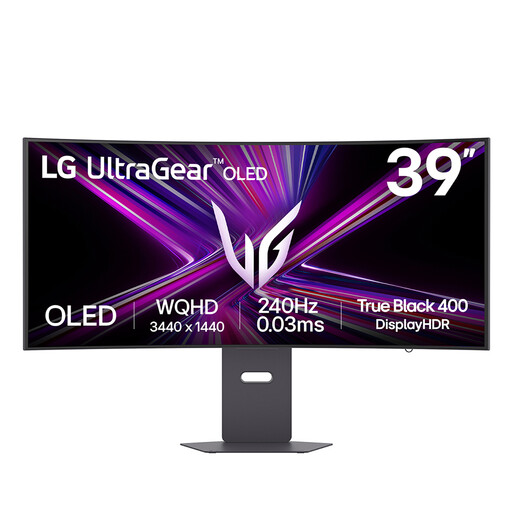
Consider this large OLED screen if a wider-view setup appeals to you; confirm how your preferred games use its screen format.
The product title specifies a 39-inch QHD OLED monitor with a 240Hz refresh rate. If you spend long periods in static menus or desktop windows, check the model’s panel-care guidance and warranty.
 No image available
Consider this 34-inch OLED option if you prefer a wider-view screen, provided your games support the framing you want.
The product title specifies WQHD resolution and 240Hz. Check the exact model’s OLED care guidance and warranty before relying on it for prolonged static maps, menus or desktop use.
 No image available
Consider this curved OLED model if you want a 32-inch 4K screen for dark-room games and its shape suits your setup.
The product title specifies 3840 × 2160 resolution, 165Hz, HDR400, a USB hub and 65W USB-C. Do not treat its HDR400 wording as DisplayHDR True Black certification; check input modes, OLED care instructions and warranty for your intended use.
It can, if the game, console settings, cable and selected monitor input support that output together. PlayStation states that PS5 supports HDMI 2.1 and 4K 120Hz video output; check the monitor’s supported input modes rather than relying on its maximum refresh-rate figure.
OLED remains an option, but prolonged fixed images are a trade-off to consider before buying. Samsung’s OLED guidance describes burn-in associated with leaving a fixed image displayed for a long time; check the particular monitor’s care settings and warranty rather than treating protection features as a guarantee.
No particular refresh-rate headline is required by the purchase scenario alone. Choose the panel, resolution and format that suit your games and room, then check which refresh modes your PC or console can actually output.
Check your retailer’s current electrical take-back options and your local authority’s electrical-waste arrangements. GOV.UK explains that waste electrical and electronic equipment measures are intended to encourage recovery, reuse and recycling rather than landfill or incineration.