
24/7 Customer Support

Free returns

Same-day & Next-day Delivery

Quality Guaranteed

Unlock Your Welcome Offers: FREE Delivery | Up to 80% OFF | Free 30-day JoyPlus trial
Download the APP
Dark spots can appear after blemishes, sun exposure or hormonal changes, while age spots and general uneven skin tone may become more noticeable over time. A targeted dark spot serum can fit neatly into a UK skincare routine, but choosing one based only on phrases such as “brightening” or “instant results” can lead to disappointment.
The right product depends on the type of mark, your skin’s tolerance and whether you protect your skin from further UV exposure. Here is how to compare an anti-dark-spot serum without getting distracted by inflated marketing claims.
Some product listings refer to visible changes after a set number of days or weeks. These statements may come from brand testing or consumer studies and should not be treated as a guaranteed outcome for every user. Skin type, consistency, sun exposure and the cause of pigmentation all affect how a product looks on your skin.
Think of time-based claims as an indication of intended use, not a promise. A realistic routine usually requires regular application over several weeks.
A brightening serum cannot compensate for regular unprotected UV exposure. Sunlight can make existing pigmentation appear darker and contribute to new discolouration. If you are using a Vitamin C serum, AHA BHA serum or another active formula, apply a broad-spectrum sunscreen in the morning.
For convenience, an SPF50 anti-dark-spot day fluid can combine daily moisturising, UV filters and targeted ingredients in one step. Check whether the product is intended to replace or be used alongside your usual sunscreen.
Using a Thiamidol serum, Vitamin C, exfoliating acids and retinoid products together may increase the chance of dryness or irritation. More active ingredients do not automatically mean faster results.
Introduce one new product at a time. Patch testing is sensible, particularly for sensitive skin, and you should stop using a product if persistent redness, itching or discomfort develops.
A hyperpigmentation serum may use different ingredients for different needs:
Read the full ingredient list rather than relying on the front label. Fragrance, alcohol and exfoliating acids may matter if your skin is reactive.
A lightweight, fast-absorbing serum may suit oily or blemish-prone skin, while a richer anti-ageing serum containing squalane, shea butter or moisturising ingredients may feel more comfortable on mature or dry skin.
Check how the formula fits into your routine. Generally, apply serum after cleansing and before moisturiser. In the morning, finish with sunscreen. If a product pills under make-up, its texture may not be practical for daily use, even if its ingredient list looks appealing.
Follow the directions supplied with the product. For formulas containing LUMINOUS630 or Thiamidol, the supplied product information states that products containing the ingredient should not be used more than four times per day. Keep active serums away from direct sunlight and heat, and check the open-jar symbol for the recommended period after opening.
Do not use a product if the seal is broken or the packaging is damaged. Avoid applying serum to broken, recently shaved or visibly irritated skin.
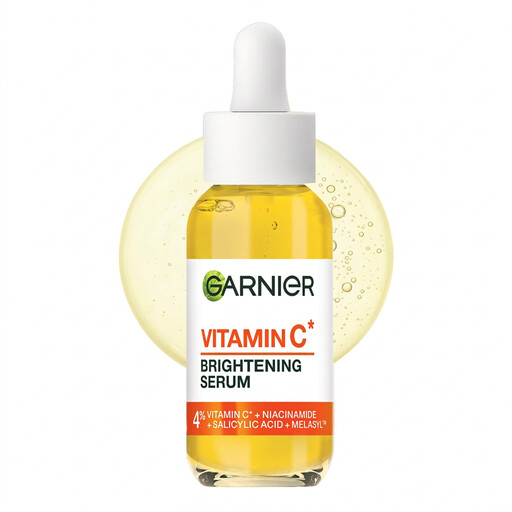
Why This Fits Their Persona: A straightforward option for shoppers starting a brightening routine, with a lightweight texture that can be used morning and evening.
The formula identifies its main ingredients clearly: a 4% Vitamin C derivative, Niacinamide, Salicylic Acid and Melasyl. This makes it easier to compare with simpler Vitamin C serum formulas.
Fast-absorbing, non-sticky texture; includes Niacinamide and Salicylic Acid for routines focused on uneven tone and blemish-prone skin.
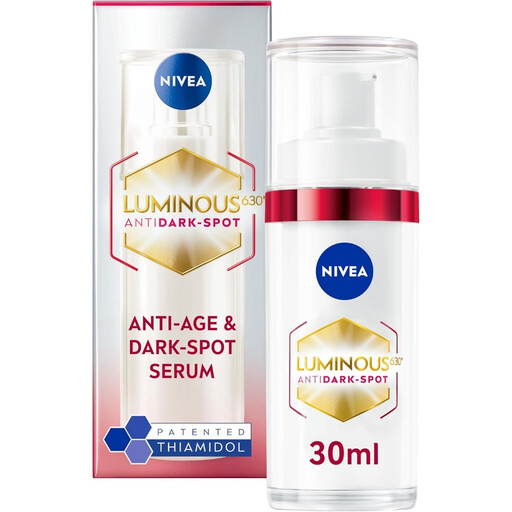
Why This Fits Their Persona: Suitable for shoppers wanting one serum for the appearance of age spots, uneven tone and mature-skin concerns.
It combines Thiamidol with Hyaluronic Acid, rather than presenting pigmentation care as a standalone instant-fix product. The supplied directions specify morning and evening use.
Contains Thiamidol and Sodium Hyaluronate; the ingredient list also includes shea butter and squalane for a richer skin feel.
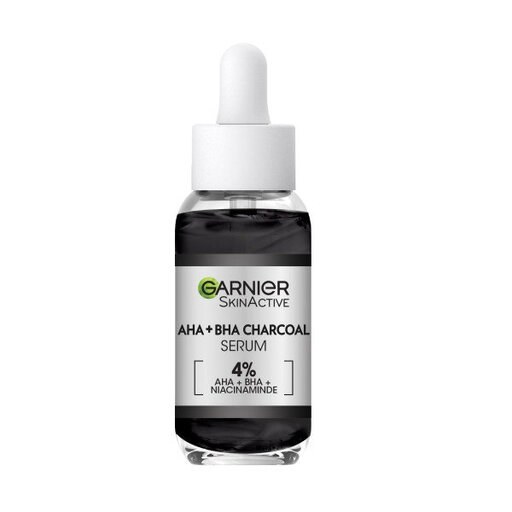
Why This Fits Their Persona: Designed for oily or blemish-prone users who want exfoliation alongside care for visible post-acne marks and uneven tone.
The 4% AHA and BHA complex is clearly stated, so users can account for exfoliation instead of unknowingly layering several acid products.
Includes Mandelic Acid, Salicylic Acid, Niacinamide and Charcoal; the supplied information lists 97% naturally derived ingredients.
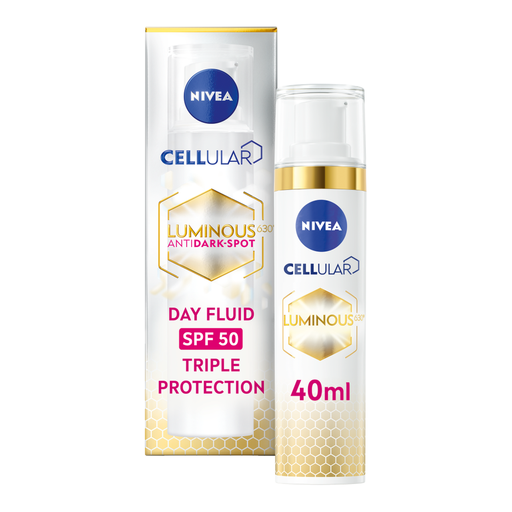
Why This Fits Their Persona: A practical morning choice for anyone who wants pigmentation care and high-factor daily UV protection in a lightweight face fluid.
It does not rely on a serum alone: the formula includes UVA/UVB filters and SPF50, helping address the daily exposure that can worsen the look of dark spots.
SPF50 protection; includes Thiamidol, Hyaluronic Acid and Vitamin E, with a mattifying and oil-control positioning.
For a simple routine, cleanse gently, apply your chosen dark spot serum and follow with moisturiser. Use sunscreen every morning, particularly when using exfoliating acids or Vitamin C. A night serum can be applied after cleansing and before a night cream, while an SPF50 day fluid belongs in the morning.
Avoid switching between several products at once. Keep a note of when you started each formula so you can assess tolerance and consistency rather than changing products every few days. If a mark changes rapidly, bleeds, becomes painful or looks unusual, seek advice from a GP or qualified healthcare professional rather than treating it only with cosmetics.
There is no universal timeframe. Some product information refers to visible changes within days or weeks, but results vary between individuals. Allow several weeks of consistent use, protect your skin from UV exposure and follow the product directions.
Many formulas are designed for daily use, but frequency depends on the ingredients. Thiamidol, Niacinamide and some Vitamin C formulas may be used as directed, while AHA BHA serum products may require more careful introduction. Always follow the packaging instructions and stop if irritation occurs.
Yes. Daily broad-spectrum sunscreen is an important part of managing the appearance of uneven tone because UV exposure can deepen visible pigmentation. Apply an SPF50 product as the final morning skincare step and reapply as directed, especially during prolonged outdoor exposure.