Students stocking a shared kitchen
If a bar might become a snack or an ingredient for a flatmate’s recipe, choose its intended use before buying. Check the pack’s storage and allergen instructions before putting it in a shared cupboard.


Choose a high-cocoa dark bar if you want a more intense cocoa flavour; a clearly labelled 70% bar is a useful starting point, but it will not taste like creamy, sweet white chocolate. For a student kitchen, decide whether the bar is for eating or baking, then check the current pack’s allergen and storage instructions—particularly if you will share it.
If a bar might become a snack or an ingredient for a flatmate’s recipe, choose its intended use before buying. Check the pack’s storage and allergen instructions before putting it in a shared cupboard.
A declared cocoa percentage makes it easier to identify a high-cocoa dark bar than the word “dark” alone. A 70% bar is a starting point, not a promise that every bar will taste the same.
Dark chocolate is not automatically suitable for a milk or nut allergy. If caffeine affects your sleep, consider when you plan to eat chocolate as well as which bar to buy.
Choose it when: You want a more pronounced cocoa flavour and are comfortable with a less sweet result than white chocolate.
Bear in mind: The cocoa percentage does not tell you whether the bar suits an allergy or whether it was made for snacking or cooking.
Choose it when: Creamy sweetness is what you want, rather than the flavour of a high-cocoa dark bar.
Bear in mind: It is not an interchangeable choice when a recipe or your own taste calls for high-cocoa dark chocolate.
| Priority | What to check | Your needs |
|---|---|---|
| Cocoa flavour | Read the cocoa-solids percentage on the exact bar. Lindt EXCELLENCE Dark 70%, M&S Dark Chocolate and Galaxy Fusions Dark Chocolate are examples with a declared 70% cocoa level; the declaration alone does not describe every flavour difference. | I want a noticeable cocoa flavour, so I would rather compare labelled percentages than rely on “dark” in the name. |
| Allergens | Read the current ingredients, allergen advice and any “may contain” statement. The Food Standards Agency explains that precautionary allergen labelling signals that an allergen could be unintentionally present. | If I am sharing chocolate with someone who has an allergy, a vegan label is not enough: Lindt says its EXCELLENCE Dark 70% bar is unsuitable for people with a milk allergy despite its vegan recipe. |
| Eating or baking | Check whether the exact bar is presented for eating, cooking or both, and whether your recipe specifies a type of chocolate. M&S and Green & Black’s identify relevant dark bars for baking. | For a cupboard snack, I want a bar chosen for eating; for a planned recipe, a cooking-labelled bar may make more sense. |
| Storage | Follow the current pack instructions. The M&S dark bar specifies cool, dry storage away from sunlight; the Waitrose-listed Green & Black’s cooking bar says to protect it from heat. | My cupboard may be near a window or radiator, so I need somewhere that meets the bar’s storage directions. |
| Snack timing | Consider your response to caffeine. Doncaster and Bassetlaw Teaching Hospitals NHS Foundation Trust includes chocolate in its guidance on caffeine and sleep. | If chocolate late in the day seems to affect my sleep, I would keep it for an earlier snack rather than a late study session. |
“Dark” does not, by itself, give you a cocoa percentage. That matters if a high-cocoa flavour is the reason you are choosing it over white chocolate.
Check the exact bar’s cocoa-solids declaration; a labelled 70% bar gives you a clear starting point.
Lindt says its EXCELLENCE Dark 70% bar is made to a vegan recipe but is unsuitable for people with a milk allergy because it is manufactured in a facility that uses milk.
For anyone with an allergy, read the current ingredients and precautionary statements for that exact product rather than relying on a dietary label.
A bar presented for baking answers a different shopping need from one chosen mainly for eating squares from the pack.
Decide whether this purchase is for snacks or a specific recipe before choosing the format.
Product storage directions can rule out a warm or sunny spot. Chocolate also appears in Doncaster and Bassetlaw Teaching Hospitals NHS Foundation Trust’s caffeine-related sleep guidance.
Follow the pack’s storage directions, and consider an earlier snack if caffeine affects your sleep.
Lindt EXCELLENCE Dark 70% is a plainly labelled high-cocoa bar to consider for eating.
Galaxy Fusions includes a Dark Chocolate with 70% Cocoa option for someone considering a dark eating bar.
M&S Dark Chocolate is a 70% minimum-cocoa option presented for recipes.
The Green & Black’s Organic Cooking Dark Chocolate listed by Waitrose is a 70% cocoa bar intended for cooking.
Cadbury Bournville Classic is a dark bar to consider if you are not choosing by a confirmed high-cocoa percentage.
These bars offer labelled high-cocoa dark options for eating or planned cooking. Compare their cocoa declarations and intended use, then check the current pack if allergens matter.
 No image available
A 90g dark bar labelled 70% for someone choosing a high-cocoa snack. Check the current pack’s milk and nut statements before sharing, and follow its storage instructions.
 No image available
A 100g bar labelled 85% cocoa if you want to consider a higher declared percentage than a 70% bar. Check the current allergen advice and keep it according to the pack’s storage instructions.
 No image available
A 100g dark bar labelled 72% cocoa to consider when choosing chocolate for eating or a recipe. Its product information names soya and gives precautionary allergen advice, so check the current pack before sharing.
 No image available
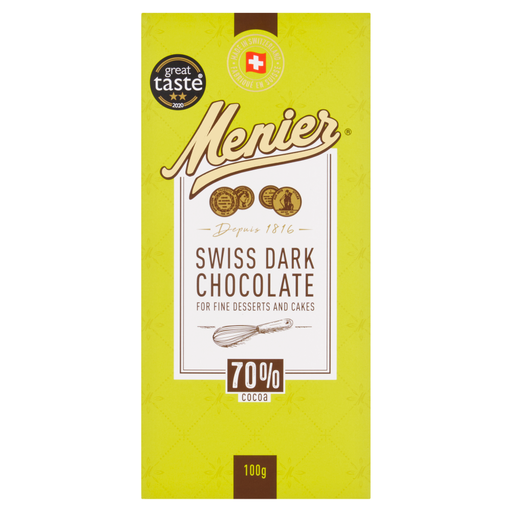
A 100g cooking bar labelled 70% cocoa for a planned chocolate recipe rather than a purchase made mainly for snacking. Its product information lists milk and precautionary allergens; check the current pack if these matter.
 No image available
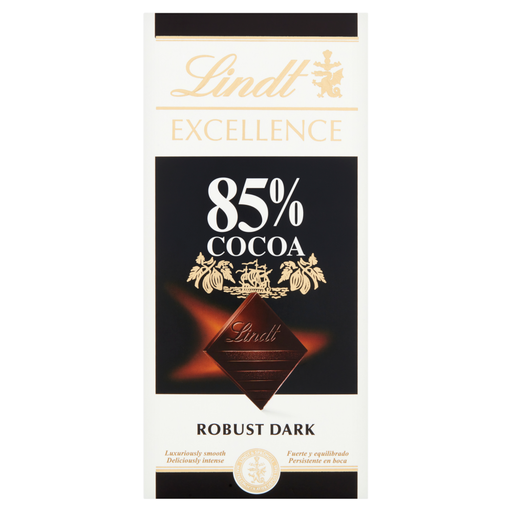
A 100g eating bar labelled 85% cocoa for someone comparing declared cocoa levels. Check the current pack’s allergen wording before buying it for anyone with an allergy; do not apply the information for Lindt’s separate 70% bar to this one.
No: check the cocoa-solids percentage on the exact bar. Lindt EXCELLENCE Dark 70%, M&S Dark Chocolate and Galaxy Fusions Dark Chocolate are labelled 70% options, while Cadbury’s description of Bournville Classic as dark chocolate does not, by itself, establish a high-cocoa percentage.
Not necessarily. Lindt says its EXCELLENCE Dark 70% bar has a vegan recipe but is not suitable for people with a milk allergy because it is made in a facility using milk. Read the current label for the exact bar.
The Food Standards Agency explains that precautionary allergen labelling communicates that an allergen could be unintentionally present. It is not a free-from statement; check which allergens the warning names on the product you are buying.
Follow the exact pack instructions and avoid a storage spot that conflicts with them. For example, M&S specifies a cool, dry place away from sunlight for its dark bar, while the Waitrose-listed Green & Black’s cooking bar should be protected from heat.
If caffeine affects your sleep, consider eating chocolate earlier. Doncaster and Bassetlaw Teaching Hospitals NHS Foundation Trust includes chocolate among caffeine-containing items in its sleep-hygiene guidance and advises avoiding them after 2pm.