What should you check before buying?
Decide whether the bar is an occasional treat or food for a training session. Then compare the specific packs, because cocoa percentage alone cannot answer questions about portions, allergens or storage.
High-cocoa dark chocolate
Choose it when: You want a dark chocolate treat with an explicitly stated cocoa percentage.
Bear in mind: A high cocoa percentage does not make the bar a purpose-selected exercise snack or replace a serving-level nutrition check.
White chocolate
Choose it when: You prefer white chocolate’s sweet, creamy flavour and are buying it as a treat.
Bear in mind: It does not answer a preference for a high-cocoa dark bar; compare its own ingredients and serving panel.
| Priority |
What to check |
Your needs |
| Snack purpose |
Decide whether this is a treat or a snack eaten before training. For the latter, check timing and the full nutrition panel: University College London Hospitals NHS Foundation Trust advises carbohydrate, protein and minimal fat for snacks 60–90 minutes before exercise. |
I’m packing a treat, not assuming that chocolate will meet the needs of a training session. |
| Cocoa and ingredients |
Look for a stated cocoa percentage and read the ingredient list. Lindt lists EXCELLENCE dark bars at 70% and 78% cocoa; Waitrose lists a 72% dark bar. Waitrose’s white chocolate lists sugar, cocoa butter and milk ingredients. |
If I want high-cocoa dark chocolate, I need the percentage on the particular bar, rather than a dark-sounding name. |
| Serving nutrition |
Compare like-sized servings, including sugars and saturates. Waitrose lists 4.4 g sugars and 4.1 g saturates per serving for its 72% dark bar; its white chocolate lists 11.3 g sugars and 3.3 g saturates per square. Those serving units are not necessarily the same size. |
Before putting a bar in my bag, I want to know what portion the nutrition figures describe. |
| Allergens |
Read the current pack’s ingredients and precautionary statements. Waitrose’s listing for Green & Black’s Organic 70% Dark Chocolate says it may contain nuts and milk; its white chocolate lists milk ingredients. |
Where ingredients or possible cross-contact matter to me, an old online listing is not enough to go by. |
| Heat and storage |
Check the pack’s storage directions and how long the bar will be carried. Waitrose says to keep its 72% dark chocolate closed in a cool, dry place away from heat and direct sunlight. |
My bag might sit somewhere warm, so I need a way to keep the bar out of heat and direct sun. |
Relevant brand references
These examples help distinguish named dark bars from milk, white and Darkmilk styles; a brand name alone does not establish the ingredients or nutrition of every bar it makes.
Lindt
Lindt’s UK EXCELLENCE listings include dark bars labelled 70% and 78% cocoa.
- The stated percentages make those particular bars identifiable starting points for a high-cocoa comparison.
- Use the chosen pack’s serving panel and allergen statement; a cocoa percentage is not a nutrition summary.
Waitrose
Waitrose lists a Belgian Dark Chocolate bar with 72% cocoa solids, as well as Belgian White Chocolate.
- The dark-bar listing includes serving nutrition and instructions to store it away from heat and direct sunlight.
- Waitrose advises checking the physical label because recipes can change.
Cadbury
Cadbury describes Darkmilk as a rich, creamy chocolate style and identifies Bournville separately as dark chocolate.
- The two names distinguish different styles to investigate if you are changing from milk chocolate.
- Do not assume Darkmilk meets a 70%-cocoa preference: check the percentage on the specific product.
Galaxy
Galaxy Smooth Milk is a milk-chocolate reference point, not a high-cocoa dark bar.
- Mars / Galaxy Chocolate states a minimum of 25% cocoa solids for its 42 g Smooth Milk bar.
- That specification belongs to the named milk bar; it does not describe a dark-chocolate option.
Milka
Milka’s German-market Darkmilk listing provides an example of a product whose name should not stand in for a cocoa-content check.
- Milka states at least 40% cocoa for that particular German-market product and lists milk ingredients.
- Those details should not be applied to a different UK pack; check the exact product’s label.
Chocolate options on Joybuy
These bars cover the high-cocoa dark treat and white-chocolate treat choices discussed here. Choose by the particular bar’s cocoa declaration and current pack details, not by treating either style as a dedicated pre-training snack.
 No image available
Green & Black’s Dark Chocolate 70% 90g
A 70% dark bar for an occasional gym-bag treat. Check the current pack for its serving nutrition and allergen advice, and keep it away from heat.
View on Joybuy
 No image available
Morrisons The Best 85% Cocoa Ecuador Dark Chocolate 100g
An 85% cocoa dark bar if you want that stated percentage in a treat. Decide on a portion using the current pack, check its allergen advice and protect it from heat.
View on Joybuy
 No image available
Morrisons The Best 72% Cocoa Dominican Republic Dark Chocolate 100g
A 72% cocoa dark-bar choice for an occasional treat. Read the current pack’s portion and allergen information before packing it, and keep it out of direct sun.
View on Joybuy
 No image available
Lindt EXCELLENCE 85% Cocoa Dark 100g
An 85% cocoa dark bar for a treat rather than a planned exercise snack. Decide how much to carry and check the physical pack’s portion and allergen details; store it somewhere cool and dry.
View on Joybuy
 No image available
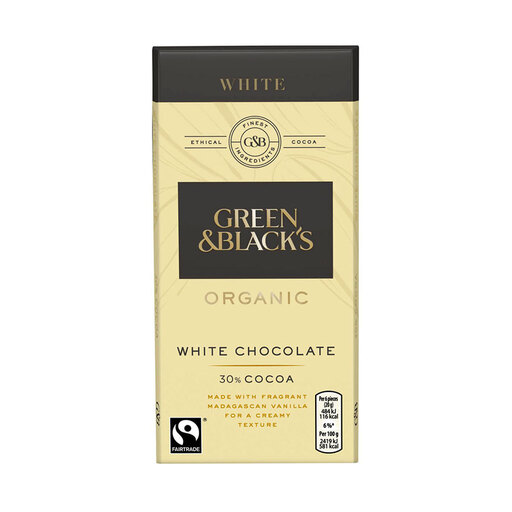
Green & Black’s White Chocolate 90g
A white-chocolate treat if that is the style you prefer, rather than a high-cocoa dark option. Check the current pack’s serving, ingredients and allergen advice, and protect the bar from heat.
View on Joybuy
Common questions
Is dark chocolate a suitable pre-workout snack?
Not on the strength of its cocoa percentage alone. University College London Hospitals NHS Foundation Trust advises that snacks eaten 60–90 minutes before training should include carbohydrate and protein with minimal fat. Choose a snack for the timing and purpose of the session rather than assuming a dark bar fits.
What should I read on a dark chocolate pack?
Check its cocoa percentage, serving size, sugars, saturates, ingredients, allergy advice and storage directions. For example, Waitrose lists 4.4 g sugars and 4.1 g saturates per serving for its Belgian Dark Chocolate 72% and instructs buyers to keep it away from heat and direct sunlight. Use the current physical pack if online information differs.
Can white chocolate replace a high-cocoa dark bar?
Not if a stated high cocoa content is what you are looking for. Waitrose’s Belgian White Chocolate lists sugar, cocoa butter and milk ingredients, while its Belgian Dark Chocolate states 72% cocoa solids. White chocolate remains a separate flavour choice for a treat.
Do England’s HFSS promotion rules decide what schools can serve?
No. England’s school-food requirements and its restrictions on certain retail promotions are separate frameworks. The 2014 Requirements for School Food Regulations define chocolate as confectionery; Department of Health and Social Care guidance says the promotion rules apply to qualifying businesses operating in and selling to England, with product status assessed using nutrient profiling. Check the relevant school-food requirements for a school menu rather than treating a retail classification as the answer.
Do England’s school-food standards cover chocolate brought from home?
Not when it is food occasionally brought in by parents or pupils, according to Department for Education guidance on school food in England. An individual school may have its own policy, so check that policy before packing it.


