
24/7 Customer Support

Free returns

Same-day & Next-day Delivery

Quality Guaranteed

Unlock Your Welcome Offers: FREE Delivery | Up to 80% OFF | Free 30-day JoyPlus trial
Download the APP
A dash cam can provide useful footage after a collision, help clarify an insurance dispute or record an incident while your vehicle is parked. However, choosing one based only on a large resolution number or a long feature list can lead to disappointment.
The most common buying traps include:
For everyday UK driving, 1080P can be adequate for basic incident recording, while 2K or 4K provides more image detail when conditions allow. Higher resolution also uses more storage, so check the supported card capacity and recording bitrate.
HDR helps balance bright and dark areas, such as a vehicle emerging from a shaded road or headlights appearing against a dark background. A night vision dash cam may use a larger aperture, image processing or a low-light sensor. These features can improve visibility, but performance still depends on windscreen reflections, street lighting and camera positioning.
Frame rate is also relevant. A camera recording at 60 frames per second can produce smoother footage than 30FPS, which may help when reviewing fast-moving scenes. It does not automatically guarantee clearer evidence in every situation.
A front-only car camera is simpler to install and usually occupies less space. A front and rear dash cam adds coverage behind the vehicle but requires a longer cable run through the cabin, tailgate or rear door.
Wide-angle lenses reduce the chance of missing events at the sides, but an extremely wide field of view can make distant objects appear smaller. Consider whether the camera can be mounted behind the rear-view mirror without obstructing your view. UK drivers should also keep cables tidy and avoid placing equipment where it interferes with visibility or vehicle controls.
Mirror-style systems, such as a 10-inch rear-view mirror camera, may provide a large display but need careful compatibility checking. Adjustable straps, rear-camera mounting options and cable routing are particularly important for hatchbacks, SUVs and commercial vehicles.
A dashcam with GPS can record information such as speed, time, coordinates and route data. Review the privacy settings before sharing footage, as location information may reveal your regular journeys.
A Wi-Fi dash cam allows footage to be viewed or downloaded through a smartphone app without removing the card. Check whether the app is compatible with your phone and whether the camera creates its own Wi-Fi network.
Loop recording automatically replaces older unlocked files when storage is full. A built-in G-Sensor can detect sudden movement and lock footage after an impact. Locked files can also consume storage, so format the card through the camera periodically and replace it when the manufacturer recommends doing so.
For parking protection, verify whether the camera offers buffered recording, impact detection, time-lapse recording or motion detection. A hardwire kit should normally include suitable low-voltage protection, and installation should be carried out carefully to avoid draining the vehicle battery.
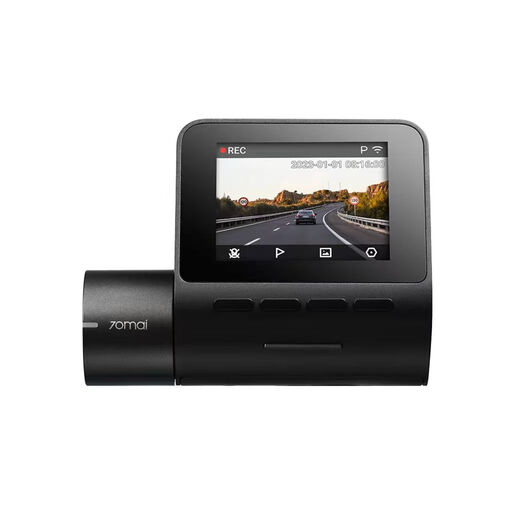
Why This Fits Their Persona: A straightforward front camera for commuters and new dash cam owners who want app access and a built-in screen without adding a rear-camera installation.
Its listing clearly identifies it as a single-channel front camera and states that the microSD card is not included, making the additional cost easier to plan.
1080P recording, 60FPS, HDR, G-Sensor protection, Wi-Fi app control and a 2-inch IPS screen.
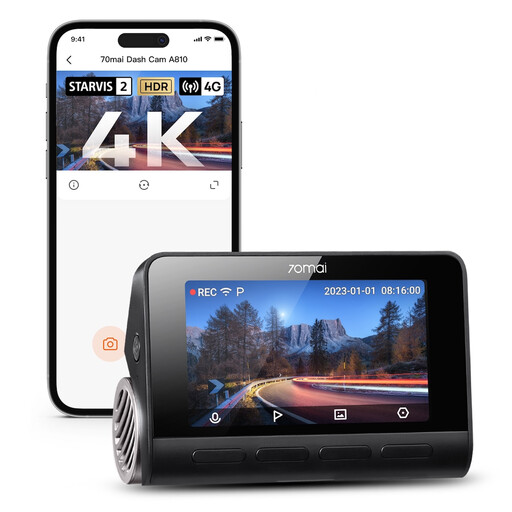
Why This Fits Their Persona: Suitable for drivers prioritising detailed front footage, GPS data and connected features for regular motorway or urban journeys.
The feature list separates built-in functions from optional 4G and parking requirements, including the need for a compatible hardwire kit.
4K recording, Sony STARVIS 2 IMX678 sensor, HDR night vision, built-in GPS, voice control and optional 4G monitoring.
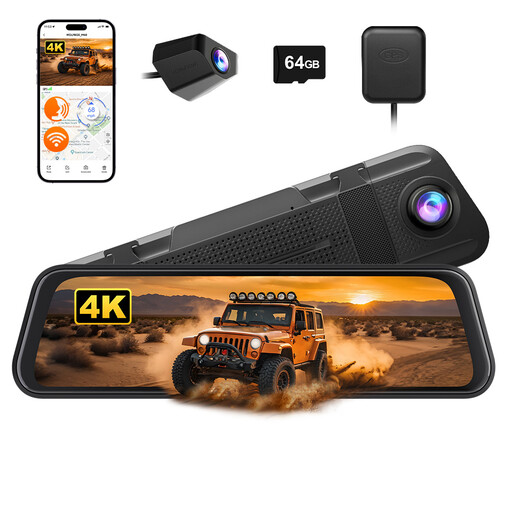
Why This Fits Their Persona: A practical match for taxi, rideshare, delivery and family drivers who want front-and-rear coverage with a large display.
The product information explains the rear-camera mounting choices, 12V–24V support and the separate hardwire requirement for parking monitoring.
4K front and 1080P rear recording, 10-inch screen, GPS, Wi-Fi, ADAS/BSD functions and included 64GB card.
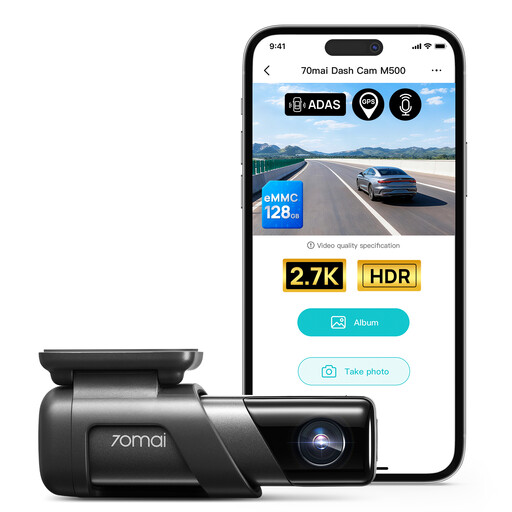
Why This Fits Their Persona: Well suited to drivers wanting a discreet front camera with integrated storage and route tracking for routine use.
The built-in 64GB eMMC storage removes the need to source a separate card, while the listing clearly states that this is a front-only camera.
1944P recording, 170° field of view, HDR night vision, built-in GPS, route tracking and ADAS alerts.
We have compiled a complete, real-time list of products that fully satisfy these strict selection criteria and UK safety regulations.
Before fitting the camera, clean the windscreen and position the lens behind or near the rear-view mirror without blocking your view. Set the date and time, check the recording angle and make a short test recording.
Allow for the cost of a compatible microSD card, particularly with 2K or 4K footage. High-capacity cards may be useful for delivery drivers and long-distance commuters, but locked incident files should be managed regularly. If you need 24-hour parking monitoring, budget for a hardwire kit and consider professional installation. Check the vehicle manufacturer’s guidance before connecting accessories to the fuse box.
Do not assume that footage can be shared without limits. Faces, number plates and audio may involve privacy considerations, particularly when recordings are uploaded publicly or used for business. Review current UK data-protection guidance and the camera’s audio settings for your circumstances.
It can be useful for documenting road incidents and supporting an insurance discussion, provided the footage is clear, accurately dated and stored securely. It should supplement safe driving rather than replace it.
Lifespan depends on heat exposure, power stability, storage-card quality and daily operating hours. Cameras used frequently should have their mount, cable and memory card checked periodically. Replace a card if recordings become corrupted or the camera reports errors.
It can, particularly when the vehicle remains parked for long periods. A suitable hardwire kit with low-voltage cut-off is normally required, but compatibility varies by vehicle and camera. Check the instructions and installation requirements before enabling continuous parking monitoring.