
24/7 Customer Support

Free returns

Same-day & Next-day Delivery

Quality Guaranteed

Unlock Your Welcome Offers: FREE Delivery | Up to 80% OFF | Free 30-day JoyPlus trial
Download the APP
Navigating UK roads comes with its own set of challenges, from dense city traffic to unpredictable country lanes. For many drivers, the peace of mind that comes from having a reliable visual record is invaluable. A dash cam front and rear system provides a complete picture, capturing events that a forward-facing camera alone would miss. This can be instrumental in clarifying fault in an insurance claim or identifying the cause of a parking incident.
As a Joybuy Product Recommendation Officer, my role is to help you understand the features that truly matter. This guide cuts through the clutter to offer practical advice, helping you choose a dual dash cam that fits your needs and budget. We will look at key technologies and present a few carefully selected models for your consideration.
Choosing the right car camera system involves more than just looking at the price. Here are a few critical features to focus on to ensure you get a device that performs when you need it most.
The primary purpose of a dash cam is to capture clear, usable footage. While 1080p (Full HD) is a common standard, higher resolutions like 2.7K or a full 4K dash cam can make a significant difference in capturing fine details like number plates, especially from a distance or while moving.
Equally important is the camera's low-light performance. Look for models equipped with an HDR night vision dash cam function. High Dynamic Range (HDR) technology balances the light and dark areas of an image, preventing overexposure from streetlights or headlights while lifting detail from the shadows. This is often powered by advanced image sensors, such as Sony's STARVIS series, which are specifically designed for clarity in near-darkness.
Your vehicle is vulnerable even when you are not in it. A dash cam with parking mode offers 24/7 protection. When the ignition is off, the camera enters a low-power state. Using a built-in G-sensor, it will automatically start recording if it detects an impact, such as another vehicle bumping into yours. More advanced systems also offer time-lapse recording or AI-powered motion detection. Note that this function almost always requires a separate hardwire kit to provide continuous power without draining your car's battery.
A dash cam with GPS adds another layer of crucial evidence. It automatically embeds your vehicle's speed, location coordinates and the time into the video footage. This data can be invaluable for verifying your account of an incident for an insurance claim or legal purposes.
Based on features, performance and user feedback, here are our recommendations for drivers seeking comprehensive vehicle monitoring.
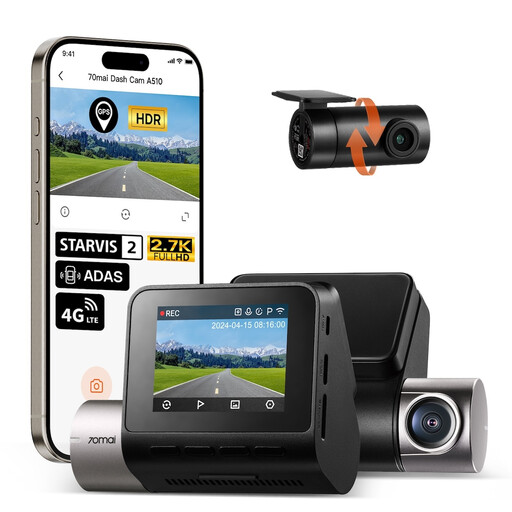
Why It Stands Out: The A510-1 strikes an excellent balance between high-resolution recording and next-generation sensor technology. Its front camera, powered by the Sony STARVIS 2 sensor, delivers 1944P (2.7K) video that is noticeably sharper than standard 1080p, while the dual-channel HDR ensures clarity day and night.
Pros:
Who is it for? This is an ideal choice for the daily commuter or long-distance driver who wants a significant visual upgrade from 1080p and prioritises excellent night-time video quality.
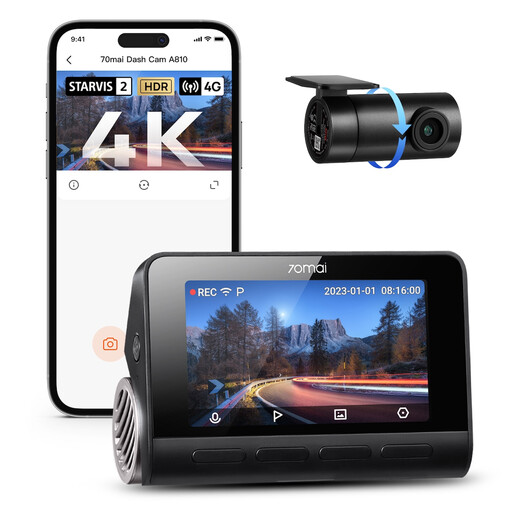
Why It Stands Out: As a true 4K dash cam, the A810-2 offers the highest level of video fidelity. It uses two separate Sony STARVIS 2 sensors for the front and rear cameras, ensuring uncompromising quality across both channels. Its AI-driven parking mode adds an intelligent layer of security not found in many other models.
Pros:
Who is it for? The tech-savvy car owner who demands the best possible video clarity and wants advanced security features like AI detection and the option for remote monitoring.
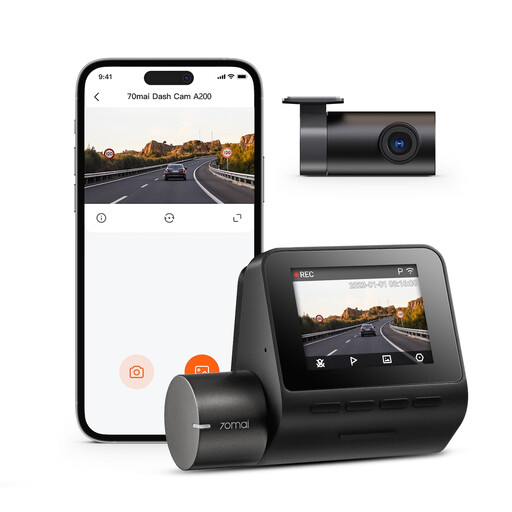
Why It Stands Out: The A200-1 proves that you do not need to spend a fortune for reliable, comprehensive coverage. Its standout feature is the 60 frames-per-second (FPS) recording on the front camera, which produces incredibly smooth video and makes it easier to capture details on fast-moving objects.
Pros:
Who is it for? Drivers looking for a dependable and affordable car camera front and rear system. It is an excellent entry point for new dash cam users or anyone who values smooth video playback over maximum resolution.
These three models represent a strong cross-section of what is available, but every driver's needs are different. If you are looking for a different set of features or want to compare more models, we have a wider selection available.
Browse our full range of front auto cameras to find the perfect fit for your vehicle.
Absolutely. A dual-camera system provides a complete evidentiary record of events around your vehicle. The rear camera is invaluable for capturing rear-end collisions, parking incidents and dangerous tailgating—scenarios a front-only camera would completely miss. This comprehensive view can be decisive when dealing with insurance providers.
A dash cam with parking mode uses an internal G-sensor to detect physical shocks or impacts when the car is parked and the engine is off. Upon detection, it powers on and records a short, protected video file. Some advanced models also use time-lapse recording for continuous, low-frame-rate surveillance or AI to detect suspicious motion. This feature typically requires a hardwire kit, which connects the camera directly to the car's fuse box for a constant power supply.
While not essential for everyone, a 4K dash cam provides the highest possible level of detail, which can be critical for identifying number plates at a distance or in challenging light. It offers a degree of "future-proofing" and maximises your chances of capturing indisputable evidence. However, modern 1080p and 2.7K cameras, especially those with high-quality sensors and HDR, still deliver excellent, clear footage suitable for most situations.