
24/7 Customer Support

Free returns

Same-day & Next-day Delivery

Quality Guaranteed

Unlock Your Welcome Offers: FREE Delivery | Up to 80% OFF | Free 30-day JoyPlus trial
Download the APP
A dash cam can provide useful video evidence after a collision, help document damage in a car park and support safer driving habits. However, product listings often focus on headline resolution while leaving out practical details such as memory-card requirements, hardwiring and rear-camera installation.
For UK motorists, the right choice depends less on impressive-sounding claims and more on how the camera will be used. A commuter may need a compact Wi-Fi dash cam, while a fleet operator could prioritise GPS records, front and rear coverage and reliable parking surveillance.
A 4K dash cam records more pixels than a 2K or Full HD model, but footage quality also depends on the sensor, lens, exposure control and lighting. Reflections, a dirty windscreen or an incorrectly positioned camera can reduce useful detail at any resolution.
A Sony STARVIS dash cam may offer a sensor designed for low-light recording, but buyers should still check the complete specification. Night vision performance is influenced by the aperture, HDR or WDR processing and the road environment.
Parking monitoring usually needs a separate dash cam hardwire kit connected to the vehicle’s fuse box. A standard 12V socket may stop supplying power when the ignition is off, so it cannot necessarily support overnight surveillance.
Hardwire kits should include low-voltage protection to reduce the risk of excessive battery drain. Professional installation may be sensible if you are unfamiliar with fuse-box connections or your vehicle has complex electrical systems.
A front and rear dash cam normally requires a cable to run from the windscreen camera to the rear window or tailgate. Check whether the cable length suits your vehicle and whether it can be routed safely through the headliner, door sill and hatch grommet.
Do not position a camera where it obstructs your view. In the UK, the device should be mounted discreetly and securely, generally behind or close to the rear-view mirror where practical.
Higher resolution produces larger files, so confirm the supported microSD capacity and use a high-endurance Class 10 card where the manufacturer recommends one.
A single front camera is compact and straightforward. A dual system adds rear coverage, while a three- or four-channel camera can monitor the cabin and vehicle sides as well.
A loop recording dash cam automatically replaces the oldest unlocked files when the memory card is full. A G-sensor should lock footage after a sudden impact, although important files should still be backed up promptly through the app or a computer.
A dash cam with GPS can record location, time and speed alongside video. This may help organise journey footage, but speed and route data should be checked for accuracy before being relied upon.
A Wi-Fi dash cam or dash cam with app control allows clips to be viewed and downloaded on a smartphone without removing the card. Wi-Fi generally works locally between the camera and phone; it does not automatically provide remote viewing from another location.
For remote alerts and live access, a 4G dash cam or compatible 4G hardwire accessory is required. This may involve a SIM card, data plan and cloud service costs.
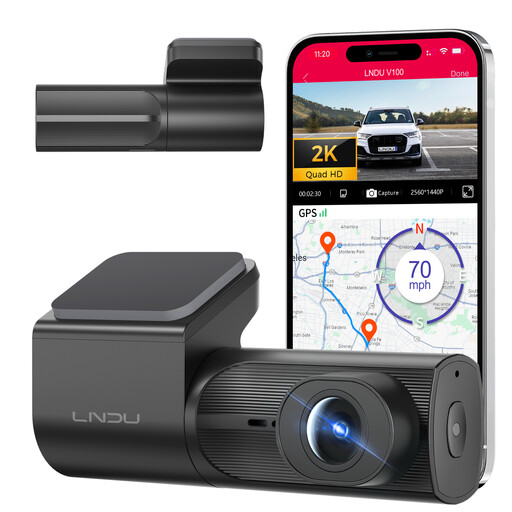
Why This Fits Their Persona: A compact front-facing option for UK commuters who want app access and everyday incident recording without moving to a multi-camera setup.
Its listing clearly states that 24-hour parking mode requires a separately purchased hardwire kit, avoiding the assumption that the standard car charger provides overnight power.
2K recording, built-in Wi-Fi, app control, G-sensor emergency locking and loop recording.
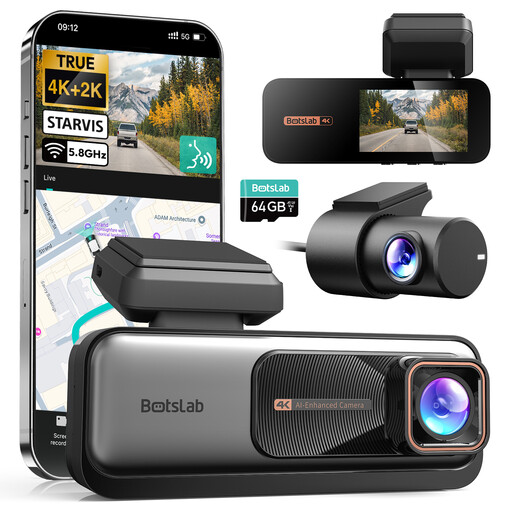
Why This Fits Their Persona: A suitable match for drivers who want high-resolution front footage, rear coverage and integrated trip information in one system.
The specification distinguishes 4K front recording from 2K rear recording and notes that parking monitoring needs a separate hardwire kit.
Sony IMX415 STARVIS sensor, 170° front and 150° rear lenses, GPS, 5.8GHz Wi-Fi and an included 64GB microSD card.
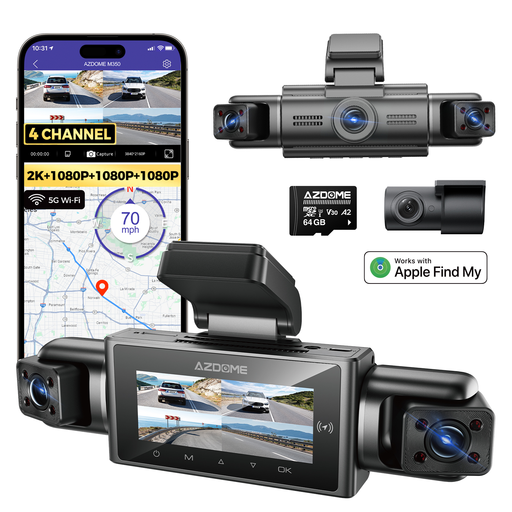
Why This Fits Their Persona: Designed for vehicle owners needing wider surveillance, including front, rear and side views for enhanced parking and security coverage.
The four-channel layout provides a clearly stated coverage plan rather than relying on a wide-angle front lens alone. Buyers should still plan cable routing and storage capacity.
2.5K front camera, three 1080P cameras, built-in GPS, 5G Wi-Fi, voice control and Apple Find My compatibility.
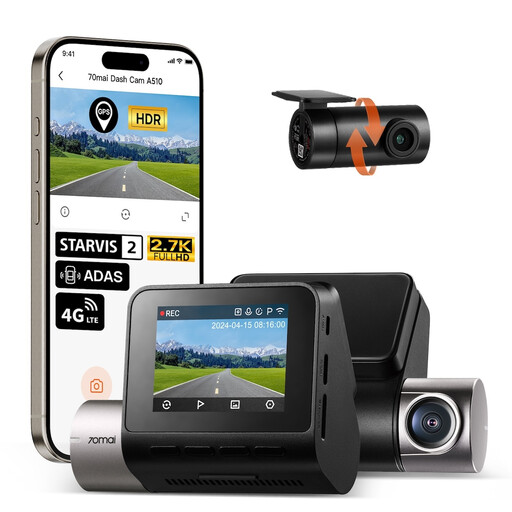
Why This Fits Their Persona: A dual-camera solution for drivers who regularly travel for work and want GPS records, app access and parking functions.
Its listing identifies the separate UP04 hardwire kit requirement for parking mode and states that a microSD card is not included.
1944P front and 1080P rear recording, Sony STARVIS 2 IMX675, GPS, ADAS alerts and app synchronisation.
We have compiled a complete, real-time list of products that fully satisfy these strict selection criteria and UK safety regulations.
Before fitting a dash cam, check the following:
No. A standard dash cam can usually operate from the vehicle’s 12V accessory socket while driving. Hardwiring is generally needed for parking mode, remote monitoring or recording when the ignition is off. Confirm connector type and vehicle compatibility before purchase.
The duration depends on resolution, camera channels, bitrate and memory-card capacity. A 4K front and rear system uses storage more quickly than a single 2K camera. Loop recording replaces older unlocked files when the card is full, while G-sensor-protected clips may remain until manually deleted or the card is formatted.
The main ongoing costs can include a high-endurance microSD card, professional installation and, for a 4G dash cam, a compatible SIM or data plan. Wi-Fi file transfer normally uses a direct connection to your phone and does not by itself require a mobile subscription.