
24/7 Customer Support

Free returns

Same-day & Next-day Delivery

Quality Guaranteed

Unlock Your Welcome Offers: FREE Delivery | Up to 80% OFF | Free 30-day JoyPlus trial
Download the APP
A dash cam can provide useful video evidence after a collision, help document damage in a car park and support safer driving habits. However, choosing the right model is not simply a matter of selecting the highest resolution on the box. Some products combine impressive claims with inconvenient installation requirements, limited storage or unclear camera specifications.
As the Joybuy Product Recommendation Officer, I focus on separating practical features from marketing language. Here are the main points UK motorists should check before buying a car dash camera.
A product may be described as a “dual-channel dash cam”, yet the package may contain only one camera or may require a separately purchased rear unit. Always check the number of included cameras, the resolution of each channel and whether the rear camera cable is long enough for your vehicle.
For example, the DV3 Driving Recorder is listed as dual-channel, while the supplied specifications identify one front camera. It should therefore be treated as a single-camera Full HD driving recorder unless the retailer confirms otherwise.
A parking mode dash cam generally needs power while the ignition is switched off. This often requires a separate hardwire kit connected to the fuse box. A standard cigarette-lighter connection usually stops supplying power when the vehicle is parked.
Hardwiring should be carried out carefully, particularly in vehicles with complex electrical systems. If you are unfamiliar with automotive wiring, professional or semi-professional installation is advisable. Check whether the required kit is included before comparing prices.
High-resolution footage uses considerable storage. A 4K dash cam can fill a memory card more quickly than a 1080p model, especially when front and rear channels record simultaneously.
Look for loop recording, which automatically replaces older unlocked files when storage is full. Also check whether a microSD card is included, the maximum supported capacity and whether the manufacturer recommends a high-endurance card. Important footage should be locked or copied promptly rather than left solely on the camera.
Full HD 1920 × 1080 is suitable for basic front-facing recording, while 2K and 4K capture more image detail in favourable conditions. Resolution alone does not guarantee readable number plates. Lens quality, sensor performance, exposure control, weather and the distance from the subject all affect results.
A night vision dash cam may use HDR, WDR or an infrared interior camera to improve visibility in low-light situations. These features can assist with contrast, but glare from headlights, rain and poorly lit roads may still affect footage.
Choose coverage according to your regular driving:
Check the camera angles carefully. A wide lens can cover more of the road, but excessive wide-angle distortion may make distant details appear smaller.
A GPS dash cam can record location, route and speed data alongside video. This may make files easier to organise, although drivers should check local privacy and data-handling considerations before sharing recordings.
A Wi-Fi dash cam or dash cam with app control allows footage to be viewed or downloaded to a smartphone without removing the memory card. Confirm that the app supports your phone and that Wi-Fi is being used for direct camera connection rather than mobile-network access.
For UK use, mount the camera behind or close to the rear-view mirror where possible. It must not obstruct the driver’s view, and cables should be routed securely away from airbags and pedals.
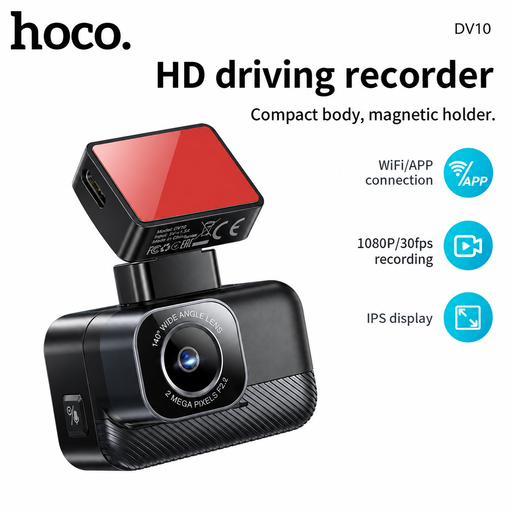
Why This Fits Their Persona: A compact front-facing option for commuters who want a straightforward driving recorder with a built-in display and smartphone connectivity.
The specifications clearly state 1080p front recording, Wi-Fi and support for memory cards up to 128GB, helping buyers avoid vague resolution and storage descriptions.
1.47-inch IPS display, 140° lens angle, Wi-Fi app operation and a lightweight 40g body.
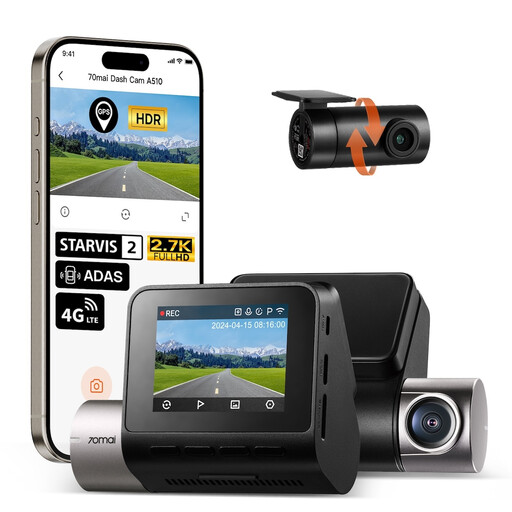
Why This Fits Their Persona: Suitable for drivers seeking front and rear recording, GPS, app access and an option for 24-hour parking surveillance.
The front and rear resolutions are specified as 1944p and 1080p. The listing also states that the hardwire kit and microSD card are separate considerations.
Dual-channel HDR recording, built-in GPS, app and voice control, plus an optional parking mode requiring the UP04 hardwire kit.
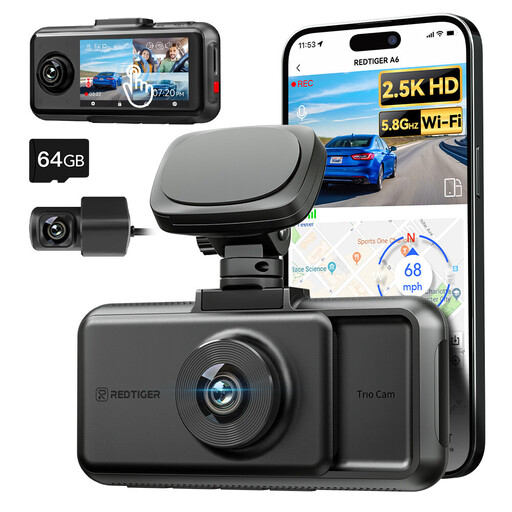
Why This Fits Their Persona: Designed for drivers who need front, rear and interior coverage, including taxi, delivery and frequent long-distance use.
The listing distinguishes between dual recording at 4K front plus 1080p rear and triple recording at 2.5K front, 1080p interior and 1080p rear.
Three recording channels, adjustable cameras and a rear camera with 360° rotation; parking mode requires hardwiring.
We have compiled a complete, real-time list of products that fully satisfy these strict selection criteria and UK safety regulations.
Using a dash cam is generally permitted, but it must not obstruct the driver’s view or interfere with safe vehicle operation. Recordings may contain personal data, so store and share footage responsibly. If recording inside a taxi or private-hire vehicle, consider privacy notices and applicable data-protection responsibilities.
Not always. Many models can record while driving through a 12V accessory socket. A hardwire kit is commonly needed for 24-hour parking mode dash cam functions because it provides controlled power while the engine is off. Check compatibility with your vehicle before installation.
Lifespan depends on heat exposure, usage, memory-card quality and power stability. Models using a supercapacitor may be suited to wider temperature ranges than those relying mainly on a small internal battery. Regularly format the card according to the instructions, inspect cable connections and replace worn memory cards to maintain reliable recording.