What to check before buying
Start with your course’s operating system and software instructions, then decide whether local GPU work is required. Compare memory, storage and desk connections on the exact configuration you intend to order.
| Concern |
What to check |
Who this matters to |
| Course software |
Confirm the required operating system, Python and framework versions, and installation instructions. PyTorch currently requires Python 3.9 or later. |
If my course specifies particular packages, I need to know they will run before choosing hardware. Around 40% of consumers would put course-software compatibility first. |
| Local GPU work |
Ask whether coursework requires CUDA; if it does, check the exact NVIDIA GPU and the supported framework build. |
When I plan to run CUDA-based coursework locally, the compute route matters more to me than a general 'AI' label. Around 30% of consumers would prioritise local acceleration. |
| Memory and storage |
Check installed RAM and SSD capacity, not just a product family’s available options; ask whether the course provides remote compute. |
If I keep datasets locally while running a notebook, editor and other study applications, I need a configuration that fits that workload. For around 20% of consumers, capacity and multitasking would come first. |
| Desk setup |
Match display outputs to your monitors and check the box contents, warranty and return terms for the exact desktop. |
I may already have a monitor, but I need to know whether the computer connects to it and which other items I must provide. Around 10% of consumers would make the complete desk setup their primary concern. |
Relevant brands for reference
These examples show why the model and configuration matter more than the brand name alone.
Dell
Precision towers are worth examining if you need a configurable Windows or Linux workstation with room to adapt the hardware.
- Dell’s UK Precision 5860 configuration offers operating-system and component choices, including ECC memory options.
- Those are model-level choices: check which components are installed in the configuration you select.
Lenovo
ThinkStation models are relevant when a confirmed workflow calls for substantial expansion or a specialist local-compute setup.
- Lenovo describes six PCIe Gen 5 expansion slots for the ThinkStation P8.
- That expansion is not a requirement for ordinary notebook-based study. For the separate ThinkStation PGX, check optional peripherals when planning the desk.
Apple
Mac Studio is relevant if your course tools are confirmed to work on macOS and you want a compact, fixed desktop.
- Apple’s UK Mac Studio specifications list configurable unified memory and support for external displays, subject to the selected configuration.
- Its Apple graphics should not be assumed to meet coursework that explicitly requires NVIDIA CUDA.
Joybuy desktops for local GPU work
These desktops are relevant if you are considering local GPU work at a home-office desk. Their operating systems and configurations differ, so match a model to your course instructions rather than treating an NVIDIA GPU alone as proof of software compatibility.
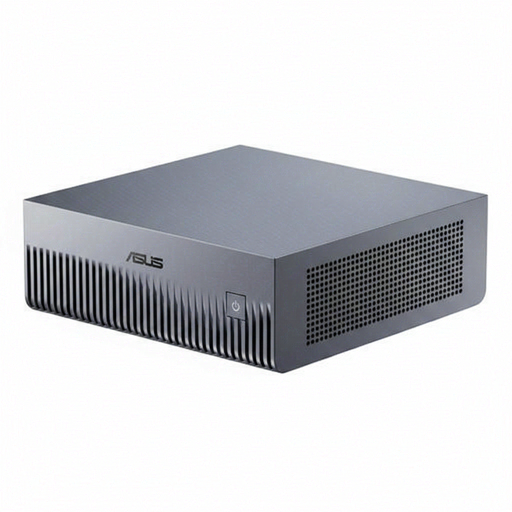 Image unavailable
ASUS Ascent GX10, NVIDIA GB10 Grace Blackwell, 1TB
Consider this NVIDIA DGX OS desktop for a planned local-compute workflow only after checking that your course tools work with its operating system and processor architecture.
The listed configuration has 128GB unified memory and a 1TB NVMe SSD. Check memory expansion options and the included desk equipment if either matters to your setup.
View on Joybuy
 Image unavailable
CyberPowerPC JOYB1013, RTX 5080 16GB, 2TB SSD
This Windows tower is a candidate for study that may include local NVIDIA GPU work; confirm the course’s framework and GPU requirements before choosing it.
It lists an AMD Ryzen 7 9800X3D, 32GB DDR5 memory, a 2TB NVMe SSD and Windows 11 Home. The monitor, keyboard and mouse are not included.
View on Joybuy
 Image unavailable
CyberPowerPC JOYB1010, RTX 5070 12GB, 1TB SSD
Consider this Windows tower if your study plans call for a local NVIDIA GPU, subject to checking the exact course software and supported compute route.
It lists an Intel Core Ultra 7 265KF, 32GB DDR5 memory, a 1TB NVMe SSD and Windows 11 Home. The monitor, keyboard and mouse are not included.
View on Joybuy
 Image unavailable
Stormforce Cyclone, Core i7, RTX 5080, 2TB SSD
This desk-bound Windows tower is relevant to possible local GPU work, provided its exact GPU and software environment match your course.
It lists 32GB RAM, a 2TB SSD and Windows 11. The listing gives a tower weight of 22kg; the monitor, keyboard and mouse are not included.
View on Joybuy
 Image unavailable
Stormforce Defiance, Ryzen 7 5700X, RTX 5070, 2TB SSD
This Windows desktop is a candidate for local NVIDIA GPU work once you have checked the course’s framework and GPU requirements.
It lists 32GB RAM, a 2TB SSD and Windows 11. Check the box contents against the monitor, keyboard and mouse needed for your desk.
View on Joybuy
Common questions
Do I need an NVIDIA GPU to study data science?
No, not automatically: notebook-based learning and CPU-supported packages can use a CPU route. If your course requires CUDA or an NVIDIA-specific workflow, check the exact GPU and framework build; PyTorch offers CPU, CUDA and ROCm installation choices.
What should I ask my university before buying a desktop?
Ask which operating system, Python and framework versions your modules use, whether GPU work must run locally, and whether remote compute is provided. University of York IT Services advises checking with your department where specialist course requirements may apply.
Will a desktop include everything I need at my desk?
Not necessarily: check the exact model’s box contents and display connections against the equipment you own. Lenovo, for example, lists the monitor and wireless keyboard for its ThinkStation PGX as optional items.
Can I cancel an online desktop order if it does not suit me?
For most UK distance purchases, GOV.UK says you can tell the seller you want to cancel within 14 days of receiving the item. Check the terms before ordering a customised computer; a fault or misdescription is a separate matter from changing your mind, so raise it with the seller even if a change-of-mind exception applies.
What can I do with an old desktop I am replacing?
Use an electrical-waste collection route rather than household rubbish. GOV.UK says a retailer must accept an old electrical product free of charge on a like-for-like basis when you buy a replacement.


