What should you check first?
For data-science study with limited sockets, settle the computer-and-screen arrangement before comparing memory, storage and software compatibility.
All-in-one desktop
Choose it when: One socket must cover the computer-and-screen setup, subject to the exact model’s power arrangement.
Trade-off: The display is part of the system rather than a separate monitor you can choose independently.
Mini PC or Mac mini
Choose it when: You already have a suitable monitor and want a compact, separate computer.
Trade-off: The monitor remains a separate device with its own power needs.
NVIDIA-equipped desktop
Choose it when: Course instructions or intended local work call for a specified NVIDIA GPU or CUDA environment.
Trade-off: A separate tower or workstation does not solve the computer-and-monitor socket constraint by itself.
| Concern |
What to check |
Who this matters to |
| Computer and screen power |
Check whether the display is integrated and confirm the exact system’s supplied power arrangement. |
If I have one usable socket for both computer and screen, I want to avoid a separately powered desktop and monitor. Around 36% of consumers put an integrated setup first. |
| Local coursework capacity |
Check installed memory and SSD capacity against the applications, files and datasets your course uses. |
When coding, notebooks and local files are my main work, I need a configuration that fits those tasks rather than a particular chassis label. Around 29% of consumers put general study capacity first. |
| Accelerated-work compatibility |
Match the required operating system, framework and any specified CUDA or GPU requirements to the exact configuration. |
If my module requires accelerated work on my own machine, I need its software environment to match the desktop I buy. Roughly 21% of consumers put local accelerator compatibility first. |
| Compact separate computer |
Check the computer’s size and monitor connections, as well as how the existing display will be powered. |
With a suitable monitor already on my desk, I may want a small computer without replacing the screen. Around 14% of consumers put that separate-PC flexibility first. |
Brands to consider
These brands illustrate different desktop approaches; suitability depends on the particular model and configuration, not the brand alone.
Lenovo
Relevant when comparing an integrated Windows study desk with a separate workstation route.
- Lenovo describes its all-in-one systems as combining display and core computer components, and lists an IdeaCentre AIO configuration with 16GB of memory.
- ThinkStation configurations can serve substantially different computing needs; check the exact course requirement before choosing workstation hardware.
Apple
Relevant for macOS study, with an integrated iMac or a Mac mini used alongside an external monitor.
- Apple lists a 24-inch display and configurations of up to 32GB unified memory for the iMac; its Mac mini connects to external displays.
- PyTorch supports macOS but notes that performance varies by system and GPU capability. Check the course instructions if they specify CUDA or another platform.
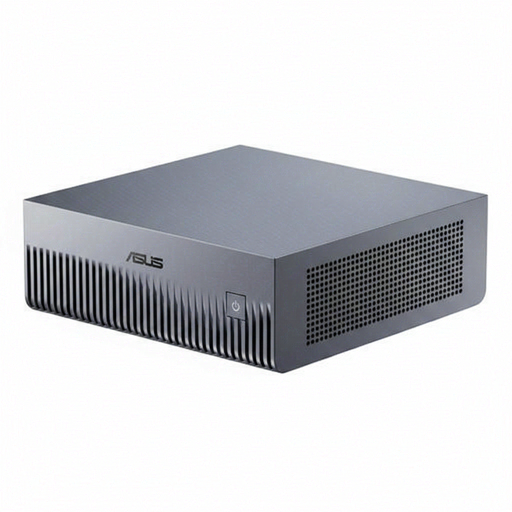
ASUS
Relevant for a compact separate-PC setup when you already have a suitable monitor.
- ASUS describes the NUC 14 Pro as a less-than-one-litre mini PC with memory and NVMe storage options.
- A NUC is not an integrated display; account for the monitor’s connection and power.
Dell
Relevant when a course or local workload warrants checking configurable workstation graphics and memory.
- Dell lists Precision 3280 configurations with up to 64GB memory and an NVIDIA RTX 4000 Ada graphics option with 20GB GDDR6.
- Those are configuration options, not features of every Precision 3280; the workstation also needs a separate display.
Joybuy desktop choices
These are separate computers for a study setup with an external display: compact systems for desks with an existing monitor and Windows towers to consider when the exact coursework calls for their configuration. Check the screen’s power needs alongside the computer’s.
 No image available
ASUS Ascent GX10, NVIDIA GB10 Grace Blackwell, 128GB, 1TB
Consider this separate computer only if its NVIDIA DGX OS and Arm-based platform fit your intended technical work and course software.
The product name specifies 128GB unified memory and a 1TB NVMe SSD. Arrange a compatible display and confirm the required power supply and what is supplied before ordering.
View on Joybuy
 No image available
Apple Mac mini (2026), M5 Pro, 24GB, 512GB
This compact macOS computer is a choice to assess if you already have a powered monitor and your course tools run on macOS. PyTorch supports macOS but cautions that performance varies by system and GPU capability.
The listed variant has a 15-core CPU, 16-core GPU, 24GB memory and a 512GB SSD. The display, keyboard and mouse are not included; check module requirements before choosing it for CUDA-specific work.
View on Joybuy
No image available
Apple Mac mini (2026), M6, 24GB, 512GB
Assess this separate macOS computer if you have a powered monitor and the required course applications support macOS; check any CUDA-specific instructions before buying.
The listed variant has a 12-core CPU, 12-core GPU, 24GB memory and a 512GB SSD. The display, keyboard and mouse are not included.
View on Joybuy
 No image available
CyberPowerPC JOYB1013, Ryzen 7 9800X3D, RTX 5080 16GB
Consider this Windows tower if your local coursework calls for a separate NVIDIA-equipped desktop; confirm the required software and GPU configuration with the course instructions.
Its product name specifies 32GB DDR5 memory, a 2TB NVMe SSD and Windows 11 Home. A monitor is not included, so plan its placement and power separately.
View on Joybuy
 No image available
Stormforce Defiance, Ryzen 7 5700X, RTX 5070, 32GB, 2TB
Assess this Windows tower against the course’s local software and GPU requirements rather than assuming an NVIDIA card is necessary for every data-science module.
The product name lists 32GB memory, a 2TB SSD and Windows 11. The listed tower weighs 24kg; allow for suitable placement, and confirm what monitor equipment is supplied.
View on Joybuy
Questions about study desktops
Should I start with an all-in-one if I have one usable wall socket?
Yes, it is the form factor to examine first because the display and core computer share an enclosure, as Lenovo describes for its all-in-one systems. Confirm the exact model’s power arrangement, memory, storage and compatibility with your course software before choosing it.
Can I use a Mac for PyTorch coursework?
PyTorch says it can be installed and used on macOS, although performance can vary with the system and GPU. Check your module’s packages and whether it specifically requires CUDA before choosing a Mac.
Do I need an NVIDIA GPU to study data science?
Not automatically: PyTorch offers a CPU installation path as well as accelerated options. Consider a local NVIDIA-equipped desktop when your course instructions or intended local workload specify a compatible GPU or CUDA environment, and check the exact model against those requirements.
What should I check before plugging in a desktop in Great Britain?
Check that the equipment suits the electrical supply and that its plug and cable are in good condition. The Health and Safety Executive advises checking the fuse rating against the equipment’s rating plate or instructions; also confirm the power leads and adapters supplied with the exact computer and monitor.


