What matters when choosing?
Confirm the course software and whether computing must happen locally, then assess the monitor at the desk where you will use it. Those decisions establish whether a compact computer, an expandable tower or a more specialised workstation is worth considering.
| Concern |
What to check |
Who this matters to |
| Screen readability |
Check the monitor’s stated brightness and anti-glare finish, then whether its stand or mount lets you turn it away from reflections. Direct sunlight may still call for repositioning or blinds. |
I need to read code and charts beside the window without fighting reflections throughout a study session. Around 42% of consumers put screen readability first. |
| Course-compatible computing |
Ask the course which operating system, software and remote-computing options it requires; match memory, storage and monitor connections to that guidance. |
If my assignments centre on notebooks and ordinary analysis, I want the required tools to run without buying hardware for work I will not do locally. Roughly 33% of consumers make course-compatible computing their primary concern. |
| Local acceleration and expansion |
Confirm the framework and its supported GPU platform before choosing graphics hardware, and check whether future component upgrades are actually needed. |
For local model training or larger future projects, I need to know whether a GPU and room to expand will serve the specified workload. Around 25% of consumers prioritise local acceleration or expansion. |
Joybuy products for these setups
These choices include a compact ASUS AI desktop and Windows towers with dedicated graphics. Confirm that each computer supports your course software before choosing one, and assess the monitor or any included display separately for the bright-window position.
 No image available
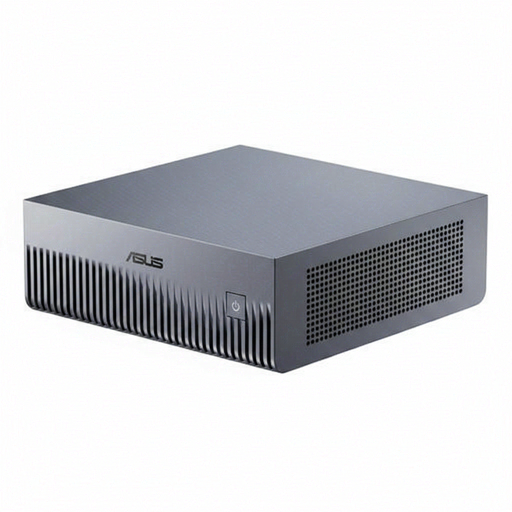
ASUS Ascent GX10, NVIDIA GB10, 128GB, 1TB
Consider this compact desktop only if the course tools can run on its NVIDIA DGX OS platform.
The named configuration has 128GB unified memory and a 1TB NVMe SSD. Confirm display inclusion and connections, the required power source and whether its fixed memory suits future work.
View on Joybuy
 No image available
CyberPowerPC JOYB1013, Ryzen 7 9800X3D, RTX 5080, white
This Windows tower is worth considering when a required local workflow can use its dedicated NVIDIA graphics; confirm framework compatibility before choosing it.
The named configuration includes 16GB graphics memory, 32GB DDR5 system memory, a 2TB NVMe SSD and Windows 11 Home. A monitor and peripherals are not included.
View on Joybuy
 No image available
CyberPowerPC JOYB1010, Core Ultra 7 265KF, RTX 5070, black
Consider this Windows tower for specified local graphics work, subject to the course’s software and GPU requirements.
The named configuration has 12GB graphics memory, 32GB DDR5 system memory, a 1TB NVMe SSD and Windows 11 Home. The monitor and peripherals are not included; connect a display to the NVIDIA graphics card.
View on Joybuy
 No image available
Stormforce Cyclone, Core i7, RTX 5080, 32GB, 2TB
This tower is a conditional choice for local work that calls for dedicated graphics; check the course framework before relying on the GPU.
The named configuration includes 16GB graphics memory, 32GB RAM, a 2TB SSD and Windows 11. The monitor, keyboard and mouse are not included; allow space for the tower and its ventilation.
View on Joybuy
 No image available
Stormforce Defiance, Ryzen 7 5700X, RTX 5070, 32GB, 2TB
Consider this tower if the course requires compatible local graphics computing rather than assuming its GPU will help with every assignment.
The named configuration includes 12GB graphics memory, 32GB RAM, a 2TB SSD and Windows 11. Check whether a monitor is included and allow room for the tower’s ventilation.
View on Joybuy
Frequently asked questions
Do I need a GPU desktop for data-science study?
Not automatically: establish whether assignments run locally and whether the required framework uses GPU acceleration. PyTorch offers CPU, CUDA and ROCm installation choices, while TensorFlow’s supported GPU routes depend on the operating system and setup.
What matters most for a monitor beside a bright window?
Check reflections, stated brightness and whether you can adjust the screen’s position. HP explains that anti-glare treatment reduces ambient reflections, but direct sunlight may still require a different screen angle or blinds.
Can a Mac mini work for data-science coursework?
Yes, if the required tools run on macOS and a compact desktop with an external monitor suits your desk. Check any local acceleration requirement carefully: TensorFlow says there is currently no official GPU support for macOS.
What should I ask my course before ordering?
Ask which software, operating system, hardware and connected devices the course requires, and whether university or cloud computing is available for demanding work. The University of Bristol advises checking with your school because specialist requirements can vary.
What should I do with an old desktop or monitor?
Keep unwanted electrical equipment out of household rubbish and check the appropriate local electrical recycling arrangements. GOV.UK advises against putting electrical waste in household rubbish when it no longer works or is no longer wanted.


