Who is each setup for?

Learners with CUDA-dependent projects

If a course requires local NVIDIA CUDA acceleration or other GPU-dependent tools, check the exact graphics configuration and software installation path before choosing a desktop. TensorFlow documents distinct GPU requirements for Linux and WSL2.

Notebook and analytics-first learners

For Python or R notebooks, SQL, visualisation and CPU-based exercises, start with the installed memory, storage, processor and display arrangement. A workstation family name alone does not identify the configuration you will receive.

People studying at a shared desk

Check how the computer fits alongside the office displays, input devices and cables. The Health and Safety Executive treats equipment, furniture and working conditions as parts of the workstation, not just the computer.

What matters when choosing?

CPU-focused tower

Choose when: Study centres on notebooks, analysis and local development without a requirement for local CUDA training.

Keep in mind: An integrated-graphics configuration does not establish CUDA capability; confirm the delivered memory and storage rather than relying on the processor name.

NVIDIA-equipped tower

Choose when: Your modules or projects require repeated local CUDA-dependent work and specify a compatible software route.

Keep in mind: An NVIDIA card alone does not establish framework compatibility. TensorFlow directs current Windows GPU workflows towards WSL2 rather than native Windows.

Compact Apple silicon desktop

Choose when: Desk space is limited and the required applications work on macOS, potentially including PyTorch with Apple silicon MPS acceleration.

Keep in mind: Apple describes the PyTorch MPS backend as beta, and TensorFlow says macOS has no official GPU support. It is not a substitute for a required CUDA setup.

ConcernWhat to checkWho this matters to
Software and GPU compatibility Confirm the course framework and version, whether local GPU work is required, and the exact GPU and operating-system path. If my project requires local CUDA training, I need hardware and an installation path that match the course requirements. Around 36% of consumers put that compatibility first.
Memory and local storage Check installed RAM and SSD capacity against your datasets and concurrent applications, not a product line's maximum configuration. When notebooks, datasets and development tools run together, I need enough capacity in the delivered machine. For around 29% of consumers, that is the primary concern.
Shared-desk fit Match display connections, chassis space and peripherals to the desk; check acoustic information for the intended configuration. I share a workstation and need a computer that connects to its displays without crowding the desk. Around 21% of consumers place workstation fit first.
Configuration and upgrades Check the full configuration code, included components and available upgrade options. If my coursework changes, I want to know what the supplied desktop contains and what I could alter later. That is the leading need for around 14% of consumers.

Mistakes to avoid

  • Assuming an NVIDIA card makes current TensorFlow GPU work run on native Windows

    TensorFlow says native-Windows CUDA GPU support ended after TensorFlow 2.10; its documented route for later Windows GPU workflows uses WSL2.

    Ask which TensorFlow version your course expects, then check the required GPU, drivers and Linux or WSL2 installation steps before ordering.

  • Reading a workstation family name as a complete specification

    Lenovo lists both integrated-graphics and NVIDIA graphics configurations within its ThinkStation P3 Tower Gen 2 range. The family name does not establish which GPU or memory configuration is supplied.

    Check the full configuration code and written specification for installed RAM, storage, graphics, operating system and ports.

  • Choosing the computer without planning the shared workstation

    A compact chassis does not, by itself, settle display placement, cable access or the arrangement of input devices. The Health and Safety Executive advises assessing the whole workstation, including equipment, furniture and working conditions.

    Check the available displays, connections, power sockets and desk space. If noise may disturb colleagues, look for acoustic information for the exact configuration.

  • Leaving disposal of the old desktop until replacement day

    UK rules cover waste electrical and electronic equipment, and GOV.UK describes retailer take-back responsibilities for applicable same-type electrical waste.

    Ask the seller what take-back route applies to your replacement, or arrange an appropriate local electrical-waste collection route.

Brands and product lines to consider

Lenovo

Lenovo's ThinkStation P3 Tower lines are conventional workstation options for buyers checking Windows or Linux configurations and expansion.

  • Lenovo lists professional NVIDIA graphics options and PCIe expansion for the P3 Tower line.
  • P3 Tower Gen 2 configurations include integrated-graphics as well as NVIDIA graphics options; verify the exact build.

HP

The HP Z2 Tower G9 line is relevant when selecting a specified tower configuration for local, CPU-focused study.

  • HP describes configurable memory and professional graphics options across the line.
  • The cited UK Core i7 and Core i9 listings have Intel UHD Graphics 770; do not treat those particular configurations as NVIDIA CUDA desktops.

Apple

Mac mini is a compact desktop option when the required development tools are compatible with macOS.

  • Apple lists a five-by-five-inch design and multiple-display support, and documents PyTorch acceleration through Apple silicon MPS.
  • Apple describes the MPS backend as beta. TensorFlow separately says there is currently no official GPU support for macOS.

Joybuy desktop choices

These desktops span a compact NVIDIA development machine, Windows towers with specified graphics cards, and a compact Mac mini. Match each configuration to your course software and shared-desk setup rather than treating the graphics cards as interchangeable.
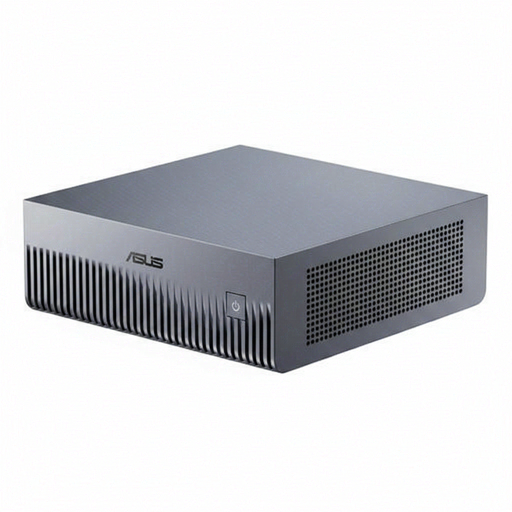
ASUS Ascent GX10 desktop computer

ASUS Ascent GX10, NVIDIA GB10, 128GB, 1TB

For local development where the required tools support its NVIDIA DGX OS setup; confirm course compatibility with this Linux and Arm configuration. It has NVIDIA GB10 Grace Blackwell, 128GB unified memory and a 1TB NVMe SSD. The memory is not user-upgradeable; check whether the required compatible 180W EPR USB-C power source is included.

View on Joybuy

Lenovo Legion T7 34IAS10 tower computer

Lenovo Legion T7 34IAS10, RTX 5070 Ti, 32GB, 1TB

For Windows-based desktop study where an NVIDIA-equipped tower fits the workspace; check the framework and WSL2 or Linux requirements if coursework depends on CUDA. This Windows 11 Home configuration has an Intel Core Ultra 7 265K, 32GB DDR5, a 1TB NVMe SSD and an RTX 5070 Ti. Allow room for its stated 34L chassis and check the display peripherals and acoustic information.

View on Joybuy

CyberPowerPC JOYB1013 tower computer

CyberPowerPC JOYB1013, RTX 5080 16GB, 32GB, 2TB

For local projects that call for an NVIDIA GPU, subject to the course's framework and installation requirements. This Windows 11 Home configuration has an AMD Ryzen 7 9800X3D, 32GB DDR5, a 2TB NVMe SSD and a GeForce RTX 5080 with 16GB GDDR7. The monitor, keyboard and mouse are not included; check tower space and acoustic information for the shared desk.

View on Joybuy

CyberPowerPC JOYB1010 tower computer

CyberPowerPC JOYB1010, RTX 5070 12GB, 32GB, 1TB

For Windows desktop study with several local applications or a project requiring an NVIDIA GPU; confirm the required drivers, framework version and operating-system path. This Windows 11 Home configuration has an Intel Core Ultra 7 265KF, 32GB DDR5, a 1TB NVMe SSD and a GeForce RTX 5070 with 12GB graphics memory. The monitor, keyboard and mouse are not included; check desk space and acoustic information.

View on Joybuy

Apple Mac mini 2026 with M5 Pro

Apple Mac mini (2026), M5 Pro, 24GB, 512GB

For a space-constrained desk and coursework compatible with macOS; check exact software versions before relying on Apple silicon MPS, which Apple describes as beta. This M5 Pro configuration has a 15-core CPU, 16-core GPU, 24GB unified memory and a 512GB SSD. TensorFlow says macOS has no official GPU support. The display, keyboard and mouse are not included.

View on Joybuy

Common questions

Do I need a discrete GPU to study data science?

Not for every course: start with the required software and whether projects call for local GPU training. If they specifically require CUDA, check the exact NVIDIA GPU and installation path; TensorFlow documents Linux and WSL2 routes for current GPU workflows rather than native-Windows CUDA support after TensorFlow 2.10.

Can a Mac mini handle local machine-learning work?

It can run compatible local tools, including PyTorch workflows using Apple silicon MPS acceleration where the software prerequisites are met. Apple describes MPS support as beta, and TensorFlow says there is currently no official GPU support for macOS, so check the course framework before choosing it.

What should I check at a shared-office desk?

Check the displays and their connections, input devices, available space and the overall workstation arrangement. The Health and Safety Executive says employers must assess display-screen workstations when workers use them daily for continuous periods of an hour or more; its assessment considers equipment, furniture and working conditions.

What should I do with the desktop I replace?

Use an appropriate electrical-waste route rather than treating the computer as ordinary rubbish. GOV.UK describes retailer take-back responsibilities for applicable same-type electrical waste; ask the seller how its take-back arrangement works or check your local collection options.