What matters when choosing?
Start with the syllabus: a CUDA requirement, a macOS-compatible workflow and general notebook study lead to different configuration checks. Then consider the space and equipment your study desk needs.
| Concern |
What to check |
Who this matters to |
| Software and local acceleration |
Check the course operating system, required framework and whether local CUDA is specified; confirm the installed GPU and relevant driver route. |
If my coursework depends on local GPU instructions, I need a machine that can follow that toolchain rather than merely one labelled for AI. Around 30% of consumers put software and accelerator compatibility first. |
| Desk fit and noise |
Check the case dimensions and seek acoustic information for the exact configuration under relevant use, not just a compact-design claim. |
In a quiet room, I need the computer to fit my desk without its operating noise becoming a distraction. Roughly 40% of consumers make low-distraction desk fit their primary concern. |
| Capacity and expansion |
Confirm installed RAM and storage, display connections and any free expansion options; distinguish installed components from supported upgrades. |
If I expect larger local projects or more displays later, I want to know what the chosen configuration can accommodate. Around 30% of consumers prioritise capacity and expansion. |
Desktop choices on Joybuy
These desktops cover different study plans: NVIDIA-equipped Windows towers, a compact DGX OS system, a macOS desktop and a mini PC for workflows that do not require a confirmed NVIDIA CUDA route. For a quiet room, check acoustics for the specific configuration rather than choosing by case size.
 No image available
Lenovo Legion T7 34IAS10 — RTX 5070 Ti, 32GB, 1TB
Consider this Windows tower if your course requires a local NVIDIA CUDA route; check its exact software setup against the course instructions.
Intel Core Ultra 7 265K, 32GB RAM, 1TB SSD, NVIDIA GeForce RTX 5070 Ti and Windows 11 Home.
For a quiet study, check noise for this configuration and confirm whether the monitor and input devices are included.
Joybuy
 No image available
CyberPowerPC JOYB1013 White — RTX 5080 16GB, 32GB, 2TB
This Windows tower is worth checking if local NVIDIA CUDA work and substantial local file storage are part of your study plan.
AMD Ryzen 7 9800X3D, NVIDIA GeForce RTX 5080 16GB, 32GB DDR5, 2TB NVMe SSD and Windows 11 Home.
The monitor, keyboard, mouse, headset and mousepad are not included. Check noise for this configuration before choosing it for a quiet room.
Joybuy
 No image available
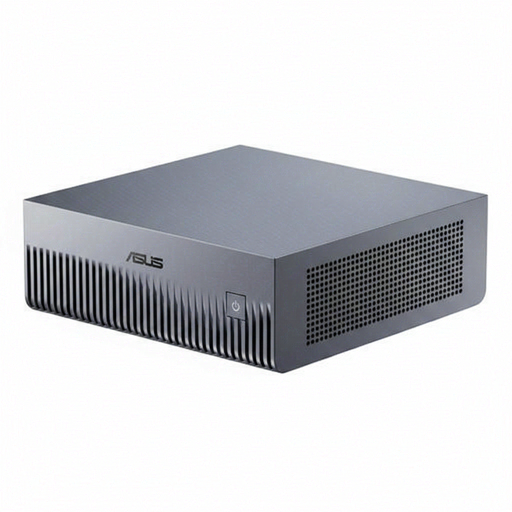
ASUS Ascent GX10 1TB — NVIDIA GB10, 128GB, DGX OS
Consider this compact DGX OS desktop only after confirming that your course tools and workflow support its particular platform.
NVIDIA GB10 Grace Blackwell, 128GB unified memory and 1TB NVMe SSD.
Do not assume that instructions for a Windows CUDA desktop apply unchanged. Confirm the supplied power equipment and exact-configuration noise before purchase.
Joybuy
 No image available
Apple Mac mini (2026) M6 — 16GB, 256GB SSD
This compact macOS desktop is a choice for a space-limited desk if your course software works on macOS; confirm any required MPS support for the exact machine.
M6 chip with 12-core CPU and 12-core GPU, 16GB memory and 256GB SSD.
Check CUDA-specific course instructions, noise during your intended work and whether a monitor and input devices are included.
Joybuy
 No image available
FIREBAT F1 — Ryzen 5 7640HS, 24GB, 512GB
This mini PC is an option to assess for general desktop study if your course does not call for a confirmed NVIDIA CUDA setup.
AMD Ryzen 5 7640HS, 24GB LPDDR5 RAM, 512GB PCIe 4.0 SSD and Radeon 760M graphics; the product name states support for triple-screen output.
Confirm the operating system and course-tool compatibility, as well as the bundle contents. Do not treat the product name's silent-operation wording as a noise measurement.
Joybuy
Frequently asked questions
Do I need an NVIDIA GPU to study data science?
Not for every course: an NVIDIA GPU becomes relevant when your instructions or intended local projects specifically require CUDA. Microsoft Learn describes an NVIDIA graphics card for its CUDA-in-WSL route, so check your syllabus before choosing hardware for that workflow.
Can a Mac mini use PyTorch GPU acceleration?
PyTorch documents an MPS backend for supported macOS hardware, but availability depends on the macOS version and whether the machine is MPS-enabled. Check the exact Mac mini configuration, required libraries and course instructions, particularly if they specify CUDA.
Will a workstation tower come with a monitor and keyboard?
Do not assume they are included. Lenovo states that the monitor, keyboard and mouse are optional and sold separately for its ThinkStation P3 Tower Gen 2 listing; check the bundle contents of whichever desktop you choose.
What should I check about electrical safety in Great Britain?
Confirm that the desktop is supplied for use in your location and ask the seller what plug and power lead are included. The Office for Product Safety and Standards explains that Great Britain's Electrical Equipment (Safety) Regulations 2016 set requirements before electrical equipment is placed on the GB market; a product's appearance alone does not establish its supplied connection.
What can I do with an old desktop?
Check an appropriate electrical-waste collection or reuse route rather than putting it in general household waste. UK government guidance on waste electrical and electronic equipment describes the rules as intended to reduce electrical waste sent to incineration or landfill through recovery, reuse and recycling.


