What matters when choosing?
Establish the course’s software and local-computing requirements, then compare the battery and charging arrangements of compatible laptops. A GPU-focused choice calls for a different setup check from ordinary notebook study.
| Concern |
What to check |
Who this matters to |
| Study time and charging |
Read the battery test condition, then confirm USB-C Power Delivery support and the exact model’s charger requirements. |
I need to finish notebook work between lectures without counting on a free socket; roughly 36% of consumers put untethered study and charging first. |
| Memory and storage |
Check installed and upgradeable memory, plus SSD space for the course’s datasets and local environments. |
Keeping notebooks, packages and project files on my laptop matters more than another headline feature; around 29% of consumers prioritise local working capacity. |
| Course compatibility |
Confirm the required operating system, processor architecture and installation instructions before choosing Windows x86, Windows on Arm or Apple Silicon. |
I want to follow my module’s setup instructions without finding that an essential tool expects another platform; roughly 21% of consumers make course compatibility their primary concern. |
| Local GPU work |
Find out whether the course requires local TensorFlow GPU execution, and check its hardware, CUDA and WSL2 instructions. |
If deep-learning exercises must run on my own machine rather than a course-provided service, the GPU setup drives my choice; around 14% of consumers put that requirement first. |
Brands to consider
These product lines illustrate different checks for this study scenario; the details depend on the model and configuration.
Apple
MacBook Air is an Apple Silicon option when a course accepts macOS and the work centres on Python, notebooks and other compatible local environments.
- Apple lists 16GB unified memory on current entry configurations, USB-C Power Delivery charging and battery figures tested with video streaming or wireless web use.
- Those figures do not measure data-science runtime. TensorFlow says there is currently no official GPU support for macOS.
ASUS
The cited Zenbook 14 Intel configuration offers a Windows x86 reference point; an Arm-based ASUS model calls for a separate software check.
- ASUS lists 16GB onboard memory, a 512GB SSD, a 70Wh battery and a 68W Type-C adapter for the cited Zenbook 14 Intel configuration.
- ASUS lists 16GB as that configuration’s maximum memory. For a Snapdragon-based model, confirm course tooling because Anaconda’s current Windows requirements specify 64-bit x86.
Lenovo
ThinkPad T-series models are worth considering when maintainability matters alongside study use.
- Lenovo describes the ThinkPad T14 Gen 6 AMD as having customer-replaceable units, including its 57Wh battery.
- Check the exact configuration’s memory, charging arrangement and course compatibility; a replaceable battery does not establish how long a study session will last.
Joybuy product choices
These laptops span Apple Silicon notebook study, a Windows-on-Arm option that needs a course-software check, and Windows models for local work. If you need a discrete GPU, assess its setup separately from battery and charging suitability.
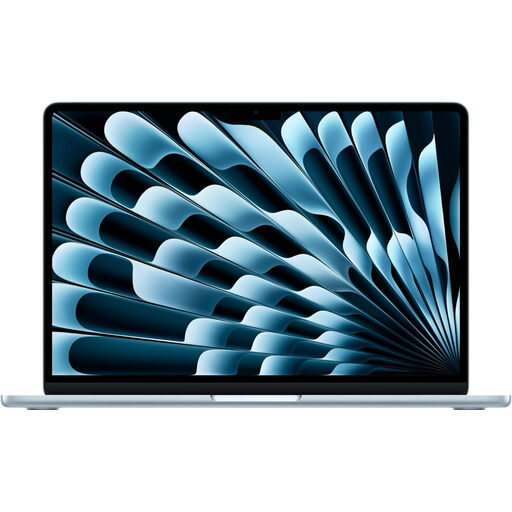 Image unavailable
Apple 13-inch MacBook Air (2026), M5, 16GB, 1TB SSD, Sky Blue
Consider this for notebook-based study if your course accepts Apple Silicon macOS. The listed configuration has an M5 chip with a 10-core CPU and 10-core GPU, 16GB memory and a 1TB SSD. Check battery expectations against your workload; TensorFlow says macOS has no official GPU support.
View on Joybuy
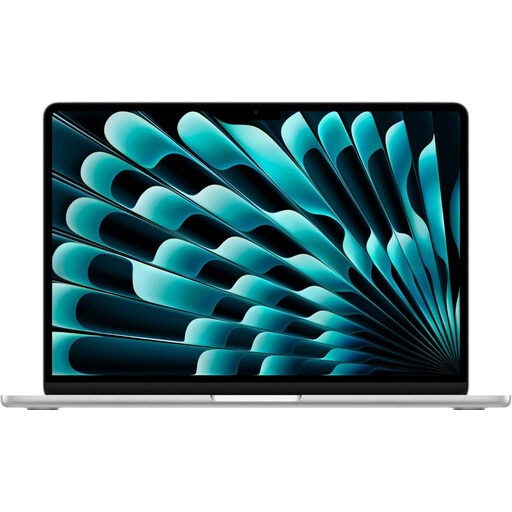 Image unavailable
Apple 15-inch MacBook Air (2026), M5, 16GB, 1TB SSD, Silver
The 15-inch configuration is another option for compatible macOS notebook work. Its listed M5 chip has a 10-core CPU and 10-core GPU, alongside 16GB memory and a 1TB SSD. Apple’s published battery tests are not notebook-runtime figures, and TensorFlow does not officially support macOS GPUs.
View on Joybuy
 Image unavailable
ASUS Vivobook 14 X1407QA-LY003W, Snapdragon X, 16GB, 512GB SSD, Quiet Blue
Consider this Windows-on-Arm model only after checking every essential course package and teaching environment. Its name identifies a Snapdragon X processor, 16GB RAM and a 512GB SSD. Anaconda’s current Distribution requirements list Windows 64-bit x86, so Windows branding alone does not establish compatibility; check battery-runtime expectations too.
View on Joybuy
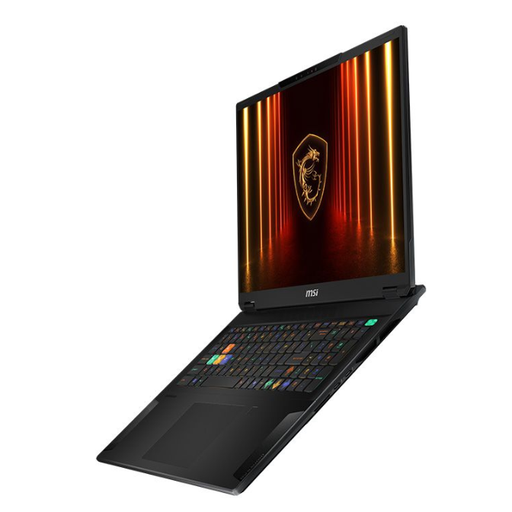 Image unavailable
MSI Stealth 18 AI Studio A1VGG-001UK, Intel Core Ultra 9, 32G RAM, 2TB SSD, RTX 4070
This is a candidate to investigate if your course calls for local GPU work. Its listed NVIDIA GeForce RTX 4070, 32G RAM and 2TB SSD do not by themselves confirm a working TensorFlow setup: check the course’s WSL2, CUDA and GPU instructions. Confirm battery expectations and the exact charging specification before planning socket-free sessions.
View on Joybuy
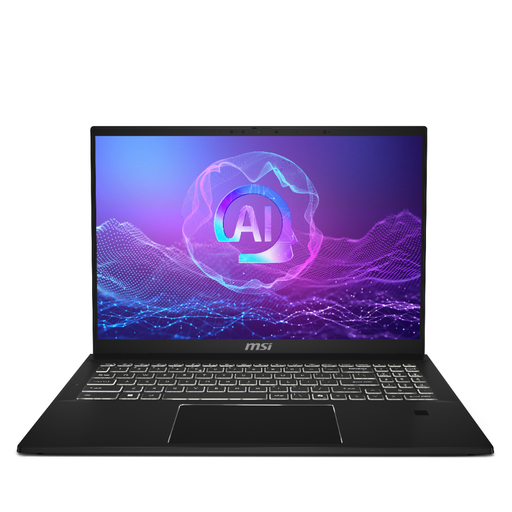 Image unavailable
MSI Summit 16 AI Evo, 16-inch QHD+ 165Hz, Core Ultra 7 255H, 32GB, 1TB SSD
The listed 32GB RAM and 1TB SSD make this a configuration to assess for memory- and storage-heavy local study. It also lists Intel Arc graphics; do not treat that name as proof of compatibility with a required GPU framework. Check the course software, expected battery runtime and charging arrangement for this exact model.
View on Joybuy
Common questions
Do I need 16GB of RAM to study data science?
Not for every introductory Python or notebook task. Anaconda Desktop recommends at least 16GB for most local models, so compare that guidance with your course work and check whether your chosen laptop’s memory can be upgraded.
Can I use a MacBook Air for data-science study?
Yes, if your course accepts macOS and its required tools support Apple Silicon. Anaconda lists Apple Silicon macOS in its current requirements, but TensorFlow says there is no official macOS GPU support; check another route if the module requires local TensorFlow GPU work.
Will any Windows 11 laptop run my course tools?
Not necessarily: check the processor architecture as well as the Windows version. Anaconda’s current Distribution requirements list Windows 64-bit x86, so verify essential packages and teaching instructions before choosing a Windows-on-Arm laptop.
Can I use one USB-C charger when sockets are scarce?
Only if the charger and cable meet the exact laptop’s charging standard and power requirement. Apple specifies at least 30W for charging the cited MacBook Air, while ASUS lists a 68W Type-C adapter for the cited Zenbook 14 Intel configuration; check the specification of the model you actually choose.
What should I do about a replacement charger or an old laptop?
For a replacement charger, match the laptop’s requirements and check the seller and UK plug and safety information. For an old laptop, ask the retailer or your local authority which electrical-equipment collection route is available to you.


