For programming, notebooks and ordinary data analysis, check your course software first, then compare memory and SSD capacity. UWE Bristol lists 8GB RAM and a 256GB SSD in its enhanced programming and data-analysis specification, and 16GB RAM and a 512GB SSD for more intensive advanced programming. Consider a CUDA-capable NVIDIA GPU when your coursework or projects require local CUDA work; a tower also calls for more careful checks of room fit, configuration and peripherals.
Who is this for?
Coursework-focused data-analysis students
If your work centres on Python, notebooks, statistics and ordinary datasets, start with the applications your course requires rather than assuming you need a dedicated GPU. UWE Bristol includes programming and data analysis in its enhanced equipment guidance.
Students planning local CUDA work
If a module or personal project requires CUDA on your own computer, the exact GPU and software environment become essential checks. NVIDIA says CUDA requires a CUDA-capable GPU and a supported development environment.
Students balancing room space and upgrades
If a compact setup matters now but later memory, storage or graphics upgrades matter too, compare the complete footprint with the expansion options of the exact configuration. Lenovo and HP describe configurable tower workstation lines, but individual configurations differ.
What matters when choosing?
Decide whether your course needs local GPU computing before choosing a form factor: a coursework desktop, an expandable NVIDIA-equipped tower and a specialist local-AI system answer different requirements.
Coursework desktop
Consider it when: Your required applications are for programming and conventional data analysis, without local CUDA work.
Trade-off: A configuration without a CUDA-capable GPU cannot run local CUDA workloads.
Expandable NVIDIA-equipped tower
Consider it when: You have confirmed a compatible local GPU requirement or expect to add components later.
Trade-off: A tower needs space, and its family name does not tell you which GPU or peripherals the configuration includes.
Dedicated local-AI system
Consider it when: A substantial local AI project specifically calls for this type of system and its software environment suits your tools.
Trade-off: The ASUS Ascent GX10 listing specifies NVIDIA DGX OS on an Arm-based system, so do not assume Windows course applications will run on it.
| Concern | What to check | Who this matters to |
|---|
| Memory and SSD capacity |
Compare your course requirements with the RAM and SSD in the exact configuration. UWE Bristol distinguishes its 8GB/256GB enhanced specification from a 16GB/512GB intensive specification. |
If I will keep notebooks, applications and working files open together, I want enough capacity for that coursework without buying for an unspecified workload. Around 40% of consumers put study capacity first. |
| Local CUDA capability |
Confirm that your work actually requires CUDA, then check the exact GPU model and intended software environment against NVIDIA’s CUDA requirements. |
When my project must run CUDA locally, I need to establish GPU compatibility before choosing a desktop. For around 30% of consumers, that local capability is the primary need. |
| Room fit and future changes |
Measure space for the computer and display; check the included peripherals and whether the chosen configuration permits the upgrades you expect. |
With limited desk space, I need the full setup to fit while keeping any planned upgrades practical. Room fit and an upgrade path come first for around 30% of consumers. |
Buying pitfalls
-
Choosing specifications before checking course software
A capable computer can still be unsuitable if a required application does not run on its operating system.
Get the programme’s application list and check its operating-system, memory, storage and GPU requirements before selecting a configuration.
-
Assuming any discrete graphics card supports CUDA
NVIDIA’s CUDA requirements call for a CUDA-capable GPU and a compatible software environment; a generic graphics-card description does not establish either.
Check the exact GPU model and the requirements of the tools you intend to run.
-
Comparing workstation family names instead of configurations
Lenovo and HP list different specifications within their workstation lines. Lenovo also identifies monitor, keyboard and mouse options that need checking for a particular configuration.
Compare the exact processor, RAM, SSD, GPU and box contents, not just the tower’s family name.
-
Overloading extension leads at the desk
Electrical Safety First warns that an overloaded extension lead or adaptor can overheat and cause a fire.
Check the lead’s marked rating, do not overload it or connect extension leads in a chain, and stop using a lead that becomes hot or shows damage.
Brands to consider
Lenovo
Lenovo’s ThinkStation P3 Tower line is worth examining if you want a configurable tower with operating-system and expansion options.
- Lenovo describes Intel Core processors, optional professional NVIDIA graphics, SSD storage, PCIe expansion and Windows or Linux options for the P3 Tower line.
- Configurations differ: Lenovo also lists an 8GB RAM entry configuration, while a cited P3 Tower Gen 2 configuration pairs 32GB RAM with a 256GB SSD. Check the exact specification and peripherals.
HP
HP’s Z2 Tower G1i is a configurable workstation line to compare when your work calls for a verified GPU or later expansion.
- An HP UK Z2 Tower G1i configuration lists 32GB RAM, a 1TB SSD and NVIDIA RTX A1000 8GB graphics; HP describes further configuration and upgrade options for the line.
- Those specifications describe a particular configuration, not every Z2 Tower or a requirement for ordinary data-analysis coursework.
Dell
Dell’s Pro Precision and Pro Max desktop lines provide professional configurations to compare if your project requirements justify them.
- Dell’s UK catalogue describes configurable NVIDIA graphics in the Pro Precision 7 T1 and Pro Max T2 lines.
- Graphics and other specifications vary by model and configuration. Check a direct listing for the exact system, support terms and included peripherals.
Joybuy desktop choices
These desktops cover compact options for coursework and a specialist local-AI option. Match each one to your course software and room setup; a mini PC is not a substitute for a confirmed CUDA-capable workstation merely because it has ample memory.
 No image available
Lenovo IdeaCentre Mini PC 01IRH10R, 16GB RAM, 512GB SSD, 91B2000XUK
A compact option to compare for programming and conventional data-analysis coursework.
- Intel Core 5 processor, 16GB RAM and 512GB SSD.
- Check the exact dimensions and whether the monitor, keyboard and mouse are included.
- If your course requires local CUDA, confirm a suitable GPU elsewhere in your shortlist.
View on Joybuy
 No image available
SOYO M5 Mini PC, Ryzen 3 4300U, 16GB RAM, 512GB SSD
Consider this compact desktop for coursework that does not call for a local CUDA-capable GPU.
- 16GB LPDDR4 RAM and 512GB SSD; dimensions are 128 × 128 × 47.6mm.
- Confirm whether a monitor, keyboard and mouse are included.
View on Joybuy
 No image available
FIREBAT F1 Mini PC, Ryzen 5 7640HS, 24GB RAM, 512GB SSD
Its stated memory and storage make it one to compare if you expect to work with several study applications at once.
- 24GB LPDDR5 RAM, 512GB PCIe 4.0 SSD and Radeon 760M graphics.
- Confirm the operating system against your course software, plus the dimensions and included peripherals.
- Its stated Radeon graphics should not be mistaken for a CUDA-capable NVIDIA GPU.
View on Joybuy
 No image available
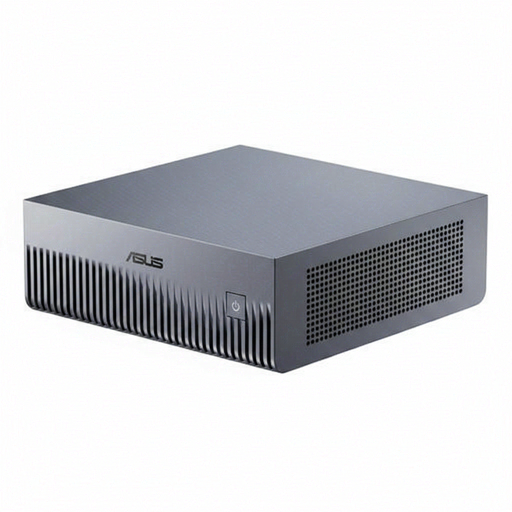
ASUS Ascent GX10 1TB, NVIDIA GB10 Grace Blackwell, 128GB unified memory
This specialist local-AI system warrants consideration only if its software environment matches a confirmed project requirement.
- 128GB unified memory, 1TB NVMe SSD and NVIDIA DGX OS.
- Check compatibility with course applications before choosing its Arm-based environment instead of a Windows desktop.
- Check display and peripheral arrangements; the stated unified memory is not user-upgradeable.
View on Joybuy
 No image available
FIREBAT R3 Mini PC, Ryzen 5 7430U, 16GB RAM, 512GB SSD
Compare this mini PC for programming and conventional data-analysis study once you have checked your required applications.
- AMD Ryzen 5 7430U, 16GB LPDDR4 RAM and 512GB SSD.
- Confirm the operating system, dimensions and included peripherals before ordering.
- If you need local CUDA, check the exact graphics hardware and software requirements first.
View on Joybuy
Frequently asked questions
Do I need an NVIDIA GPU to study data science?
Not for every data-science course: choose a CUDA-capable GPU when your modules or projects require local CUDA work. NVIDIA makes that GPU a requirement for CUDA, while UWE Bristol includes programming and data analysis in its enhanced specification without making a discrete GPU a general starting requirement.
What memory and storage should I compare first?
Start with your course requirements, then use UWE Bristol’s 8GB RAM and 256GB SSD enhanced specification and 16GB RAM and 512GB SSD intensive specification as comparison points. Check whether your applications, datasets or virtual machines call for more.
Can I use a different operating system from Windows?
Yes, if every required course application and development tool supports it. UWE Bristol cautions that some specialist applications may not be available on macOS; if you need CUDA, check the precise operating-system and tool requirements for your intended setup as well.
How should I power a desktop and monitor in a student room?
Check the rating of any extension lead and keep the connected equipment within it; do not chain extension leads. Electrical Safety First warns that overloaded leads and adaptors can overheat and cause a fire.


