For a date-night dinner, choose an unsalted block if you want to add salt separately while cooking; a salted block can also work if you account for its salt. Choose a spreadable blend when serving bread straight from the fridge is the main task. Clarify what ‘6 pint’ means before choosing a quantity: the butter packs discussed here are labelled in grams, not pints.
Who is choosing butter?
Cooking a dinner for two
If the butter is going into a sauce, bake or finished dish, decide whether the recipe needs a block and whether you want to add salt separately. Anchor describes its salted and unsalted blocks as options for cooking and baking.
Serving bread or starters
If you want to spread butter directly from the fridge, consider a spreadable blend. Lurpak and Anchor describe products formulated for spreading, rather than plain block butter.
Serving a guest who avoids milk
Check the physical pack before serving. The butter and spreadable examples described by Lurpak, Anchor and Tesco contain milk, and Tesco notes that ingredients and allergen information can change.
What should you check?
Start with how you will use the butter, then check seasoning, ingredients and the quantity your recipe actually requires.
| Priority |
What to check |
Your needs |
| Cooking format |
Check whether the recipe calls for block butter or another butter product. Anchor recommends its regular block, rather than its spreadable blend, for cooking. |
I’m making a sauce, baking or finishing a dish, so I need to choose a product for that cooking task rather than for easy spreading. |
| Salt |
Check whether the block is salted or unsalted and read its salt information per 100g. Tesco lists salt as an ingredient in its British Salted Block Butter. |
If I’m adding seasoning in stages, an unsalted block lets me add salt separately. With a salted block, I’ll account for the salt already in it. |
| Table serving |
Check whether you want a plain block or a spreadable blend. Lurpak says its spreadable product includes rapeseed oil and water to help it spread from the fridge. |
For bread or starters served straight from the fridge, easy spreading matters more to me than choosing a cooking block. |
| Ingredients and storage |
Read the current pack for milk ingredients, allergen information, date marking and storage directions. Tesco notes that product information can change. |
I’m serving someone who avoids milk, or I need to store the butter before dinner, so the label on the pack matters. |
| Quantity |
Work out what ‘6 pint’ refers to before choosing a pack. The butter examples listed by Lurpak, Tesco, Sainsbury’s and Kerrygold use gram quantities. |
I need enough for the recipe and the table, but I cannot use ‘6 pint’ alone to choose a butter pack. |
What can go wrong?
-
Treating spreadable butter as a cooking block
The Lurpak and Anchor spreadable products described by their brands contain rapeseed oil and water. Anchor recommends its regular block for cooking instead of its spreadable product.
For a sauce, bake or finished dish, check which butter format the recipe calls for. Choose a spreadable blend for the table when spreading from the fridge is the task.
-
Adding salt without checking the butter
Salted and unsalted blocks give you different starting points for seasoning. Salt is listed in Tesco’s British Salted Block Butter, while Anchor describes a separate unsalted block.
Read the pack and account for salted butter when adding other seasoning to the dish.
-
Relying on an online ingredient listing
Ingredients and allergen information can change, as Tesco notes in its product information. That matters when you are serving a guest who avoids milk.
Check the physical pack for ingredients, allergens, date marking and storage directions before serving.
-
Using ‘6 pint’ to choose a butter pack
The relevant butter examples are labelled in grams. A pint quantity does not identify which butter format or pack size this dinner requires.
Clarify whether the request means a recipe quantity, a number of people or something else before selecting a pack.
Which brands offer relevant formats?
Lurpak
Lurpak has distinct block-butter and spreadable products relevant to cooking and table serving.
- Lurpak says its spreadable product uses rapeseed oil and water so it can spread from the fridge.
- A spreadable blend is not the same formulation as its block butter; choose the format your recipe or table service calls for.
Anchor
Anchor describes salted and unsalted blocks for cooking and baking, alongside a spreadable product.
- Its unsalted block offers an option when you want to add salt separately.
- Anchor recommends regular block butter, rather than its spreadable product, for cooking.
Kerrygold
Kerrygold lists Irish butter blocks, including a salted 200g product and a 500g butter product.
- Kerrygold describes its Pure Irish Salted Butter for cooking, baking and serving on toast or crumpets.
- Check the individual product’s size and salt information rather than treating the two listed packs as interchangeable.
Tesco
Tesco lists a British Salted Block Butter in a 250g pack.
- Its product listing specifies a minimum of 80% milk fat and lists butter containing milk and salt as ingredients.
- Tesco notes that ingredients and allergen information can change; check the current pack.
Sainsbury’s
Sainsbury’s lists British salted block butter in 250g and 500g sizes.
- Its 250g British salted butter listing states a minimum of 80% milk fat.
- Choose a pack against the amount your recipe requires; ‘6 pint’ does not establish that amount.
Joybuy product options
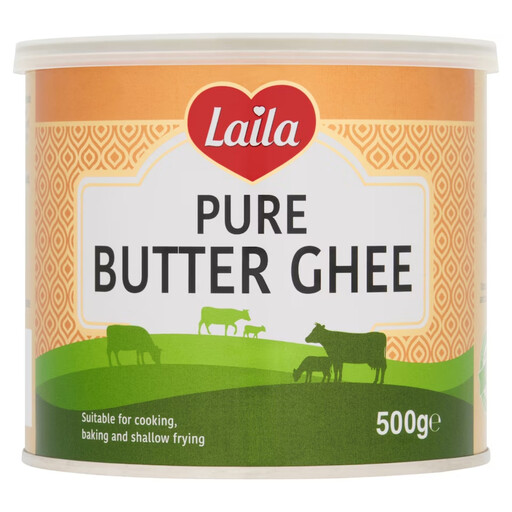
This Joybuy option is ghee for cooking, not a block or spreadable butter for the table. Check that your recipe calls for ghee and that a 500g pack matches the quantity you need.
 No image available
Laila Pure Butter Ghee 500G
Consider this 500g ghee if your dinner recipe calls for ghee rather than block butter. Confirm the required quantity and check the pack’s milk information before serving.
View on Joybuy
Common questions
Should I buy salted or unsalted butter for a date-night dinner?
Choose an unsalted block when you want to add salt separately to a sauce, bake or finished dish. A salted block may suit the dish too, but check its salt information and account for it when seasoning; Tesco and Anchor list distinct salted and unsalted block products.
Is spreadable butter the same as block butter?
No. The Lurpak and Anchor spreadable products described by their brands include rapeseed oil and water. Anchor recommends its regular block butter for cooking rather than its spreadable product.
Does butter need to be refrigerated?
Follow the storage directions on the butter you buy. Tesco’s British Salted Block Butter listing calls for refrigeration; check the current pack for its storage and date-marking instructions.
Can I serve these butter examples to someone with a milk allergy?
Do not assume they are suitable: the butter and spreadable examples from Lurpak, Anchor and Tesco identify milk in their ingredients. Check the physical pack before serving, as Tesco notes that ingredients and allergen information can change.


