Bean-to-cup canteen managers
For a lunchtime service using a bean hopper and grinder, preparation guidance and bag size both matter. Check the installed machine’s instructions and compare pack size with the number of decaf drinks served.


For a workplace canteen lunch service, choose decaf whole beans that suit the installed brewing equipment, then select a bag size that fits actual decaf demand. A 1 kg bag means fewer bag changes if demand is steady; smaller packs give a trial service less opened stock to manage. Describe the offer as decaf, not caffeine-free, unless the exact product supports that wording.
For a lunchtime service using a bean hopper and grinder, preparation guidance and bag size both matter. Check the installed machine’s instructions and compare pack size with the number of decaf drinks served.
A clearly labelled decaf option helps staff distinguish it from regular coffee. Decaf should not automatically be described as caffeine-free: illy UK, for example, states a caffeine content not higher than 0.1% for its decaffeinated whole beans.
For a service with uncertain decaf demand, a smaller bag makes it easier to assess turnover. Taylors Decaffé Beans come in a 200 g pack, while Waitrose lists its own-label Peru decaf beans in a 227 g pack; check each product’s instructions after opening.
Start with the service equipment and the exact bean format, then compare demand, pack handling and the description staff will see.
| Priority | What to check | Your needs |
|---|---|---|
| Equipment fit | Confirm whole-bean format, the product’s stated preparation methods and the installed machine’s instructions. Union Coffee recommends its Decaf Blend for espresso or bean-to-cup preparation; that recommendation does not confirm compatibility with every machine. | I use a bean hopper at lunch, so ground coffee would not be a substitute. If the canteen uses several brewing methods, I need guidance for each one in use. |
| Bag size and storage | Compare the bag size with recorded decaf demand and follow the exact product’s after-opening instructions. Union Coffee lists a 1 kg Decaf Blend; Waitrose advises using Taylors Decaffé Beans within two weeks of opening. | Decaf orders may be occasional, so I want to see how quickly an opened bag is used before moving to a larger format. |
| Caffeine wording | Check the current specification for the exact bean. illy UK states no more than 0.1% caffeine for its decaffeinated whole beans; the Waitrose listing for Lavazza Decaf Classico states no more than 0.10%. Neither statement means zero caffeine. | Staff should be able to identify the decaf option without the menu promising that it is caffeine-free. |
| Flavour and process | Compare the product’s roast, bean composition and tasting description, then trial the exact bean in the canteen’s equipment. Lavazza and Taylors describe different decaffeination processes, but a process name alone does not establish a taste advantage. | I want a flavour staff will choose at lunch, without treating water- or CO2-process wording as a quality score. |
That wording may promise more than the product specification does. illy UK and a Waitrose listing for Lavazza Decaf Classico each state a caffeine maximum of 0.1% for their respective beans, not zero caffeine.
Use “decaf coffee” on the menu and check the current specification before making a more specific caffeine claim.
Ground coffee is not the same format as whole beans. A product with a similar brand and decaf name may therefore be unsuitable for the installed service setup.
Confirm “whole bean” on the exact product and check the machine manual’s bean and cleaning instructions before ordering.
A 1 kg bag needs fewer changes during steady use, but slow decaf turnover can leave it open longer than a smaller pack. Waitrose gives two-week after-opening guidance for Taylors Decaffé Beans and its own-label Peru decaf beans.
Record decaf cups served during a lunch-service trial, then compare bag sizes against the storage guidance for the product you intend to buy.
Taylors describes a water-based process for Decaffé, while Lavazza describes a CO2 process for Decaf Intenso. Those descriptions do not, by themselves, show which bean staff will prefer.
If the process matters to procurement, check it on the exact product. Assess flavour using that bean and the canteen’s brewing equipment.
These examples show how named decaf bean lines differ; they do not establish that every product from a brand has the same format or preparation guidance.
Lavazza UK lists Decaf Intenso as a 500 g bean option with preparation guidance for several brewing methods.
illy UK lists a 250 g decaffeinated whole-bean coffee with stated preparation methods and a caffeine maximum.
Taylors describes a water-based decaffeination process for Decaffé; Waitrose lists Decaffé Beans in a 200 g pack.
Union Coffee lists its Decaf Blend as a 1 kg whole-bean option and recommends espresso or bean-to-cup preparation.
M&S lists Roast & Ritual Decaf Coffee Beans in a 227 g pack made with decaffeinated Arabica beans.
Waitrose lists No.1 Organic Fairtrade Peru Decaf Coffee Beans as a 227 g, 100% Arabica product.
These two whole-bean decaf options offer a 200 g pack for a smaller trial and a 500 g pack to assess against higher demand. Check the exact bean’s guidance and your machine manual before choosing either for lunch service.
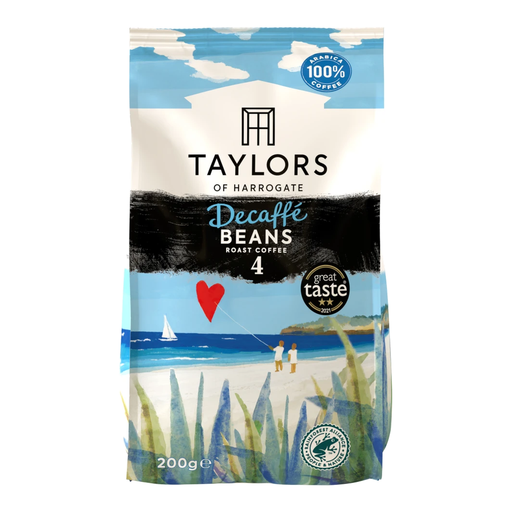 No image available
This 200 g whole-bean pack is a size to consider for a lower-volume decaf trial. Confirm the preparation guidance for the exact pack against the installed machine before ordering.
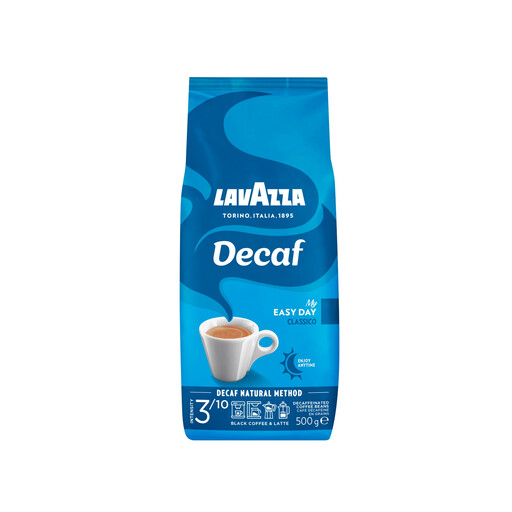 No image available
This 500 g whole-bean pack offers a larger format to compare with the canteen’s decaf turnover. Check the exact product line, preparation guidance and after-opening instructions; do not apply directions for a different Lavazza decaf bean.
No. Describe a workplace offer as decaf unless the exact product supports a stronger claim. illy UK states caffeine content not higher than 0.1% for its decaffeinated whole beans, and Waitrose gives a maximum of 0.10% for Lavazza Decaf Classico Beans.
It may suit more than one method, but check both the bean’s preparation guidance and the installed equipment’s instructions. Union Coffee recommends its Decaf Blend for espresso or bean-to-cup preparation; Lavazza Decaf Intenso and illy decaffeinated whole beans each list several methods. None of those listings confirms a pass for every machine.
Follow the instructions for the exact bag. Waitrose advises sealing Taylors Decaffé Beans, keeping them in a cool, dry place and using them within two weeks of opening; it also advises using its No.1 Peru decaf beans within two weeks for best taste. M&S gives different storage instructions for its Roast & Ritual Decaf Beans.
Not on its own. Taylors describes a water-based process for Decaffé, while Lavazza describes CO2 decaffeination for Decaf Intenso. If the process is a purchasing requirement, verify it for the exact bean; assess flavour and equipment fit separately.
Check the current pack for the exact bean and keep its ingredient, allergen and preparation information available to the catering team. Recheck that information when the product or supplier changes rather than relying on details from an earlier bag.