Choose decaffeinated black tea if you want a familiar breakfast-tea cup with less caffeine; a blend labelled English Breakfast is the more direct match for that flavour. If avoiding caffeine is essential, choose a herbal infusion explicitly labelled caffeine-free instead, accepting that it will taste different from black tea. Decaf black tea is not necessarily caffeine-free.
Who is each option for?
Breakfast-tea drinkers cutting back on caffeine
If you want black tea with your Full English and may add milk, start with a decaffeinated English Breakfast blend. Twinings describes its decaf blend as robust black tea; it is a closer match to that kind of cup than a botanical infusion, but it should not be treated as caffeine-free.
Readers seeking a caffeine-free drink
Look for a herbal infusion whose current label says it is caffeine-free. Pukka identifies Three Chamomile as naturally caffeine-free. Choose it for its chamomile flavour, not as a substitute for the taste of black breakfast tea.
Regular tea-bag buyers
For a daily breakfast cup, compare the number of bags, pack weight and brewing instructions. A 15-bag pack and a 160-bag pack serve different routines, even when both are described as decaf tea.
What should you check?
Decaf black tea
Choose it when: you want to keep a recognisable black-tea breakfast cup while reducing caffeine.
Bear in mind: decaffeinated black tea may still contain caffeine, and an Everyday Decaf is not necessarily an English Breakfast blend.
Caffeine-free herbal infusion
Choose it when: a product explicitly labelled caffeine-free matters more to you than retaining black-tea flavour.
Bear in mind: chamomile and other botanical ingredients make a different drink from English Breakfast black tea.
Once you have chosen between black tea and a herbal infusion, check the individual product rather than relying on the word “decaf” alone.
| Priority | What to check | Your needs |
|---|
| Breakfast-tea character |
Check whether the tea is black tea and whether the blend is named English Breakfast. Check the maker’s milk and brewing guidance if those matter to your cup. |
I want the familiar black-tea taste alongside breakfast, with the option of adding milk. |
| Caffeine wording |
Distinguish “decaffeinated” from “caffeine-free” on the current pack. Teapigs says its decaf black tea naturally contains caffeine. |
Avoiding caffeine is essential for me, so I need a product explicitly labelled caffeine-free rather than assuming any decaf tea will do. |
| Format and preparation |
Compare bag count and pack weight, then follow that product’s brewing instructions. Tea temples, pyramid bags and standard tea bags are different formats. |
For a regular breakfast cup, I want a pack size and preparation method that fit my routine. |
| Ingredients and labels |
Read the current ingredients, allergen information and caffeine wording on the pack, particularly when choosing between a black-tea blend and a botanical infusion. |
If a particular ingredient or caffeine claim matters to me, I want to check the pack I am buying. |
Common buying mistakes
-
Treating herbal tea as decaf black tea
A herbal infusion can meet a caffeine-free preference while tasting quite different from the robust black tea associated with English Breakfast.
Decide which matters more for your Full English: keeping a black-tea cup or choosing a drink explicitly labelled caffeine-free.
-
Reading “decaf” as “no caffeine”
Teapigs states that its decaf English Breakfast black tea naturally contains caffeine. The word “decaf” alone therefore cannot settle a strict caffeine-free requirement.
Check the current pack’s caffeine wording. If your restriction is health-related, seek individual professional advice rather than relying on a tea category name.
-
Overlooking the pack format
Decaf products come in different bag styles and counts, so the number of cups a pack offers is not clear from the product category alone.
Check the bag count, pack weight and brewing directions for the exact product you plan to use.
-
Relying on an old product description
Ingredients and label wording can change. Tesco advises shoppers to read food labels rather than rely solely on its website information.
Check the current pack for ingredients, allergens, brewing guidance and any caffeine-related claim before use.
Relevant brand references
These examples illustrate the difference between named decaf English Breakfast blends, everyday decaf black tea and herbal infusions.
Twinings
Twinings offers a named English Breakfast Decaffeinated black-tea blend.
- Twinings describes the blend as Assam, Kenyan and Ceylon teas and gives guidance for serving it with milk.
- Do not rely on a precise residual-caffeine figure without checking the current pack.
Teapigs
Teapigs offers Decaf English Breakfast in a tea-temple format.
- The product lists decaffeinated black tea and a CO2 decaffeination method.
- Teapigs states that this decaf tea naturally contains caffeine.
Clipper
Clipper’s Organic Everyday Decaf is a black-tea option rather than a blend named English Breakfast.
- Clipper describes an organically grown decaffeinated black tea blended with Assam.
- Check the exact product and format if an English Breakfast label is important to you.
Pukka
Pukka provides a herbal-infusion route for readers seeking a product labelled caffeine-free.
- Pukka identifies its Three Chamomile herbal tea as naturally caffeine-free.
- Chamomile is a different flavour choice from black English Breakfast tea.
Tesco
Tesco’s grocery listings can help identify the pack details of individual decaf teas.
- Its Twinings English Breakfast Decaffeinated listing identifies the product as decaffeinated black tea.
- Tesco advises checking the physical food label because product information can change.
Decaf black tea options on Joybuy
These options are decaffeinated black teas for readers who want to keep a black-tea cup with breakfast. None is identified here as a named English Breakfast blend or as a caffeine-free herbal infusion.
 No image available
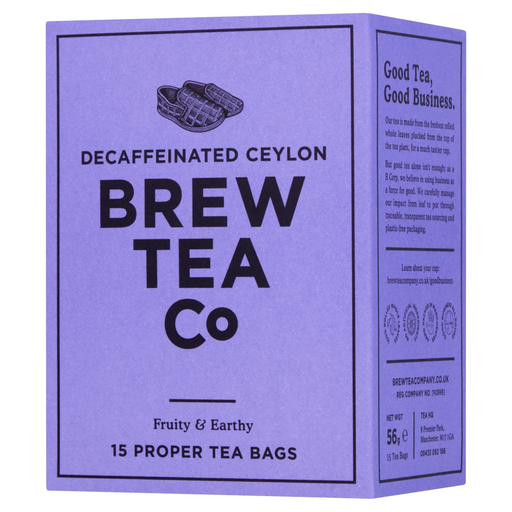
Brew Tea Co CO2 Decaffeinated Tea, 15 bags, 56g
An option for a decaf black-tea cup when a named English Breakfast blend is not essential. The product is described as Ceylon tea in whole-leaf bags, with 15 bags in a 56g pack. Check the current pack if a particular caffeine limit matters.
Joybuy
 No image available
Tetley Decaffeinated Tea, 80 bags, 250g
Decaffeinated black tea bags for a regular breakfast routine, though not identified as a named English Breakfast blend. The 250g pack contains 80 bags; the product description suggests brewing for 2–3 minutes and adding milk if preferred. Check the current pack for caffeine wording if you have a specific limit.
Joybuy
 No image available
Clipper Organic Fairtrade Decaf Everyday, 80 bags, 277g
Decaffeinated black tea for readers interested in the product’s organic and Fairtrade positioning rather than an English Breakfast label. The pack contains 80 tea bags and weighs 277g. Follow the current pack’s brewing guidance and check its caffeine wording if that affects your choice.
Joybuy
 No image available
Tetley Decaf Tea, 160 bags, 500g
A larger pack of decaffeinated black tea bags for regular use: 160 bags and 500g. It is not identified as an English Breakfast blend. Check the current pack for preparation directions and caffeine wording relevant to your needs.
Joybuy
 No image available
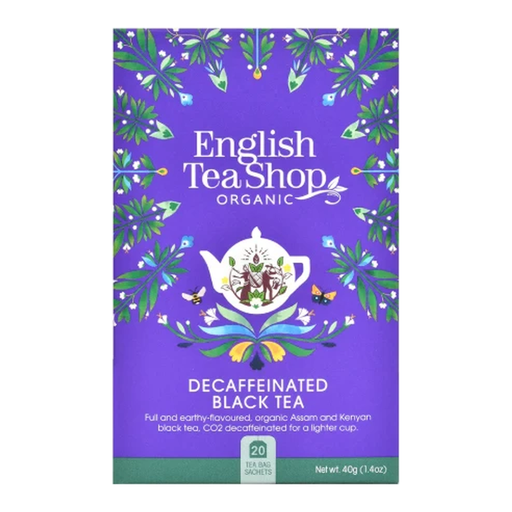
English Tea Shop Organic Decaffeinated Black Tea, 20g
An organic decaffeinated black tea rather than a herbal infusion or a named English Breakfast blend. The pack is listed as 20g. Check its current label for the serving format, brewing directions and caffeine wording before deciding whether it fits your routine.
Joybuy
Frequently asked questions
Is decaf English Breakfast tea a herbal tea?
No. The Twinings and Teapigs decaf English Breakfast products are black teas; herbal infusions use botanical ingredients instead. Choose black tea for a more familiar breakfast-tea cup, or a herbal infusion explicitly labelled caffeine-free if that requirement comes first.
Does decaf tea contain no caffeine?
Not necessarily. Teapigs states that its decaf black tea naturally contains caffeine. If avoiding caffeine is essential, check the exact product’s current label rather than treating “decaf” as a caffeine-free claim.
Can I add milk to decaf English Breakfast tea?
Yes, if you like it that way. Twinings gives milk-serving guidance for its English Breakfast Decaffeinated tea; follow the brewing instructions for the particular product you choose.
Should I check the label if I have read the product listing?
Yes. Tesco advises reading the physical food label because product information can change. Check the current pack for ingredients, allergens and caffeine-related wording, especially when any of these affects your choice.


