Evening chai drinkers avoiding caffeine
Look for a herbal or rooibos chai explicitly labelled naturally caffeine-free. A name containing “chai” does not, by itself, tell you whether the blend contains black tea.


For a Bonfire Night drink without caffeine from a black-tea base, choose a chai-style herbal or rooibos blend explicitly labelled caffeine-free. If the black-tea character of a milky chai matters more, choose a decaffeinated black-tea chai, bearing in mind Twinings UK’s guidance that minor caffeine traces can remain in decaf tea; check the ingredients and preparation directions before serving.
The useful distinction is whether you want to avoid caffeine from a tea-leaf base or keep black tea in the cup.
Look for a herbal or rooibos chai explicitly labelled naturally caffeine-free. A name containing “chai” does not, by itself, tell you whether the blend contains black tea.
A decaffeinated black-tea chai keeps the tea base and spices associated with a milky chai. It is a different choice from a caffeine-free infusion: Twinings UK notes that minor caffeine traces can remain in decaf tea.
Offering a clearly labelled caffeine-free blend alongside a decaf black-tea chai lets guests distinguish the two. Keep the current ingredient information available, particularly for blends containing liquorice root.
Start with the caffeine label and tea base, then decide whether the spices, milk serving and ingredients suit the people you are serving.
| Priority | What to check | Your needs |
|---|---|---|
| Caffeine | Distinguish a decaffeinated black-tea blend from one explicitly labelled naturally caffeine-free. Twinings UK says minor caffeine traces can remain in decaf tea. | I want an evening chai-style drink without caffeine from a black-tea base; a labelled caffeine-free herbal or rooibos blend fits that requirement better than decaf black tea. |
| Tea base and flavour | Read whether the base is decaffeinated black tea, rooibos, herbs or fruit. Rosevear Tea’s decaf chai uses Ceylon black tea and spices; Tick Tock’s Chai Relax uses rooibos. | For a tea-led chai with milk, I would choose decaf black tea. If the spiced flavour matters more than the black-tea base, rooibos or herbal chai is worth considering. |
| Seasonal ingredients | Compare the listed spices and other ingredients rather than relying on “chai” alone. Teapigs lists apple, cocoa husk and pumpkin in Pumpkin Spiced Chai, while Pukka’s Vanilla Chai lists cinnamon, ginger, cardamom and vanilla extract. | I may want a fruit-and-spice drink for the occasion rather than a chai built around black tea and milk. |
| Guest ingredients | Read the current pack before serving. Tesco’s listing for Pukka Vanilla Chai includes liquorice root and fennel; a caffeine-free label does not describe every ingredient. | When serving a group, I want guests to be able to check the blend against their own ingredient requirements. |
| Preparation | Follow the directions for the particular blend. Tick Tock gives a 2–4 minute infusion for Chai Relax; Rosevear Tea gives 95°C and 3–5 minutes for its Decaffeinated Chai. | For several guests, I want to prepare and label each drink according to its own pack directions rather than treat every chai blend alike. |
A chai blend can use black tea. Decaffeinated black tea is not the same as a blend labelled naturally caffeine-free; Twinings UK notes that minor caffeine traces may remain after decaffeination.
Check both the tea base and the caffeine wording on the current pack before choosing a drink for someone avoiding caffeine.
Herbal and rooibos blends can contain familiar chai spices, but their base is not black tea. Tick Tock says its rooibos Chai Relax can be served with milk; Rosevear Tea’s Decaffeinated Chai uses a Ceylon black-tea base.
Choose the decaf black-tea blend if keeping the tea base matters most. Choose herbal or rooibos chai if its caffeine-free label and different base better suit the occasion.
Tesco’s ingredient listing for Pukka Vanilla Chai includes liquorice root. Collingwood Health Group’s guidance discusses concerns associated with large quantities of black liquorice; it does not establish an equivalent quantity from a tea bag.
Read the current pack with guests’ ingredient needs in mind. Anyone with a relevant medical or medicine concern should seek individual advice from a pharmacist or clinician.
These examples illustrate different chai bases and flavour profiles; the details apply to the named blends, not every tea made by each brand.
Spiced Vanilla Chai is a herbal option for a sweet-spiced cup without a black-tea base.
Chai Relax uses rooibos in place of black tea and can be served plain or with milk, according to Tick Tock.
Decaffeinated Chai is the black-tea route for someone who wants spices and the option to add milk.
Pumpkin Spiced Chai takes a fruit-and-spice approach to a Bonfire Night drink.
Twinings provides a useful decaf black-tea reference if you are considering adding your own spices.
This Joybuy option is a caffeine-free herbal chai for a spiced drink without a black-tea base. It serves a different preference from decaffeinated black-tea chai.
 No image available
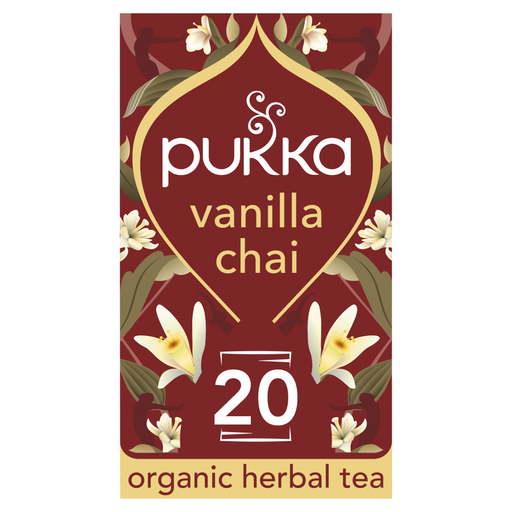
A caffeine-free herbal infusion for guests who want chai spices without a black-tea base. The listed ingredients include cinnamon bark, ginger root, liquorice root, fennel, cardamom and vanilla; check the current pack for ingredient suitability and brewing directions before serving.
No. Decaf black-tea chai and naturally caffeine-free chai-style infusions are different choices: Twinings UK says minor caffeine traces can remain in decaffeinated tea. For a drink without caffeine from a black-tea base, look for an explicit caffeine-free label on a herbal or rooibos blend.
A decaffeinated black-tea chai keeps the tea base. Rosevear Tea’s Decaffeinated Chai uses Ceylon black tea with cinnamon, cardamom and ginger and is presented as suitable with milk. Tick Tock says its Chai Relax can also take milk, but that blend uses rooibos instead.
Use each blend’s own directions and label the finished drinks so guests can distinguish decaf black tea from caffeine-free rooibos or herbal chai. Tick Tock specifies a 2–4 minute infusion for Chai Relax, while Rosevear Tea specifies 95°C and 3–5 minutes for its Decaffeinated Chai; check the packs you use for their current instructions.
Read the current ingredient list as well as the caffeine label. Tesco lists liquorice root and fennel in Pukka Vanilla Chai, so guests with ingredient-specific concerns should be able to check the pack. A caffeine-free label alone does not establish that a blend suits everyone.
Keep drink selection separate from the event’s safety arrangements and follow the organiser’s instructions. Staffordshire Fire and Rescue Service advises supervising children around fireworks and encourages organised displays where possible.