Hosts serving guests who avoid caffeine
A clearly identified caffeine-free herbal chai-style drink gives guests an alternative to decaffeinated black tea, which can retain traces of caffeine.


For brunch guests who want to avoid caffeine from tea leaves, choose a chai-style herbal infusion explicitly labelled caffeine-free. If the black-tea base matters more and traces of caffeine are acceptable, serve decaffeinated black tea with separately chosen spices or milk. Check the ingredients and pack warnings before serving either option, rather than assuming every drink called chai is decaf.
A clearly identified caffeine-free herbal chai-style drink gives guests an alternative to decaffeinated black tea, which can retain traces of caffeine.
If a black-tea base matters to you, consider decaffeinated black tea with your chosen chai spices. Check the label: Teapigs’ standard chai contains Assam black tea and caffeine.
Compare the current packs before making a shared pot. Chai-style blends have different ingredients, and Pukka’s caffeine-free blend includes liquorice.
Decide whether caffeine-free labelling or a black-tea base matters more, then check the ingredients and serving instructions for the product you choose.
Choose when: Guests want a spiced drink without a black-tea base; Pukka Spiced Vanilla Chai and Teapigs Pumpkin Spiced Chai are described by their makers as caffeine-free.
Trade-off: These are herbal blends, not black-tea chai, and their ingredients and flavours differ.
Choose when: Guests prefer a black-tea base and accept that decaffeinated tea may retain traces of caffeine.
Trade-off: A plain decaffeinated black tea needs separately chosen spices or milk for a chai-style serving.
| Priority | What to check | Your needs |
|---|---|---|
| Caffeine status | Look for an explicit caffeine-free description or identify a decaffeinated tea. Twinings notes that decaffeinated tea can retain traces; Teapigs’ standard Assam black-tea chai contains caffeine. | I want guests to know whether their cup is caffeine-free, decaf or ordinary black-tea chai. |
| Tea base and flavour | Read the ingredient list for black tea and the stated spices or other flavour ingredients. A herbal chai-style infusion is not the same drink as black-tea chai. | For this brunch, does a spiced herbal cup fit, or would guests rather have a black-tea base with added spices? |
| Ingredients and warnings | Check the current pack’s full ingredient list and warnings. Pukka’s caffeine-free chai-style blend contains liquorice; Teapigs Pumpkin Spiced Chai has a different ingredient mix. | Several guests may have different ingredient or flavour preferences, so I want them to be able to check what is in each drink. |
| Serving method | Check the pack format and brewing directions. Teapigs specifies one tea temple per person and a brew of at least 3 minutes for Pumpkin Spiced Chai. | If guests are choosing different drinks, individual portions and clearly identified cups will make serving simpler. |
Decaffeinated black tea can retain traces of caffeine, as Twinings explains. That distinction matters when a guest wants to avoid caffeine.
Choose a product explicitly described as caffeine-free for that guest, and identify a decaf black-tea option separately.
Teapigs’ standard chai contains Assam black tea and is described as naturally containing caffeine.
Check the tea base on the pack and keep ordinary black chai distinct from a caffeine-free option.
Chai-style blends can contain different ingredients: Pukka’s caffeine-free blend includes liquorice, while Teapigs Pumpkin Spiced Chai includes apple, cocoa husk and carob.
Read the latest pack ingredients and warnings before serving guests with ingredient restrictions.
A herbal infusion does not have the Assam black-tea base of conventional chai; additional ingredients can change the flavour further.
If both preferences matter at brunch, offer a caffeine-free herbal option alongside a separately identified black-tea choice.
Spiced Vanilla Chai is a caffeine-free herbal chai-style blend, rather than a decaffeinated black tea.
Its Pumpkin Spiced Chai is described as naturally caffeine-free; its standard Assam black-tea chai contains caffeine.
Its decaffeinated teas are relevant when guests want a tea base and accept possible caffeine traces.
Everyday Decaf is an organic, Fairtrade decaffeinated black tea that can be served with separately chosen chai spices.
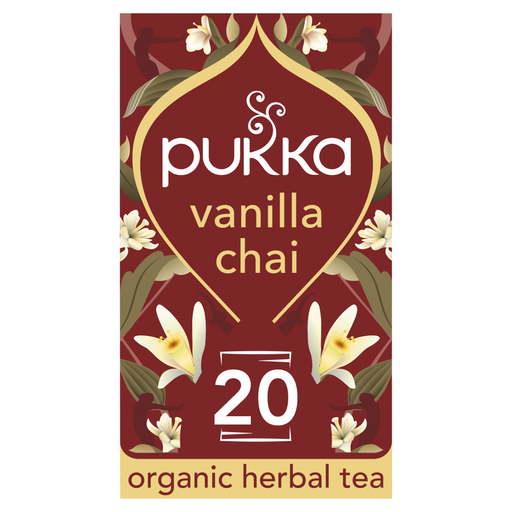
This caffeine-free herbal chai-style option suits a spiced brunch drink without a black-tea base.
 No image available
This caffeine-free herbal chai-style tea offers a spiced option for brunch guests who prefer a drink without black tea.
The 20-sachet pack lists cinnamon, ginger, cardamom, vanilla and liquorice. It is not black-tea chai; check the current pack’s warnings and brewing directions before serving.
No. Decaffeinated black tea can retain traces of caffeine, while a chai-style herbal infusion explicitly described as caffeine-free offers a different tea base. Check the ingredients as well as the caffeine wording on the particular pack.
Do not make ordinary black chai the only option for that guest. Teapigs’ standard chai contains Assam black tea and caffeine; offer a clearly identified caffeine-free herbal chai-style drink or a decaffeinated tea if traces are acceptable to them.
Check the current ingredients, warnings and preparation directions, especially if guests have ingredient restrictions. Also confirm whether the drink is labelled caffeine-free, decaffeinated or neither.
Pukka Spiced Vanilla Chai contains liquorice. Read the current pack for any applicable warning and let guests check the ingredients rather than assuming all chai-style blends contain the same spices.
Follow the directions for the product you serve. Teapigs specifies one tea temple per person, boiling water and at least 3 minutes for Pumpkin Spiced Chai; check other packs individually and serve additions separately when guests have different preferences.