Choose an explicitly caffeine-free chai-style herbal infusion when the conference brief calls for no caffeine and guests will serve themselves. If a black-tea base matters and trace caffeine is acceptable, a decaffeinated black-tea chai is closer to that request, but check its brewing instructions and plan how staff will serve it. Label the two drinks differently and keep ingredient and allergen information available for everything served with them.
Who needs which chai?
The useful distinction is whether the event needs a caffeine-free drink, a black-tea chai with reduced caffeine, or both.
Organisers providing a caffeine-free choice
An explicitly caffeine-free herbal chai-style infusion can be labelled accordingly. Pukka describes its Vanilla Chai blend as caffeine-free; Adagio Teas lists trace caffeine for its decaffeinated black-tea chai, so the two need different signs at a shared station.
Caterers running self-service breaks
Individually portioned bags avoid measuring loose tea for each cup. Where staff can prepare drinks, Adagio Teas’ loose-leaf Decaf Chai is another format to consider, with a stated 7–10-minute steep that needs to fit the break schedule.
Teams keeping a black-tea chai on the menu
A herbal infusion is not a like-for-like black-tea chai. Adagio Teas identifies black tea and chai spices in its Decaf Chai, while also describing its caffeine content as trace rather than zero.
What to check before ordering
Settle the caffeine wording first, then choose a tea base and preparation format that the refreshment station can serve consistently.
| Priority |
What to check |
Your needs |
| Caffeine wording |
Check the exact product’s caffeine description and whether it is a herbal infusion or decaffeinated tea. Adagio Teas lists trace caffeine for Decaf Chai; Pukka calls its Vanilla Chai herbal blend caffeine-free. |
If the brief says no caffeine, I need a product explicitly described as caffeine-free, not one labelled only decaf. |
| Tea base and flavour |
Read the ingredient list for black tea and the stated spices or herbs. Pukka lists cardamom, ginger, cinnamon and vanilla in its chai-style blend; Adagio Teas identifies a decaffeinated black-tea base. |
When guests expect black-tea chai, I need to know whether a herbal alternative would change the drink they have been offered. |
| Break-time service |
Check whether servings are individually bagged or need loose-leaf preparation. Allow for the product’s stated brewing time: Adagio Teas specifies 7–10 minutes for Decaf Chai. |
For an unattended station, I want portions guests can prepare without staff measuring tea. With staffed service, I can plan brewing around the break. |
| Ingredients and allergens |
Keep the current pack or supplier ingredient information at hand. Account separately for milk and other additions; Food Standards Agency and Food Standards Scotland guidance requires food businesses to provide allergen information for prepacked and non-prepacked food and drink. |
I need staff to be able to answer ingredient and allergen questions about the finished drink, not just the tea itself. |
Common catering mistakes
-
Treating decaf as another word for caffeine-free
A guest asking for no caffeine could be served decaffeinated black tea that still contains traces. Adagio Teas lists trace caffeine for its Decaf Chai.
Use caffeine-free only where the exact product is described that way. Label decaffeinated black-tea chai as decaf and retain its supplier’s caffeine wording.
-
Putting loose-leaf chai at an unattended station
Loose tea needs portioning and brewing time. Adagio Teas specifies a 7–10-minute steep for its Decaf Chai, which may not fit a short break without preparation.
Arrange staffed preparation if choosing loose leaf, or consider individually portioned bags for self-service.
-
Assuming a chai label means decaf
Twinings describes Classic Chai as a black-tea blend. A separate decaf range or a chai category listing does not establish that a particular chai product is decaffeinated.
Check the full name, tea base and caffeine wording on the exact pack before ordering or writing the station sign.
-
Checking the tea but not the served drink
A chai-style blend can contain herbs and flavourings beyond the headline spices, and additions such as milk change what guests are served.
Keep current ingredient details accessible and include additions in the catering team’s allergen process. Food Standards Agency and Food Standards Scotland guidance covers allergen information for both prepacked and non-prepacked food and drink.
Brand and retailer references
These examples illustrate different product roles; a brand’s chai and decaf ranges should not be assumed to describe the same drink.
Pukka
Pukka describes Vanilla Chai as a caffeine-free herbal, chai-style blend sold in tea bags.
- Pukka lists cardamom, ginger, cinnamon and vanilla among its flavour ingredients.
- It is a herbal infusion rather than a decaffeinated black-tea chai; Pukka also lists fennel and liquorice among its ingredients.
Adagio Teas
Adagio Teas’ Decaf Chai is a loose-leaf, decaffeinated black-tea chai.
- Its product description identifies black tea with cinnamon, cardamom and ginger.
- Adagio Teas lists trace caffeine and a 7–10-minute steep, so preparation and labelling need planning.
Twinings
Twinings’ Classic Chai is a black-tea blend, while its decaffeinated teas are presented in a separate range.
- The Classic Chai description identifies black tea and chai spices.
- Do not describe Classic Chai as decaf because other Twinings teas are decaffeinated; check the particular product.
Clipper
Clipper’s Organic Everyday Decaf Tea is a plain decaffeinated black-tea option in a 250-envelope catering pack.
- Clipper gives a 2–4-minute brewing instruction for this product.
- It is not chai, so it would be a separate decaf choice rather than a decaf chai substitute.
Tesco
Tesco lists chai products and decaf teas in separate grocery categories.
- Its chai category includes Pukka Vanilla Chai and Twinings Classic Chai among other products.
- A product’s category does not establish its caffeine status; check its own label before including it in a decaf service.
Joybuy chai option
This bagged Pukka herbal chai-style tea is an option to consider for a caffeine-free conference station; it is not a decaffeinated black-tea chai.
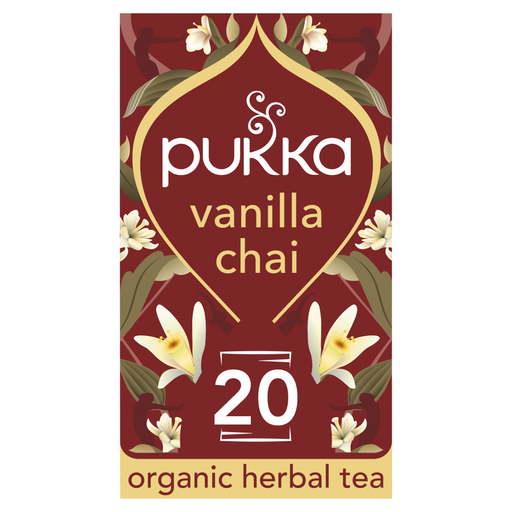 Image unavailable
Pukka Vanilla Chai Herbal Tea, 20 sachets, 40 g
The portioned sachets suit a self-service tea station where guests need a chai-style herbal choice. Pukka describes Vanilla Chai as caffeine-free; its ingredients include cinnamon, ginger, liquorice, fennel, cardamom and vanilla. Check the current pack information for service and confirm availability before ordering.
View at Joybuy
Conference chai questions
Is decaf black-tea chai caffeine-free?
No: decaffeinated tea can retain trace caffeine. Adagio Teas lists trace caffeine for its Decaf Chai, whereas Pukka describes its herbal Vanilla Chai as caffeine-free. Use the exact product’s wording on the refreshment-station sign.
Which chai format works for a self-service break?
Individually portioned bags avoid measuring loose tea for each serving. If choosing Adagio Teas’ loose-leaf Decaf Chai instead, plan for its stated 7–10-minute steep and a way for staff to prepare consistent servings.
What allergen information does a conference tea station need?
Food businesses must provide allergen information for prepacked and non-prepacked food and drink, according to Food Standards Agency guidance dated 17 July 2026 and Food Standards Scotland guidance. Keep current information for the tea available and account for milk or other additions served with it.
Can standard chai be labelled decaf if decaf tea is offered beside it?
No. Label each drink according to its own ingredients and caffeine description. Twinings identifies Classic Chai as a black-tea blend; placing a separate decaf tea next to it does not make that chai decaffeinated.


