Cream-tea hosts who want less caffeine
If you plan to serve chai with milk and want to keep a black-tea base, look for a blend explicitly labelled decaffeinated rather than a standard chai.


For a cream tea served with milk, choose a decaffeinated black-tea chai if you want a black-tea base alongside the spices; decaf tea can still contain traces of caffeine. Choose a caffeine-free herbal chai if avoiding those traces matters more, but expect a different flavour and check how you would serve it with milk.
If you plan to serve chai with milk and want to keep a black-tea base, look for a blend explicitly labelled decaffeinated rather than a standard chai.
A chai labelled as a caffeine-free herbal infusion takes a different route from decaffeinated black tea. Choose it if that distinction matters more to you than black-tea flavour.
Compare the listed spices with the jam and clotted cream you are serving. Vanilla, liquorice and fennel give a different flavour direction from a black-tea blend with pepper and anise; taste the brew before adding sweetener.
Start with the tea base and caffeine description, then consider milk, spice and the preparation involved in serving guests.
| Priority | What to check | Your needs |
|---|---|---|
| Tea base and caffeine | Read the ingredients for black tea or a herbal base. Check whether the pack says decaffeinated or caffeine-free; Twinings UK notes that decaffeinated tea can retain minor caffeine traces. | I want the taste of black tea with less caffeine, or I would rather choose a caffeine-free herbal infusion even though it tastes different. |
| Serving with milk | Check the blend’s preparation guidance. Tea India UK instructs drinkers to infuse its Decaf Masala Chai for 3–5 minutes, then add milk or a dairy-free alternative to taste. | I plan to offer milk with the cream tea, so I want a blend with serving instructions that suit that plan. |
| Spice and sweetness | Compare the ingredients: Tea India UK lists ginger, cinnamon, cardamom, cloves, black pepper and anise; Pukka Herbs UK lists vanilla, cinnamon, ginger, cardamom, fennel and liquorice in its Vanilla Chai. Taste before adding sugar or honey. | With jam and clotted cream already on the table, I would like to decide whether the brewed chai needs any extra sweetness. |
| Preparation format | Check whether the tea comes in bags or loose form, and allow for the stated steep time. Tea India UK gives 3–5 minutes for its teabags; Adagio Teas UK gives 7–10 minutes for its loose Decaf Chai. | Teabags would simplify serving several cups, while loose tea would let me adjust how much tea I use. |
According to Twinings UK, decaffeinated tea can retain minor caffeine traces. A caffeine-free herbal chai has no black-tea base, so the two choices also differ in flavour.
Choose an explicitly decaffeinated black-tea chai for that tea base, or a clearly labelled caffeine-free herbal chai if avoiding traces is the priority.
Twinings UK describes conventional chai as black tea with spices. Spices in a blend do not establish its caffeine status.
Check both the ingredient list and the caffeine description before buying.
A chai’s spices and any added sweetener need to sit alongside the scones, jam and clotted cream you intend to serve.
Follow the maker’s brewing guidance, taste the tea, then add milk and sweetener gradually if wanted.
Ingredients and pack information can change. Sainsbury’s advises shoppers to read the current label rather than rely solely on online product details.
Check the pack being served, particularly if a guest has an ingredient, allergen or caffeine requirement.
Its Decaf Masala Chai is a teabag option for serving spiced black tea with milk.
Its loose Decaf Chai offers a black-tea and spice option when measuring tea and allowing a longer steep works for your gathering.
Its herbal chai offers a caffeine-free route for readers who do not need a black-tea base.
Twinings UK explains the distinction between decaffeinated tea and conventional black-tea chai.
Its Everyday Decaf is a decaffeinated black-tea reference if you prefer to choose spices separately from the tea.
This herbal chai option suits a cream-tea plan where a caffeine-free infusion matters more than a black-tea base. Check its preparation guidance if you intend to serve it with milk.
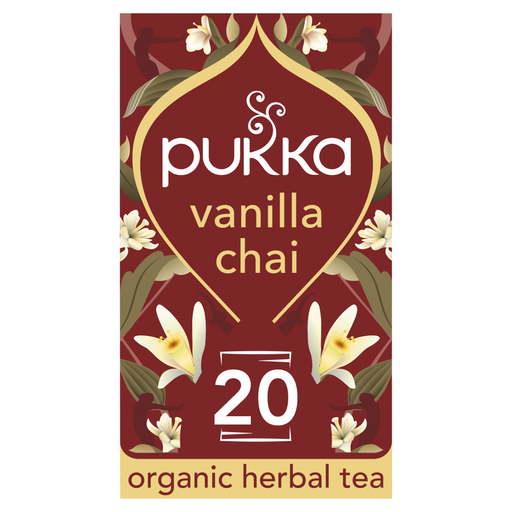 Image unavailable
Consider this caffeine-free herbal chai if you prefer a spiced infusion to decaffeinated black tea. Pukka lists vanilla, cinnamon, ginger, cardamom, fennel and liquorice in Vanilla Chai; taste it beside the scones before adding sweetener, and check the pack’s preparation guidance if serving it with milk.
No. Twinings UK says decaffeinated tea can retain minor caffeine traces. If avoiding those traces matters to you, look for a chai explicitly labelled as a caffeine-free herbal infusion, bearing in mind that it will not have a black-tea base.
A decaffeinated black-tea chai is the closer match to a milky black-tea serving. Tea India UK instructs drinkers to brew its Decaf Masala Chai for 3–5 minutes before adding milk or a dairy-free alternative to taste; check the directions for any other blend you choose.
Choose a spice list that appeals to you, follow the maker’s brewing time and taste the cup before adding sweetener. Tea India UK lists pepper and anise alongside familiar chai spices, while Pukka Herbs UK lists vanilla, fennel and liquorice in Vanilla Chai; those are different flavour directions to consider with your cream tea.
It can replace it when your priority is a caffeine-free infusion rather than black-tea flavour. Pukka Herbs UK lists Spiced Vanilla Chai in its caffeine-free range, but a herbal chai is not a like-for-like substitute for the black-tea base of decaffeinated masala chai.
Check the tea base, caffeine description, ingredients and brewing directions on the current pack, along with any dietary or allergen information relevant to your guests. Sainsbury’s advises reading the label rather than relying solely on an online description.