Hosts serving guests who avoid caffeine
A herbal chai explicitly labelled caffeine-free offers a spiced alternative to coffee without relying on the word “chai” as a caffeine guide. Pukka describes its Spiced Vanilla Chai as caffeine-free.


For a chai-style drink when a guest wants to avoid caffeine, choose a herbal chai explicitly labelled caffeine-free; Pukka describes its Spiced Vanilla Chai this way. If guests would rather have black tea with milk, serve a separately labelled decaffeinated black tea, but do not assume it has chai spices or is caffeine-free. For a mixed group, offering both lets guests choose; check the herbal chai’s ingredients before serving, particularly for anyone who is pregnant.
The useful distinction for a catch-up is whether a guest wants a chai-style cup without caffeine or a decaffeinated black-tea cup.
A herbal chai explicitly labelled caffeine-free offers a spiced alternative to coffee without relying on the word “chai” as a caffeine guide. Pukka describes its Spiced Vanilla Chai as caffeine-free.
A separately labelled decaffeinated black tea gives guests a black-tea option that they can take with milk. It is a different drink from a spiced herbal chai; Twinings’ All Day Decaf, for example, is decaffeinated black tea rather than chai.
Read the ingredients on the pack you plan to serve when a guest has an allergy or avoids particular botanicals. Pukka’s vanilla chai includes liquorice root, and NHS pregnancy guidance says to avoid teas containing liquorice root.
Decide which type of cup to offer first, then check the exact product’s caffeine wording, ingredients and pack size.
Choose when: A guest wants chai-like spices and is avoiding caffeine; Pukka calls its Spiced Vanilla Chai caffeine-free.
Bear in mind: It is a herbal infusion, not black-tea chai, and Pukka’s blend contains liquorice root.
Choose when: Guests prefer a black-tea cup with milk and want a decaf option; Twinings identifies its All Day Decaf as decaffeinated black tea.
Bear in mind: Decaf black tea is not automatically chai-flavoured, and a decaffeinated label is not the same claim as caffeine-free.
| Priority | What to check | Your needs |
|---|---|---|
| Caffeine wording | Look for “caffeine-free” or “decaffeinated” on the exact product. Twinings explains that black tea naturally contains caffeine, so ordinary black-tea chai should not be assumed decaf. | If someone wants to avoid caffeine, I need an explicitly caffeine-free option rather than a chai chosen for its spices alone. |
| Tea base and spices | Check whether the ingredients describe a herbal infusion or black tea, and whether chai spices are actually included. Decaf black tea needs a separate spice choice if chai flavour matters. | Some friends may want a spiced herbal cup; others would rather have the taste of black tea with milk. |
| Serving format | Compare the stated tea-bag count with the cups you expect to make. Pukka lists 20 bags for its Spiced Vanilla Chai; pack counts for the Joybuy options below vary. | For a get-together, I want to make individual cups and keep the different drinks easy to distinguish. |
| Guest ingredients | Read the current pack’s ingredients and emphasised allergens. Pukka’s vanilla chai contains liquorice root; NHS guidance says to avoid teas containing liquorice root during pregnancy. | Before I put out a shared tea option, I need to know whether its ingredients work for the people I am serving. |
Twinings describes conventional chai as black-tea based and explains that black tea naturally contains caffeine. Spices alone do not tell you whether a chai is suitable for someone avoiding it.
Check the exact pack for an explicit caffeine-free or decaffeinated statement rather than relying on “chai” in the name.
Decaffeinated black tea and caffeine-free herbal chai answer different requests: one retains a black-tea base, while the other can provide a spice-led cup without black tea.
If both preferences matter, label and serve the two drinks separately. Check for spices before describing any decaf black tea as chai.
Pukka’s vanilla chai includes liquorice root. NHS pregnancy guidance says to avoid teas containing liquorice root during pregnancy, so caffeine-free wording alone does not settle whether this drink suits every guest.
Check the ingredients before serving it and offer a different, clearly labelled drink to a pregnant guest.
The pack being served gives guests the relevant ingredients information. The Food Standards Agency says allergens present in prepacked food must be emphasised in its ingredients list.
Read that pack’s ingredients and highlighted allergens before offering the tea to someone with an allergy.
These product-line examples help distinguish caffeine-free herbal chai from decaffeinated black tea; a brand’s wider range does not give every chai the same caffeine status.
Pukka describes its Spiced Vanilla Chai as a caffeine-free herbal chai with cardamom, ginger, cinnamon and vanilla, sold in a 20-bag pack.
Twinings offers chai and a separate All Day Decaf black tea; those names describe different types of drink.
Clipper identifies its Organic Everyday Decaf as decaffeinated black tea blended with Assam.
The teapigs UK range lists chai tea and decaf English Breakfast tea separately.
Tesco’s listing describes Pukka Organic Vanilla Chai as a caffeine-free herbal tea containing spices and liquorice root.
These options include a herbal chai for the spiced-drink route and separate decaf teas for guests who prefer tea without chai spices. Check the exact pack’s caffeine wording and ingredients against each guest’s needs.
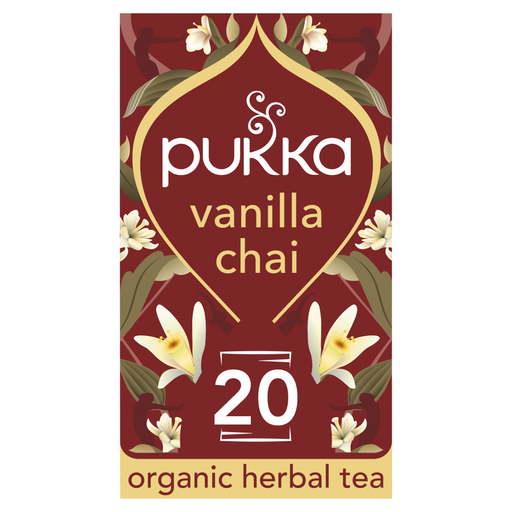 No image available
A herbal chai option for individual spiced cups; the product listing describes it as caffeine-free. Check the pack for liquorice root before serving, particularly to a pregnant guest.
 No image available
An 80-bag decaf tea option for serving separate cups alongside chai. It is not presented as a chai-spiced product; check the pack if a guest needs a specific caffeine limit.
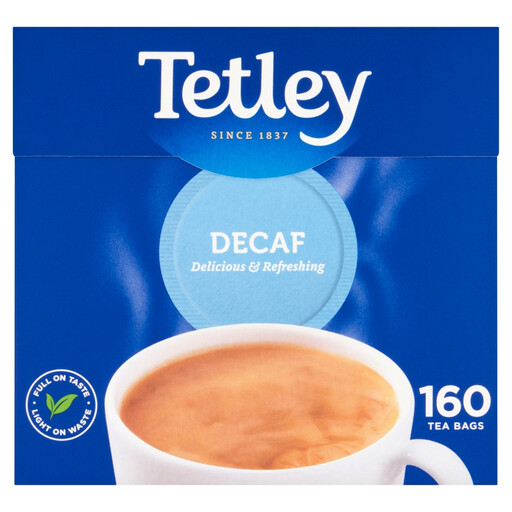 No image available
The 160-bag pack suits a plan to keep a separate decaf tea available beyond one gathering. It is not presented as chai; check the pack if a guest needs a specific caffeine limit.
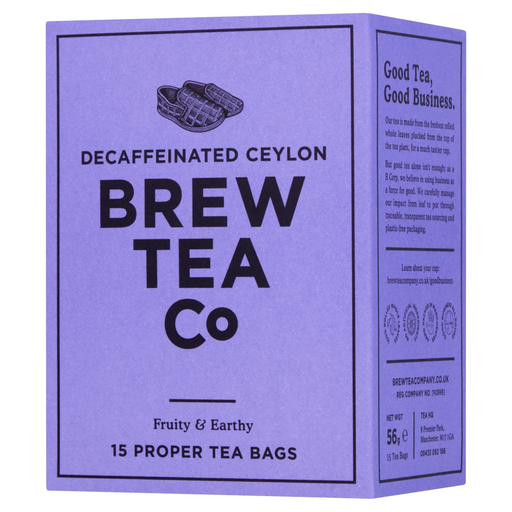 No image available
A 15-bag decaffeinated tea pack for offering individual cups as an alternative to chai. It is not presented as a spice blend; check the pack if a guest needs a specific caffeine limit.
 No image available
An 80-bag decaf tea option for guests who would rather have a separate tea cup than herbal chai. Clipper describes Organic Everyday Decaf as decaffeinated black tea, not a chai blend; check the pack if a guest needs a specific caffeine limit.
No: conventional chai can contain black tea, which naturally contains caffeine, as Twinings explains. Check the exact chai product for a caffeine-free or decaffeinated statement instead of judging it by its spices.
Choose a chai-style herbal infusion explicitly labelled caffeine-free. Pukka describes its Spiced Vanilla Chai this way, but check its ingredients as well: the blend contains liquorice root, which NHS pregnancy guidance says to avoid in tea during pregnancy.
Yes, if the guest wants a black-tea cup rather than chai spices. Twinings describes All Day Decaf as decaffeinated black tea and states that it is decaffeinated to 0.2%; it is not a chai-flavoured product.
Check the exact pack’s ingredients and offer an alternative if it contains liquorice root. Pukka’s vanilla chai includes liquorice root, and NHS pregnancy guidance says to avoid teas containing it.
Read the ingredients on the pack you will serve and check any emphasised allergens against your guest’s needs. The Food Standards Agency says prepacked food must have an ingredients list and that allergens present must be emphasised each time they appear in it.