Evening chai drinkers avoiding caffeine
A herbal chai explicitly labelled caffeine-free suits an evening cup when avoiding caffeine matters more than retaining black tea. Twinings notes that decaffeinated tea can still contain traces of caffeine.


Choose a naturally caffeine-free herbal chai when avoiding caffeine is more important than having a black-tea base. If you want the tea-and-spice character of masala chai, choose a decaffeinated black-tea blend that suits your preferred way of brewing it, but remember that decaf tea can retain traces of caffeine. Check the ingredients too: Pukka Vanilla Chai contains liquorice, and NHS pregnancy guidance advises avoiding herbal teas containing liquorice root.
A herbal chai explicitly labelled caffeine-free suits an evening cup when avoiding caffeine matters more than retaining black tea. Twinings notes that decaffeinated tea can still contain traces of caffeine.
A decaffeinated black-tea-and-spice blend keeps the tea base associated with masala chai. Tea India gives both water and milk preparation directions for its Decaf Masala Chai.
A chai-style infusion offers spices without a black-tea base, but blends differ. Check the full ingredient list, particularly if choosing a drink for someone who needs to avoid liquorice root.
Choose it when: You want a tea-and-spice cup to serve with milk; Tea India gives milk preparation directions for its Decaf Masala Chai.
Bear in mind: Decaffeinated black tea is not necessarily caffeine-free; Twinings says traces can remain.
Choose it when: Avoiding caffeine takes priority over a black-tea base; Pukka and teapigs identify the herbal chai blends described here as caffeine-free.
Bear in mind: Ingredients change the character of the cup, and Pukka Vanilla Chai contains liquorice.
| Priority | What to check | Your needs |
|---|---|---|
| Caffeine status | Check whether the pack says decaffeinated black tea or naturally caffeine-free herbal infusion. Twinings says traces of caffeine can remain in decaf tea. | For an evening cup, I may want to avoid caffeine altogether rather than simply choose a decaffeinated tea. |
| Tea and spice profile | Read the ingredients for a black-tea base and the spices you want. Herbal blends can instead include fruit, cocoa or vanilla notes. | I want a familiar tea-and-spice cup with winter food, or I would rather have a herbal drink with a different flavour. |
| Milk preparation | Check the exact pack directions if you plan to brew chai in milk. Tea India provides water and simmered-milk methods for its Decaf Masala Chai. | A milk-based cup matters to me, so I want preparation directions that fit how I intend to serve it. |
| Ingredient suitability | Read the complete ingredient list. Pukka Vanilla Chai contains liquorice; NHS pregnancy guidance advises avoiding herbal teas containing liquorice root. | If I am choosing for someone pregnant, I need to check for liquorice root rather than rely on a caffeine-free label alone. |
Decaffeinated black tea and a naturally caffeine-free herbal infusion are different choices. Twinings says minor traces of caffeine can remain in decaf tea.
If you need to avoid caffeine, look for an explicitly caffeine-free blend and check its ingredients. Choose decaf black-tea chai when reduced caffeine and a black-tea base meet your needs.
Herbal chai-style blends can contain fruit, cocoa or vanilla instead of black tea, changing the character of the drink.
For a black-tea-and-spice cup, check for a decaffeinated tea base and suitable brewing directions. Choose a herbal blend for its own listed ingredients, not as an assumed like-for-like replacement.
Pukka Vanilla Chai lists liquorice. NHS pregnancy guidance advises avoiding herbal teas containing liquorice root.
Check the ingredient list when buying for someone pregnant, and choose a blend without liquorice root in line with that NHS advice.
A brand name alone does not establish whether a particular chai is decaffeinated, caffeine-free or based on black tea; check the exact blend.
Its Decaf Masala Chai is a decaffeinated black-tea blend with directions for preparation in water or milk.
Pukka lists its vanilla herbal chai among its caffeine-free teas; its Original Chai is a different blend containing black tea.
Pumpkin Spiced Chai is labelled naturally caffeine-free and takes a fruit-and-spice approach rather than a black-tea one.
Twinings describes chai as black tea with spices and separately explains how decaffeinated tea differs from caffeine-free infusions.
Clipper Everyday Decaf is an Assam-based decaffeinated black tea to consider if you want to add your own chai spices.
This herbal chai option is for a caffeine-free, spiced evening cup rather than a decaffeinated black-tea masala chai.
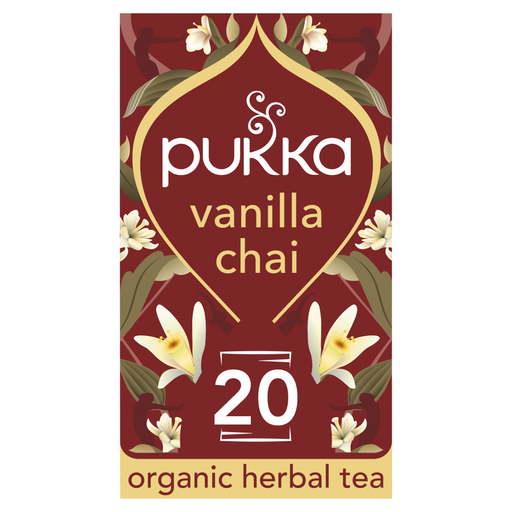 No image available
A caffeine-free herbal chai for an evening cup when a black-tea base is not essential. The blend lists cinnamon, ginger, cardamom, vanilla and liquorice; the pack contains 20 sachets. NHS pregnancy guidance advises avoiding herbal teas containing liquorice root. Check the pack directions if you intend to prepare it with milk.
No. Decaffeinated black-tea chai can retain traces of caffeine, according to Twinings. A naturally caffeine-free herbal chai has no black-tea base, but check the exact product rather than assuming every drink labelled chai is herbal.
A decaffeinated black-tea masala chai is the route to consider if you want tea and spices brewed with milk. Tea India gives simmered-milk directions for its Decaf Masala Chai; choose a caffeine-free herbal blend instead if avoiding caffeine matters more than retaining black tea.
Check the ingredient list for liquorice root. Pukka Vanilla Chai lists liquorice, and NHS pregnancy guidance advises avoiding herbal teas containing liquorice root. This precaution concerns that ingredient, not every chai blend.
Follow the directions for the specific blend. Tea India gives water and simmered-milk methods for its Decaf Masala Chai, while teapigs directs brewing Pumpkin Spiced Chai in boiling water for at least 3 minutes.