Students avoiding caffeine in the evening
Look for an explicit caffeine-free statement and check the ingredients, rather than assuming a chai blend is decaffeinated. This also avoids relying on a decaf tea that may retain traces of caffeine.


If avoiding caffeine is the priority, choose a chai explicitly labelled caffeine-free, such as Pukka Spiced Vanilla Chai or Teapigs Pumpkin Spiced Chai, rather than relying on the word “chai”. Twinings Classic Chai and Clipper Indian Chai contain black tea; herbal chai gives up that conventional tea base, so check both the caffeine wording and ingredients before packing a box.
The deciding question is whether you want to avoid caffeine-containing tea leaf or keep the flavour of a black-tea chai.
Look for an explicit caffeine-free statement and check the ingredients, rather than assuming a chai blend is decaffeinated. This also avoids relying on a decaf tea that may retain traces of caffeine.
Tea bags or tea temples offer a way to make chai without a stovetop pan or latte equipment. Check the pack’s brewing instructions and whether you like the blend prepared without milk.
If the black-tea base matters to you, distinguish the chai from a brand’s separate decaf teas. Twinings Classic Chai and Clipper Indian Chai both contain black tea and are not caffeine-free choices.
Decide whether caffeine-free wording or a conventional black-tea base matters more, then check preparation and ingredients for your new kitchen.
| Priority | What to check | Your needs |
|---|---|---|
| Caffeine status | Look for “caffeine-free” or “naturally caffeine-free” on the exact chai product. Twinings notes that decaffeinated tea can retain traces of caffeine; check for black tea in the ingredients too. | For an evening cup, I want a chai that does not rely on decaffeinating tea leaf. |
| Tea base and flavour | Twinings Classic Chai lists 70% black tea, while Clipper Indian Chai lists black tea first. Pukka and Teapigs describe their named chai blends as caffeine-free alternatives with different spice and other ingredient profiles. | I may prefer the familiar black-tea base, or choose a herbal-style chai if avoiding caffeine matters more. |
| Preparation | Check the format and the instructions on your pack. Teapigs specifies boiling water and at least 3 minutes for Pumpkin Spiced Chai; Pukka’s general guidance for herbal blends is about 5–10 minutes. | With just a kettle and mug in a shared kitchen, I want a preparation method I can use easily. |
| Ingredients | Read the current ingredient and allergen information. Check for liquorice in Pukka Spiced Vanilla Chai, and distinguish brewed tea bags from instant chai latte mixes that may contain milk or soya. | The recipe matters to me as much as the chai name, particularly if I need to check an ingredient or pack warning. |
Chai does not identify caffeine status: Twinings Classic Chai and Clipper Indian Chai contain black tea.
If avoiding caffeine is essential, choose a product explicitly labelled caffeine-free and check its ingredient list.
Decaffeinated tea can retain traces of caffeine, whereas the named caffeine-free Pukka and Teapigs chai products take a herbal-style route without a black-tea base.
Check which wording appears on the exact product; choose a caffeine-free infusion if you do not want to rely on decaffeination.
An instant mix can have a different recipe from brewed tea. Joybuy’s listing for Nestlé Everyday Vanilla Chai Latte Tea 3in1 states 11.4g sugars per 20g sachet and identifies milk and soya allergens.
Decide whether you want a brewed tea or an instant latte, and read the ingredients and nutrition information on the pack you choose.
Pukka identifies liquorice in Spiced Vanilla Chai. A general description of chai cannot establish whether a particular blend is suitable for an individual health concern.
Read the current pack ingredients and any warning. Seek appropriate professional advice if you have a personal health question about an ingredient.
A brand’s chai and decaf products need not be the same tea, so compare the names and ingredients of individual blends.
Pukka describes Spiced Vanilla Chai as a caffeine-free herbal chai.
Teapigs describes Pumpkin Spiced Chai tea temples as naturally caffeine-free.
Twinings Classic Chai is a black-tea chai; the brand also has separate decaffeinated teas.
Clipper’s Indian Chai Black Tea and Everyday Decaf are distinct products.
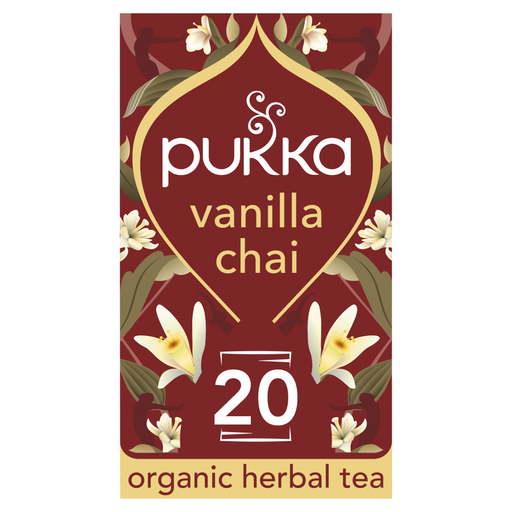
The Pukka herbal chai below is a tea-bag option for a kettle-and-mug routine when caffeine-free wording matters.
 No image available
These sachets suit a kettle-and-mug chai routine, and Joybuy describes this product as caffeine-free. The ingredient list includes liquorice root, so check the current pack ingredients, any warning and its brewing instructions.
No. Decaffeinated tea has undergone caffeine removal and can retain traces, according to Twinings. Pukka describes Spiced Vanilla Chai as caffeine-free and Teapigs describes Pumpkin Spiced Chai as naturally caffeine-free; check the wording and ingredients on the exact pack.
Yes, the named tea-bag and tea-temple options can be brewed with a kettle and mug. Teapigs specifies boiling water and at least 3 minutes for Pumpkin Spiced Chai; Pukka gives a general guide of about 5–10 minutes for herbal blends, so follow your particular pack’s instructions.
No. Twinings Classic Chai lists 70% black tea, and Clipper Indian Chai lists black tea as its first ingredient. Choose either for its black-tea base only if avoiding caffeine is not your requirement.
Check the pack’s ingredients, allergens, date and storage instructions before you put it away. Recipes differ: Pukka Spiced Vanilla Chai contains liquorice, while an instant chai latte mix may include milk and soya rather than having the ingredients of plain brewed tea.