Breakfast drinkers avoiding caffeine
A naturally caffeine-free herbal chai offers cinnamon, ginger and cardamom flavours without a black-tea base. Choose it for the spice, not in expectation of a robust breakfast-tea cup.


If avoiding caffeine is the deciding factor, choose a naturally caffeine-free herbal chai for its spices, but expect a different cup from black tea. If you want black-tea character with milk and only need to reduce caffeine, choose decaffeinated black tea; it is not chai and can retain traces of caffeine. Conventional Assam-based chai supplies both black tea and spices, but it does not meet a caffeine-free requirement.
For a full Scottish breakfast, the useful distinction is whether you want to avoid caffeine, reduce it or keep the black-tea base of conventional chai.
A naturally caffeine-free herbal chai offers cinnamon, ginger and cardamom flavours without a black-tea base. Choose it for the spice, not in expectation of a robust breakfast-tea cup.
Decaffeinated black tea is the closer route if you want black tea with milk beside a substantial savoury breakfast. Twinings notes that decaffeinated tea can still contain traces of caffeine.
Conventional black-tea chai combines tea and spices. Teapigs lists Assam black tea, cinnamon, ginger, cardamom and vanilla in its Chai, and states that it naturally contains caffeine.
Settle the caffeine requirement first, then choose between a spiced herbal infusion and a black-tea cup. The product label matters more than the word ‘chai’ alone.
Choose it when: Avoiding caffeine matters more than having a black-tea base.
Trade-off: Spices give it chai-style flavour, but a herbal infusion will not reproduce a black breakfast tea.
Choose it when: You want black tea with breakfast and reduced caffeine is sufficient.
Trade-off: It has no chai spices unless you add them, and traces of caffeine may remain after decaffeination.
Choose it when: Both black tea and chai spices matter, and caffeine is acceptable.
Trade-off: An Assam-based chai such as Teapigs Chai naturally contains caffeine.
| Priority | What to check | Your needs |
|---|---|---|
| Caffeine | Read the specific product’s caffeine statement and ingredients. A naturally caffeine-free herbal blend differs from decaffeinated black tea, which Twinings says can retain traces of caffeine. | I want to know whether I need to avoid caffeine or simply reduce it before choosing a tea for breakfast. |
| Tea and spice | Check for a black-tea base if you want tea with milk, or look at the named spices if chai flavour is the priority. Cocoa, carob and pumpkin distinguish Teapigs Pumpkin Spiced Chai from a more straightforward cinnamon-and-ginger blend. | Would I rather have a familiar black-tea cup alongside savoury food, or aromatic spice without black tea? |
| Ingredients | Read the current pack for the full ingredient list and any information relevant to your dietary needs. Tesco warns that recipes and allergen information can change. | Ingredients such as liquorice, fennel or cocoa may affect which blend I choose and serve. |
Twinings explains that decaffeination removes nearly all caffeine from tea, but small traces can remain. A naturally caffeine-free herbal chai is a different type of drink.
Decide whether reduced caffeine is enough, then check the caffeine wording and ingredients on the specific pack.
Pukka Vanilla Chai is a spiced herbal infusion, whereas Twinings Everyday Decaffeinated and Clipper Organic Everyday Decaf are black teas. They serve different flavour preferences beside a full Scottish breakfast.
Choose decaffeinated black tea for a black-tea cup with milk, or caffeine-free herbal chai when the spices matter more.
Teapigs Pumpkin Spiced Chai includes apple, cocoa husk, carob and pumpkin as well as spices. Those ingredients give it a different profile from a cinnamon, ginger and cardamom-led herbal chai.
Compare ingredient lists before choosing a blend to drink with a savoury breakfast.
Tesco notes that food recipes and allergen information can change, so a saved listing may not describe the pack you receive.
Read the current pack before serving, particularly when an ingredient or allergen matters to you.
These named ranges illustrate the difference between caffeine-free herbal chai, decaffeinated black tea and conventional chai; the descriptions do not apply to every tea from each brand.
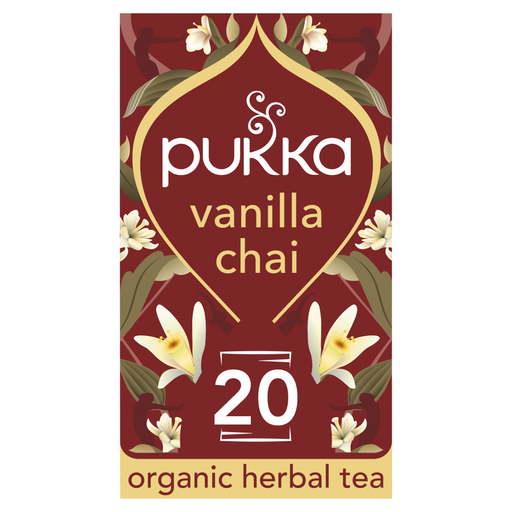
Pukka describes its Vanilla Chai as a caffeine-free herbal blend with cardamom, ginger, cinnamon and vanilla.
Twinings describes Everyday Decaffeinated as a Kenyan black-tea blend that can be served with milk; its chai range is a separate black-tea-and-spice option.
Clipper describes Organic Everyday Decaf as a decaffeinated black-tea blend made with Assam.
Teapigs lists Assam black tea and spices in its conventional Chai, while its Pumpkin Spiced Chai is described as naturally caffeine-free.
Tesco describes its Decaff Original Tea as a decaffeinated, full-bodied tea and lists Pukka Vanilla Chai as naturally caffeine-free.
These options include a caffeine-free herbal chai for a spiced breakfast cup and decaffeinated black teas for those who prefer black tea while reducing caffeine.
 No image available
A caffeine-free herbal chai option when you want spices with breakfast rather than a black-tea cup. The blend includes cinnamon, ginger, cardamom, vanilla, fennel and liquorice; check the current pack if an ingredient matters to you.
 No image available
A decaffeinated black-tea choice for a breakfast cup when reduced caffeine is sufficient. It is not chai, and decaffeinated tea may retain traces of caffeine.
 No image available
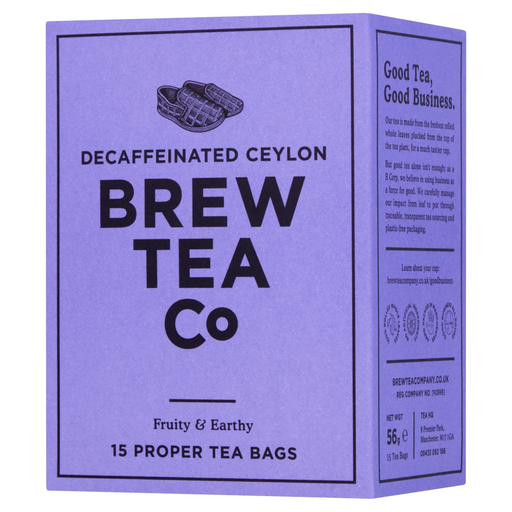
A decaffeinated black-tea alternative if you prefer tea to a herbal chai with breakfast. Its listing identifies Ceylon black tea and a CO2 decaffeination process; do not assume that decaffeinated means caffeine-free.
 No image available
Decaffeinated black tea for a breakfast cup when you want to reduce caffeine rather than choose herbal spice. The pack contains 80 tea bags; it is not chai, and decaffeinated tea may retain traces of caffeine.
 No image available
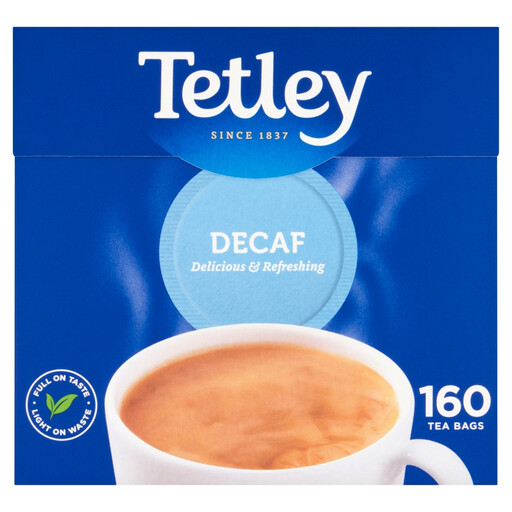
A 160-bag decaffeinated black-tea pack for those choosing a black-tea breakfast drink instead of herbal chai. It does not provide chai spices, and decaffeinated tea may retain traces of caffeine.
Not necessarily. Twinings says decaffeinated tea can retain small traces of caffeine, while a herbal chai explicitly labelled naturally caffeine-free is a different option. Check the specific pack rather than assuming the word ‘decaf’ means no caffeine.
Choose according to the cup you want: naturally caffeine-free herbal chai supplies spices without black tea, whereas decaffeinated black tea is the closer choice for a conventional black-tea drink with milk. Conventional Assam-based chai combines tea and spices but contains caffeine.
Follow the directions on the pack you buy, as brewing guidance differs between blends. Tesco advises 3–5 minutes for its Decaff Original Tea; Pukka’s general herbal guidance suggests 5–10 minutes depending on the herbs.
Check both the caffeine statement and the current ingredient and allergen information. Pukka Vanilla Chai includes liquorice and fennel alongside its spices, while Teapigs Pumpkin Spiced Chai includes apple, cocoa husk, carob and pumpkin; Tesco notes that food information can change.