Organisers with only a kettle
Instant decaf can be prepared with hot water and a spoon. Individually wrapped coffee bags also need only hot water, but each drink needs time to brew and leaves a used bag to dispose of.


For a kettle-only morning break, choose individually wrapped decaf coffee bags if each person needs a measured portion, or instant decaf if a shared jar and spoon work for your group. UK supplier listings show decaf coffee-bag packs of 150 and 300, so check the drink and pack count rather than assuming a box labelled ‘240 bags’ contains coffee; for instant coffee, use the exact pack’s serving guidance to work out how much to buy. Ground coffee or beans make sense only where a suitable brewing setup and someone to operate and clean it are available.
The right format depends on how people will prepare their drinks and whether the portions need to be counted individually.
Instant decaf can be prepared with hot water and a spoon. Individually wrapped coffee bags also need only hot water, but each drink needs time to brew and leaves a used bag to dispose of.
If each drink needs its own bag, check both the coffee-bag count and the product type. Discount Coffee lists a 150-bag decaf pack, while Stokes Coffee lists a 300-bag option. Cornish Tea & Coffee’s 240-bag decaf product is black tea, not coffee.
Label the drink as decaf rather than caffeine-free. Nescafé explains that decaf coffee can retain a small amount of caffeine, so anyone who needs to avoid caffeine completely should not rely on the word ‘decaf’ alone.
Choose when: Each person needs a separate coffee portion and the break area has mugs and hot water but no coffee machine.
Allow for: Brewing time, used-bag disposal and a pack count that may differ from 240.
Choose when: A shared kettle and a communal jar or refill suit the way the break is run.
Allow for: Measuring each drink; the weight on a jar does not establish a fixed number of cups.
Choose when: A compatible brewing setup and someone to run it are already available.
Allow for: Preparation and cleaning as part of the morning-break routine.
Settle the preparation method first, then check how the chosen pack translates into the number of drinks you need.
| Priority | What to check | Your needs |
|---|---|---|
| Preparation | Check whether the drink needs only hot water, how long a coffee bag must brew, and who will handle any equipment or cleaning. | I need people to make a drink during a short break without relying on someone to run a coffee machine. |
| Portion count | For coffee bags, confirm that the pack contains coffee and check its bag count. For jars and refills, use the exact product’s serving directions rather than converting grams directly into cups. | Around 240 drinks need to be available; I want to know whether I am counting individual bags or measuring from a shared container. |
| Storage and replenishment | Check whether bags are individually wrapped, how a communal jar will be kept sealed, and whether a refill suits the container in use. | If stock is replenished regularly, a refill may suit our setup; if drinks are issued one at a time, separate bags are easier to count. |
| Caffeine wording | Read the exact product description before describing the drink to others. According to Nescafé, decaf coffee can still contain a small amount of caffeine. | I want the break-area label to say ‘decaf’ without implying that the coffee contains no caffeine. |
Cornish Tea & Coffee lists a 240-bag decaffeinated black tea product, while the cited decaf coffee-bag suppliers list 150- and 300-bag formats. The same bag-count wording can lead to a different drink.
Confirm that the product is coffee and check the number of coffee bags before ordering.
Instant coffee is sold by weight, and the number of drinks depends on the preparation directions and the amount used per cup.
Use the exact pack’s serving guidance, agree how drinks will be measured and calculate the quantity needed for the break.
Nescafé states that decaf coffee retains a small amount of caffeine. ‘Decaf’ alone therefore does not establish that a drink contains none.
Describe it as decaffeinated and check product-specific information if the distinction matters to someone using the break area.
Beans and ground coffee need a suitable brewing method, unlike instant coffee and coffee bags prepared with hot water.
Choose beans or ground coffee only if the venue has the equipment and someone can take responsibility for preparation and cleaning.
That routine also takes time during a short break and may involve filters or other brewing supplies, depending on the equipment.
These examples show formats to compare; a brand’s wider range does not mean every format comes in a 240-serving pack.
A reference point for instant decaf where a kettle and shared jar suit the break area.
An instant decaf option for a shared jar, with a refill format for repeat supply.
Relevant where the venue can prepare ground coffee or beans rather than relying solely on a kettle.
A retailer reference for comparing own-label instant decaf with other decaf formats.
These instant decaf products suit a shared-kettle route for the morning break. They are sold by weight, so check serving directions before deciding how many packs will cover roughly 240 drinks.
 No image available
An instant decaf option for a shared-kettle break. The pack contains 100g; check its serving directions to work out how many packs you need.
 No image available
An instant decaf choice where drinks are prepared from a shared container. Its 190g weight is not a serving count; use the pack’s directions when planning for 240 cups.
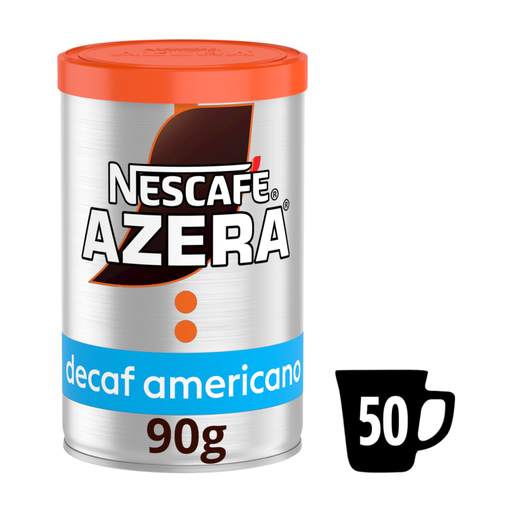 No image available
This 90g instant decaf product offers another shared-kettle option. Check its serving directions for the quantity required, and do not treat ‘decaf’ as a caffeine-free claim.
 No image available
A 300g instant decaf option for a communal break area. Confirm the preparation measure on the pack before calculating how many drinks it will provide.
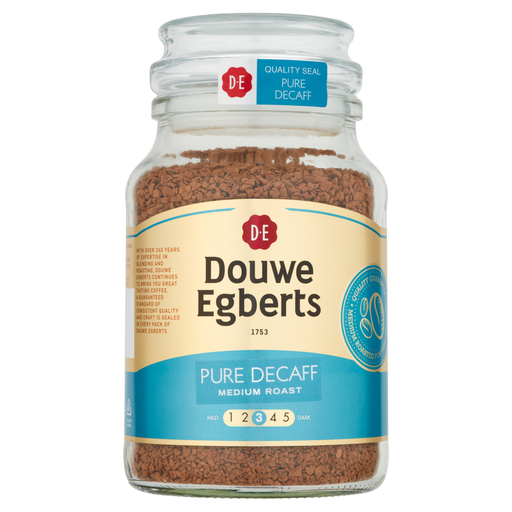 No image available
A 190g instant decaf option for shared supply. Check the exact pack’s preparation directions and serving measure before ordering it for the break.
Do not assume a 240-bag result is coffee: Cornish Tea & Coffee’s 240-bag decaf product is black tea. For coffee, Discount Coffee lists a 150-bag decaf pack and Stokes Coffee lists a 300-bag option. Check the drink and count on the exact product before ordering.
No. Discount Coffee says its coffee bags can be made with hot water without a coffee machine. Follow the chosen bag’s brewing instructions rather than assuming it takes the same time as a tea bag.
No: Nescafé states that decaf coffee can retain a small amount of caffeine. Describe a shared drink as decaffeinated, and check the exact product information if complete caffeine avoidance matters.
Check that it is coffee rather than tea, then read the bag count or weight, ingredients, date marking and preparation directions on the exact pack. GOV.UK guidance says prepacked food must carry mandatory food information and that labelling must be accurate and not misleading.
Choose them only if a suitable brewing method will be available. Tesco lists Taylors Decaffe ground coffee and beans, but a kettle alone does not provide the brewing setup they require; instant coffee or coffee bags can be prepared with hot water.