Frequent at-home coffee drinkers
If you make several mugs during the day, an instant jar lets you prepare each cup without opening an individual bag. Compare the jar’s stated serving basis with the number of cups you expect to make.


For regular winter cups, compare decaf coffee by servings and preparation method rather than assuming you need one box of 80 bags. An instant jar suits quick, repeated mugs; coffee bags suit a steeped cup without brewing equipment, while ground coffee and pods depend on the equipment you use. Decaf can still contain traces of caffeine, so check the product information if your intake must stay within a particular limit.
If you make several mugs during the day, an instant jar lets you prepare each cup without opening an individual bag. Compare the jar’s stated serving basis with the number of cups you expect to make.
Decaf coffee bags offer a portioned, brewed-style format without a cafetière or filter machine. Taylors of Harrogate lists its Decaffé coffee bags in packs of 10, so plan the number of packs around your expected use.
Choosing decaf does not necessarily remove every trace of caffeine. Check the current product information and account for other sources of caffeine if you follow a particular intake limit.
Start with how you make coffee, then compare the number of usable cups on a consistent preparation basis.
| Priority | What to check | Your needs |
|---|---|---|
| Preparation | Instant coffee dissolves in water; coffee bags steep in the cup. Ground coffee, beans and pods call for suitable brewing equipment or a compatible machine. | I want a quick mug without brewing equipment, or I would rather make a steeped or machine-brewed cup. |
| Number of cups | Compare a declared serving count or a stated dose per mug, not just pack weight or bag count. Nescafé gives 1.8 g per mug for Original Decaf; Kenco’s 200 g decaf listing states 121 servings at 1.6 g each. Taylors of Harrogate lists 10 bags per Decaffé pack. | For roughly 80 cups, I need to know how many servings my chosen format provides at the amount I actually use. |
| Caffeine | Read the exact product’s caffeine information. Nescafé says decaf coffee can retain small traces of caffeine; the word ‘decaf’ alone does not specify an amount per cup. | I am reducing caffeine and need to keep track of what I drink across the day. |
| Pack information | Check the current ingredients, allergen information, quantity, storage directions and date marking for the product you intend to buy. | An allergy or other dietary requirement makes the details on this particular pack important to me. |
Nescafé notes that decaf coffee can retain small traces of caffeine. That distinction matters if you are accounting for caffeine from several drinks and foods.
Check the current product information rather than inferring a precise caffeine amount from its name.
Eighty coffee bags represent 80 portions, but a jar’s cup count depends on how much coffee goes into each mug. Ground coffee and pods have their own doses and equipment requirements.
Use the stated serving count or preparation amount to plan your cups, and check how many packs you would need if buying 10-bag boxes.
Ingredients and allergen statements apply to the exact product. For example, M&S marks its Decaf Americano Micro-Ground Instant Coffee as unsuitable for people with a milk allergy.
Read the current pack label before buying, particularly when an allergy or dietary requirement affects your choice.
These examples show how decaf formats differ; a brand’s inclusion here does not mean that every product in its range uses the same ingredients or preparation method.
Original Decaf is an instant-coffee option listed by Nescafé UK & IE in 100 g, 190 g and 300 g jars.
A 200 g Kenco decaf instant-coffee listing gives a stated count for planning repeated cups.
Decaffé coffee bags provide a portioned format that steeps in the cup.
Its decaffeinated-coffee category offers a way to compare preparation formats while doing a grocery shop.
Its Gold Decaf instant coffee and Decaf Americano Micro-Ground instant coffee have different product descriptions.
These instant-coffee products suit shoppers considering jars for quick cups at home. Compare each pack’s preparation information before treating its weight as a particular number of servings.
 No image available
This 300 g soluble decaf coffee is an option for repeated quick mugs at home. Nescafé’s stated 1.8 g-per-mug basis works out to approximately 166 mugs from 300 g when prepared to that measure; the number of cups changes if you use a different amount.
 No image available
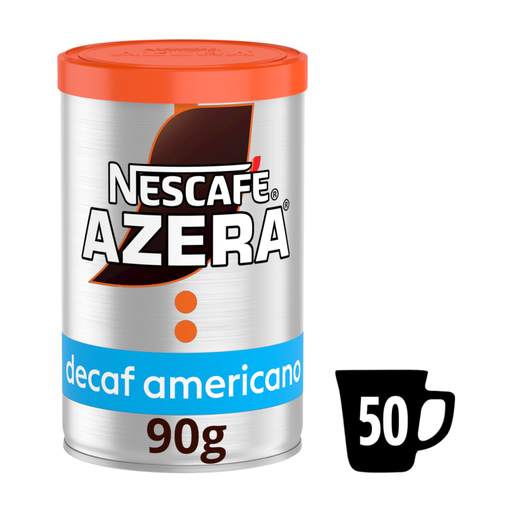
This 90 g decaf instant coffee is prepared by stirring it into hot water. If you are planning around 80 cups, check the serving amount on the pack before deciding how many jars to buy.
 No image available
This 190 g decaffeinated soluble coffee offers an instant preparation route for hot mugs. Check its serving directions to work out how the jar fits your expected number of cups.
 No image available
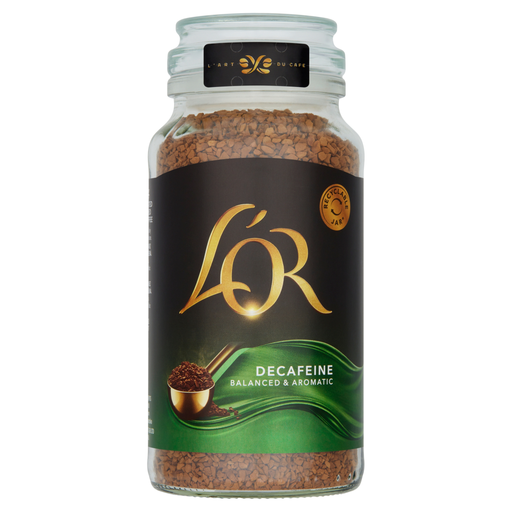
This 150 g freeze-dried instant decaf coffee is another jar format for quick preparation. Use its current serving directions when comparing it with packs that state a cup count.
 No image available
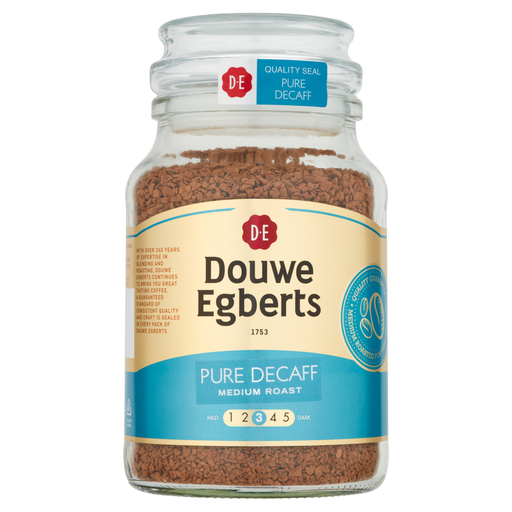
This 190 g freeze-dried decaf instant coffee is a jar option for home use. Its description emphasises chilled serving, so check the current directions if you want hot winter cups; also check the serving amount before planning for 80 cups.
No. Nescafé says decaf coffee can still contain small traces of caffeine. If an exact amount matters to you, check the information for the particular product rather than assuming its name guarantees zero caffeine.
Compare servings on the preparation basis you will use. Nescafé states 1.8 g per mug for its 300 g Original Decaf jar, which calculates to approximately 166 mugs at that measure; a Kenco 200 g decaf listing states 121 servings at 1.6 g each. Taylors of Harrogate lists Decaffé coffee bags in 10-bag packs, so 80 bagged cups would take eight packs if you use one bag per cup.
Decaf can reduce coffee-derived caffeine, but it is not necessarily caffeine-free. The NHS advises a limit of 200 mg of caffeine per day during pregnancy; caffeine from other foods and drinks also counts. Ask a midwife or clinician about an individual concern.
Check the ingredients, applicable allergen information, quantity, storage directions and date marking on the current pack. This is particularly important for a specific dietary requirement: M&S marks its Decaf Americano Micro-Ground Instant Coffee as unsuitable for people with a milk allergy.