Everyday afternoon-tea hosts
Instant decaf is worth considering when you need to prepare several cups with hot water. Compare the stated flavour profiles if the coffee will be served alongside sandwiches, scones or cakes.


Choose instant decaf when you want to make several cups quickly; choose ground coffee or coffee bags when you have time for a brewed cup. For a gentler pairing with afternoon-tea food, start with a blend described as medium-roasted or balanced, and consider a bolder style if you want the coffee to stand out. Flavour descriptions are useful cues, not guarantees of how a cup will taste.
The serving routine matters as much as the flavour description: making several quick cups calls for a different format from taking time over one brewed cup.
Instant decaf is worth considering when you need to prepare several cups with hot water. Compare the stated flavour profiles if the coffee will be served alongside sandwiches, scones or cakes.
Coffee bags offer a kettle-and-mug route. Taylors of Harrogate instructs a four-minute brew for its Decaffé bags, so allow more time than you would for instant coffee.
Decaf is not a promise of zero caffeine. If the amount matters to you, check information for the exact product rather than relying on the word on the front of the pack.
Settle on the preparation format first, then compare the blend description and pack size against how you will serve it.
| Priority | What to check | Your needs |
|---|---|---|
| Flavour profile | Compare stated roast level and descriptions such as balanced or intense. Treat caramel, malt, honeycomb and fruit notes as flavour cues, not a shared tasting scale. | I would prefer a gentler cup beside delicate food, or a more pronounced coffee flavour with milk or richer cakes. |
| Preparation | Check whether the product is instant, ground coffee or a coffee bag. Ground coffee needs suitable brewing equipment; Taylors specifies four minutes for its Decaffé coffee bags. | For several guests, I want a quick serving method. For one unhurried cup, I can allow time to brew. |
| Caffeine information | Check the exact product label and any product-specific caffeine information. A stated water-based decaffeination method does not establish zero caffeine per serving. | I want decaf without assuming that every serving is caffeine-free. |
| Pack and storage | Match the pack size to how often you serve decaf and follow its storage instructions after opening. Consider individually wrapped coffee bags for occasional cups. | If I only make decaf for occasional visitors, I want a pack I can use and store as directed. |
Decaffeination does not, by itself, establish that a serving contains no residual caffeine. That distinction matters when you need to keep track of your intake.
Check information for the exact product rather than treating the word ‘decaf’ as a zero-caffeine statement.
A coffee described as bold or intense may be more prominent beside lightly flavoured food. Those terms express the maker’s intended profile, not a quality ranking.
If you want the food and coffee to sit alongside each other, start by comparing medium-roast or balanced descriptions. Choose a bolder profile when that is the flavour you prefer.
Storage instructions matter when ground decaf is served only occasionally; they can differ between products.
Check the pack’s instructions and choose a suitable size. Individually wrapped coffee bags are another option for infrequent cups.
These examples show how named product lines differ in format and stated flavour; a retailer listing is not a claim about its entire range.
Its named instant decafs offer different stated cup profiles.
Kenco describes its Decaf instant coffee as a medium roast with a rounded profile.
Its Decaffé coffee bags provide a brewed, single-cup format without a coffee machine.
Tesco Groceries lists own-label decaf instant and ground coffees.
Sainsbury’s lists Taylors of Harrogate Decaffé coffee bags as a brewed-format option.
M&S describes distinct decaf ground-coffee and micro-ground instant products.
These instant and ground decaf coffees offer different preparation formats and stated flavour styles for afternoon tea. Check each pack against the brewing method and serving routine you prefer.
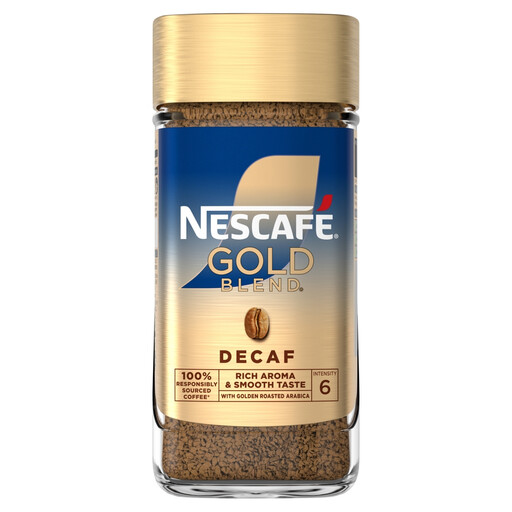 No image available
An instant option for preparing cups during afternoon tea. NESCAFÉ describes the matching Gold Blend Decaf as a medium-roasted Arabica–Robusta blend with a balanced profile. Consider whether a 190g pack suits how often you serve decaf.
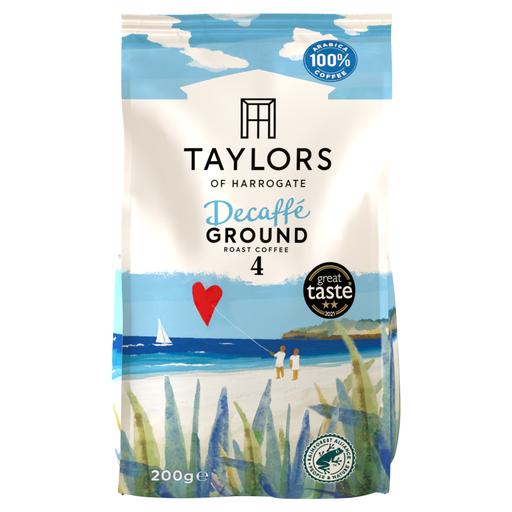 No image available
A ground-coffee option for an afternoon-tea cup when you have brewing equipment. Check that the grind suits your method, and follow the pack’s storage instructions after opening.
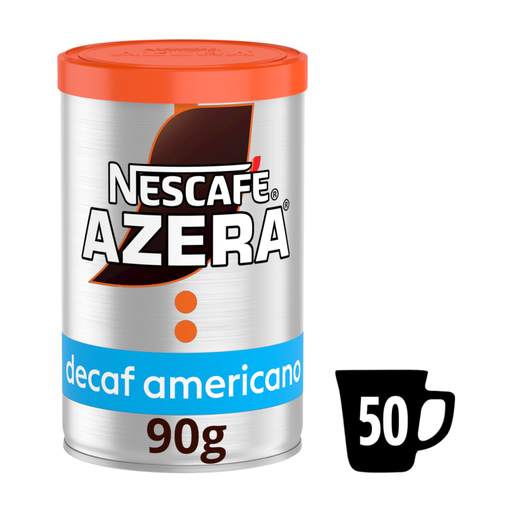 No image available
An instant decaf to consider if you want a more prominent coffee profile beside milk or richer cakes. NESCAFÉ identifies the matching AZERA Americano Decaf as an Arabica–Robusta blend; compare its stated style with gentler blends if you are serving delicate food.
 No image available
An instant decaf in a 300g pack for shoppers who expect to make cups regularly. NESCAFÉ describes Original Decaf as bold and intense, so compare that stated profile with a balanced blend if you want the coffee to be less prominent alongside food.
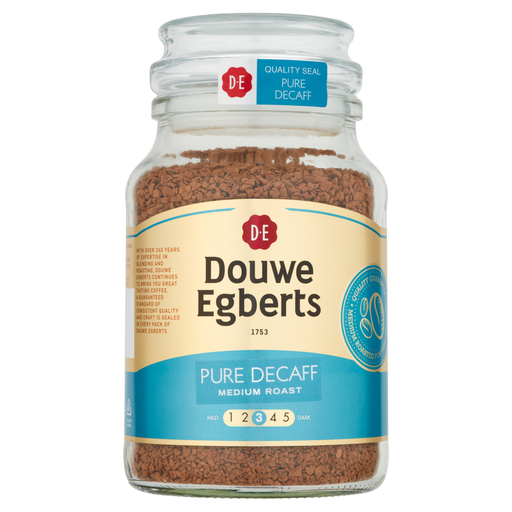 No image available
An instant decaf in a 190g pack. Its product description calls the flavour balanced and aromatic and emphasises chilled serving; if you plan to serve it hot with afternoon tea, check the preparation directions on the pack.
A medium-roast or balanced description is a useful starting point if you want a gentler cup beside cakes and sandwiches. Caramel, malt, honeycomb and fruit notes can help you choose a flavour family; consider a blend described as bolder if you want the coffee itself to stand out.
Choose instant when quick preparation matters. Choose ground coffee if you have suitable brewing equipment, or coffee bags for a brewed cup made with a kettle and mug. Taylors of Harrogate instructs a four-minute brew for its Decaffé coffee bags.
No: the word ‘decaf’ should not be read as a zero-caffeine promise. If you need to keep track of caffeine closely, check information for the exact product rather than assuming the amount from its name.
Follow the instructions on your particular pack. For its Decaf Ground Coffee, M&S advises an airtight container for up to two weeks in the refrigerator or up to four weeks in the freezer after opening. If you serve decaf only occasionally, compare pack sizes or consider individually wrapped coffee bags.