Office managers planning 80 drinks
A pack explicitly marked 1x80 makes it easier to allocate one coffee bag per mug for meetings, refreshments or visitors. Coffee Supplies Direct lists the Taylors of Harrogate Decaffé pack in that format.


Choose Taylors of Harrogate Decaffé Coffee Bags 1x80 if the office needs exactly 80 individually portioned drinks and people can allow four minutes for brewing. Choose a shared instant-coffee jar when quick preparation and a flexible serving count matter more; consider decaf sticks for individual portions without brewing, but check the pack count rather than assuming it is 80.
A pack explicitly marked 1x80 makes it easier to allocate one coffee bag per mug for meetings, refreshments or visitors. Coffee Supplies Direct lists the Taylors of Harrogate Decaffé pack in that format.
When colleagues make their own drinks and an exact portion count is unnecessary, a decaf instant-coffee jar offers a hot-water preparation option. Nescafé and Kenco list their decaf instant coffees in several jar sizes.
Individual coffee bags or instant sticks can simplify portioning for guest trays and self-service areas. UK workplace-catering supplier Vending Superstore lists decaf sachets, sticks and coffee bags among its single-serve formats.
Choose when: You need 80 separately portioned mugs and have time to brew each one.
Trade-off: Taylors of Harrogate specifies a four-minute brew, and used bags need disposing of.
Choose when: Colleagues want quick self-service and the office does not need 80 fixed portions.
Trade-off: Each person measures a serving, so jar weight alone does not establish how many mugs it will make.
Choose when: Individual instant portions are useful for guest trays or meeting rooms.
Trade-off: Check the stated count: a single-serve stick box need not contain 80 portions.
| Priority | What to check | Your needs |
|---|---|---|
| Portion count | Look for an explicit 1x80 or 80-serving label. For a jar, check its stated serving size before using a cup-count estimate. | I need to set aside 80 individual drinks, not estimate how many cups a shared jar might make. |
| Preparation | Check whether the coffee brews in a mug or dissolves in hot water, and whether a spoon is needed. Taylors of Harrogate instructs users to brew its Decaffé bag for four minutes. | If breaks are short or several people make drinks at once, I want a preparation method that fits that routine. |
| Coffee style | Compare roast-and-ground bags with instant coffee; use stated roast or bean descriptions as product information, not a promise about taste. | For a longer break, I may prefer a brewed coffee bag. For everyday self-service, instant coffee may be more practical. |
| Pack information | Read the current ingredients, allergen information, storage instructions and best-before date on the pack. Do not interpret “decaf” as a zero-caffeine guarantee. | I want colleagues and visitors to be able to check the information for the product actually being served. |
An 80-bag pack contains 80 individual coffee bags; a jar’s estimated cup count depends on how much coffee is used per mug. Those counts are not interchangeable.
For a fixed allocation, check that the pack explicitly states 1x80 or 80 servings. For a jar, check its stated serving basis as well as its net weight.
Taylors of Harrogate instructs users to brew its Decaffé coffee bags for four minutes. That wait matters when many people make drinks during a short break.
Choose bags where there is time for brewing; consider instant decaf or sticks where quick preparation matters more.
A four-minute brew also needs to fit the time available for each drink break.
Ingredients, preparation instructions and allergen statements are product-specific. “Decaf” alone does not establish that a coffee contains no caffeine.
Keep the current labelled pack available where the coffee is served, and check its information again when replenishing supplies.
Pack details and availability can matter when the same refreshments are needed for recurring meetings.
Before placing a repeat order, confirm the exact pack size, current availability and best-before date with the seller.
Coffee Supplies Direct lists Taylors Decaffé Coffee Bags as a 1x80 pack; Taylors describes a coffee bag brewed directly in a mug.
Nescafé lists Original Decaf instant coffee in 100 g, 190 g and 300 g sizes for a shared-jar approach.
Kenco describes its Decaf as a medium-roast instant coffee and lists 95 g and 190 g jars.
Tesco’s decaf instant-coffee category lists Tesco Decaff Gold Instant Coffee 200 g and Tesco Decaffeinated Classic Coffee 200 g.
M&S describes Gold Decaf Instant Coffee as a 200 g product made with medium-roasted Arabica coffee from Fairtrade farms.
These decaf instant-coffee products suit an office considering a shared pack instead of an 80-bag box. Check each pack’s serving instructions if you need to plan a set number of drinks.
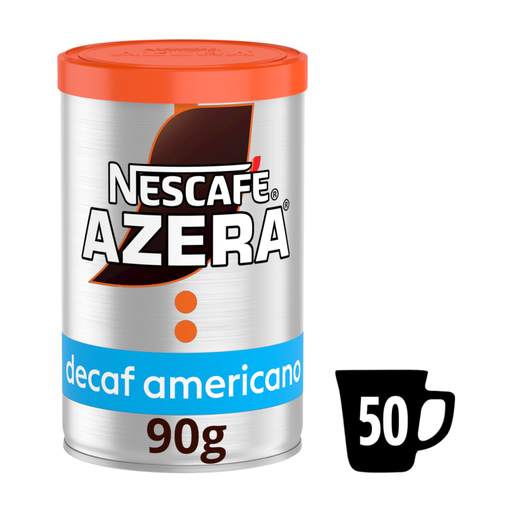 Image unavailable
A 90 g instant decaf tin for shared-kitchen drinks rather than 80 individual coffee bags. Check the serving quantity on the current pack if you need to plan a fixed allocation.
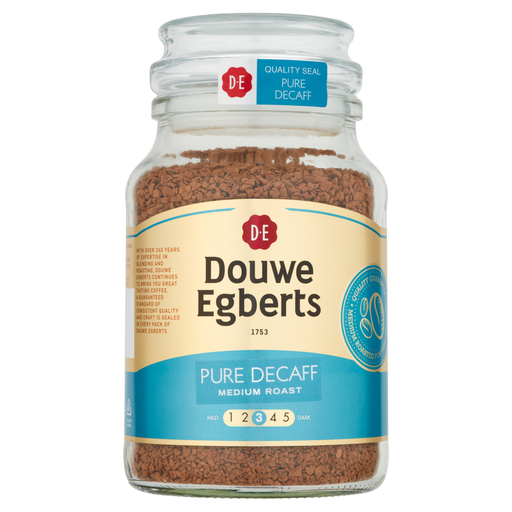 Image unavailable
A 190 g shared instant-coffee pack, not an 80-count box. Check the pack’s preparation quantity before estimating how many office mugs it will make.
 Image unavailable
This 300 g decaf instant-coffee pack is an option for a shared kitchen rather than individually allocated drinks. Confirm the serving instructions on the pack before calculating a cup count.
 Image unavailable
A 190 g decaf soluble-coffee pack for shared use, not an 80-bag format. If portion planning matters, check the current pack for its serving quantity and preparation instructions.
Choose an 80-bag pack when the office needs 80 individual portions and people have time to brew them. Choose an instant-coffee jar when quick self-service matters more than a fixed portion count; Taylors of Harrogate specifies four minutes for its Decaffé coffee bags.
Brew a bag directly in a mug of boiled water for a full four minutes, following Taylors of Harrogate’s instructions on the current pack. No coffee machine is needed for this format.
Do not treat “decaf” as a product-specific zero-caffeine statement. Nescafé says most of the caffeine is removed from Original Decaf; check the information for the particular coffee if its caffeine content affects your choice.
Keep the current labelled pack accessible so colleagues and visitors can check product-specific ingredients and allergen information. Where a workplace operates as a retail or catering food business, the Food Standards Agency says it must provide allergen information and follow the applicable food-labelling rules.