Choose decaf whole beans by the flavour you want after dinner, then check that the product suits your brewer. Union describes its dark-roast Decaf Blend with chocolate and caramel notes; Taylors Decaffé is described as smooth, with caramel and malt; and Waitrose No.1 Peru has a brighter lemon-acidity and caramel profile. Decaf does not necessarily mean caffeine-free, so check the specific product statement if caffeine intake matters to you.
Who is choosing after-dinner decaf?
After-dinner coffee drinkers reducing caffeine
Whole-bean decaf keeps the familiar grinding and brewing routine. It is worth checking the caffeine statement on the particular product: illy says its UK whole-bean decaf contains no more than 0.1% caffeine, not zero.
Espresso and bean-to-cup users
Brewing guidance matters when you are choosing beans for a particular machine. Lavazza lists Decaf Intenso for espresso, moka and filter; Union recommends its Decaf Blend for espresso or bean-to-cup; and illy lists moka, filter, espresso and lungo for its whole-bean decaf.
Shoppers choosing by flavour
An after-dinner decaf need not have one flavour profile. Union describes chocolate and caramel notes, Taylors Decaffé has caramel and malt notes, and Waitrose No.1 Peru is described with lemon acidity and caramel.
What should you check before buying?
Start with the cup you would enjoy, then check the product’s brewing guidance, caffeine statement and pack size.
| Priority |
What to check |
Your needs |
| Caffeine statement |
Check the statement for the exact beans rather than treating “decaf” as caffeine-free. illy states no more than 0.1% caffeine for its UK whole-bean decaf. |
I want to know what the product says about residual caffeine. If I have a strict personal or medical restriction, I need advice suited to that restriction. |
| Roast and flavour |
Read roast descriptions alongside tasting notes. Union describes a dark roast with chocolate and caramel; Waitrose & Partners describes Taylors Decaffé with caramel and malt, and its No.1 Peru decaf with lemon acidity and caramel. |
For a darker-tasting cup, chocolate notes appeal to me. If I prefer something smoother or brighter, I would compare the malt or lemon-acidity descriptions instead. |
| Brewing method |
Check the guidance for your brewer and the grind it needs. Union recommends espresso or bean-to-cup for Decaf Blend; Waitrose No.1 Peru gives grind guidance for cafetière, filter, espresso and moka. |
My beans need to work with the equipment I use after dinner, whether that is an espresso machine, a bean-to-cup machine or a cafetière. |
| Process and storage |
If the decaffeination method matters to you, look for a product-specific statement: Waitrose & Partners describes Taylors Decaffé as water-decaffeinated. Check the pack’s storage advice and choose a size you can use in time. |
I only make decaf occasionally, so a smaller pack may fit my routine. For regular use, I would compare larger packs while following their storage instructions. |
What can make a choice disappointing?
-
Assuming decaf means zero caffeine
Decaffeinated beans can retain caffeine. For example, illy states that its UK whole-bean decaf contains no more than 0.1% caffeine.
Read the statement for the product you plan to buy. Seek professional advice if you need to follow an individual caffeine restriction.
-
Choosing by roast number alone
A dark roast described with chocolate and caramel notes offers a different flavour direction from Taylors Decaffé’s caramel-and-malt description or Waitrose No.1 Peru’s lemon acidity.
Read the tasting notes as well as the roast description, and choose the profile that appeals to you.
-
Overlooking the brewer and grind
Product guidance differs: Union recommends its Decaf Blend for espresso or bean-to-cup, while Waitrose No.1 Peru provides grind guidance covering cafetière, filter, espresso and moka.
Check the guidance for your equipment before buying whole beans, then use the grind appropriate to your brewer.
-
Buying more beans than you expect to use
Pack size matters when decaf is only an occasional after-dinner drink. Taylors Decaffé and Waitrose No.1 Peru give advice to use their beans within two weeks of opening for the intended flavour.
Compare pack sizes with how often you make decaf, and follow the storage instructions on the pack you choose.
Which named coffees offer different profiles?
These product-line references show how flavour and preparation guidance can differ; a similarly named listing should still be checked for its exact variant.
Lavazza
Lavazza describes Decaf Intenso as a rich, full-bodied whole-bean coffee with tobacco and woody notes.
- Lavazza lists this product for espresso, filter, French press and moka preparation.
- Its 500 g pack calls for consideration if you drink decaf only occasionally.
illy
illy’s UK whole-bean decaf is described with caramel, orange blossom and jasmine notes.
- illy lists moka, filter, espresso and lungo preparation, and states caffeine content no higher than 0.1%.
- Its floral notes may be less appealing if you specifically want a dark, chocolate-led cup.
Taylors of Harrogate
Waitrose & Partners describes Taylors Decaffé Beans as smooth and balanced, with caramel and malt notes.
- The retailer lists 100% Arabica beans, roast level 4 and a water decaffeination method.
- Check the current pack for its preparation and storage instructions rather than assuming they apply to every Taylors decaf product.
Union
Union describes Decaf Blend as a dark roast with chocolate and caramel notes.
- Union recommends the blend for espresso or bean-to-cup preparation.
- Its stated brewing recommendation is narrower than the multi-method guidance listed for some other named coffees here.
M&S
M&S lists Roast and Ritual Decaf Coffee Beans in a 227 g pack among its decaf coffee products.
- The listing identifies a whole-bean option for shoppers who want to grind their own decaf.
- Check that you select the beans: M&S also lists decaf ground coffee and other formats.
Waitrose
Waitrose & Partners describes its No.1 Organic Fairtrade Peru Decaf Coffee Beans as a medium roast with lemon acidity and caramel notes.
- The product listing gives grind guidance for cafetière, filter, espresso and moka.
- Its brighter flavour description may not appeal if you want a dark, chocolate-led after-dinner cup.
Joybuy decaf coffee bean options
These Joybuy options are decaf whole beans for an after-dinner cup. Compare their pack sizes, and check each listing for the exact coffee and brewing guidance you need.
 No image available
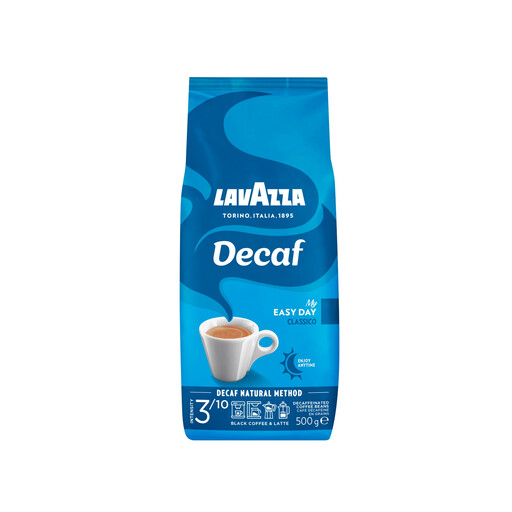
Lavazza Decaffeinated Coffee Beans 500g
The 500g pack is an option if you make decaf regularly after dinner. Check the exact blend, brewing guidance and caffeine statement before choosing it; do not assume it is Lavazza Decaf Intenso.
View on Joybuy
 No image available
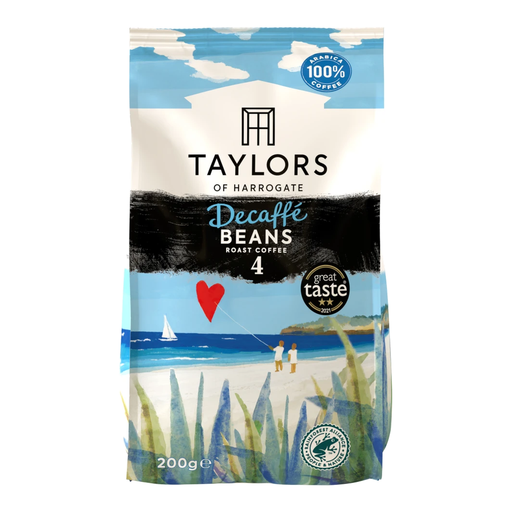
Taylors Decaf Coffee Beans 200 g
The 200 g pack is worth considering if you make decaf less often. Check the exact variant, brewing guidance and caffeine statement on the current listing rather than assuming the details for Taylors Decaffé apply to it.
View on Joybuy
Decaf coffee bean questions
Is decaf coffee completely caffeine-free?
No. Decaf can contain residual caffeine: illy states that its UK whole-bean decaf contains no more than 0.1% caffeine. Check the statement for the beans you choose, particularly if you need to manage caffeine intake closely.
Which flavour profile suits an after-dinner coffee?
That depends on the cup you enjoy. Union describes its dark-roast Decaf Blend with chocolate and caramel notes; Taylors Decaffé is described with caramel and malt; and Waitrose No.1 Peru has lemon acidity and caramel for a brighter-tasting option.
Can I use decaf beans for espresso or cafetière?
Yes, when the particular beans have suitable preparation guidance and you grind them for your brewer. Union recommends Decaf Blend for espresso or bean-to-cup, while Waitrose No.1 Peru gives coarse-grind guidance for cafetière and fine-grind guidance for espresso or moka.
How should I store decaf beans after opening?
Follow the instructions on the pack you buy. Taylors advises sealing its Decaffé Beans and keeping them in a cool, dry place; Waitrose & Partners advises an airtight container for No.1 Peru. Both give guidance to use those products within two weeks of opening for the intended taste.


