Older adults choosing less caffeine
For someone who enjoys an afternoon coffee but wants to reduce caffeine, the exact bean’s residual-caffeine statement may matter. Age alone does not determine which coffee to buy.


For afternoon tea with older guests, choose whole-bean decaf by the brewer you have, the flavours your guests enjoy and how quickly you will use an opened pack. A smaller pack may make more sense for occasional serving, while a larger one needs more regular use. Decaf is not necessarily caffeine-free, so check the exact product’s statement if residual caffeine matters.
For someone who enjoys an afternoon coffee but wants to reduce caffeine, the exact bean’s residual-caffeine statement may matter. Age alone does not determine which coffee to buy.
If decaf is served only when guests visit, consider how many cups a pack will make before choosing its size. Ask guests whether they prefer richer caramel or chocolate notes, or a brighter-tasting coffee.
Whole beans need grinding before brewing. Check the individual coffee’s preparation guidance against your machine or brewer rather than assuming every decaf bean is intended for the same method.
Start with caffeine information and brewing equipment, then narrow the choice by flavour and the amount you will use after opening.
| Priority | What to check | Your needs |
|---|---|---|
| Residual caffeine | Check the exact product’s caffeine statement if a numerical limit matters. illy states no higher than 0.1% caffeine for its Whole Bean Decaffeinated Coffee; that figure does not describe other decaf beans. | I want to reduce caffeine without assuming that a bag labelled decaf contains none. |
| Brewing fit | Confirm you have a grinder and check the bean’s recommended brewing methods. Lavazza lists espresso, moka and filter for Decaf Intenso; Union recommends espresso or bean-to-cup for its Decaf Blend. | My afternoon coffee needs to work with the equipment already in the kitchen. |
| Flavour | Compare product descriptions rather than treating decaf as one flavour. Taylors describes Decaffé with caramel and malt notes; Waitrose describes its No.1 Peru Decaf with lemon acidity and caramel. | Some guests prefer a rounded cup with cakes or milk; others would choose a brighter flavour. |
| Pack size | Match the pack to serving frequency. Taylors offers 200 g and 1 kg formats; Waitrose advises using its No.1 Peru beans within two weeks of opening for the best taste. | If I serve decaf only occasionally, I would rather open a smaller pack than leave a large one unused. |
The word decaf alone does not tell you the residual-caffeine figure for a particular bean.
If the figure affects your choice, check the exact pack or product page. illy states no higher than 0.1% caffeine for its Whole Bean Decaffeinated Coffee; do not apply that limit to other products.
Whole beans need grinding, and the grind should suit the brewing equipment.
Check that you have a grinder. Waitrose’s No.1 Peru guidance specifies coarse grinding for a cafetière, medium for filter and fine for espresso or moka.
A pack intended for frequent serving may stay open longer than an occasional decaf drinker expects. Waitrose advises using both its No.1 Peru and listed Taylors Decaffé beans within two weeks of opening for the best taste.
Estimate how often you will make decaf before choosing between a smaller pack and a larger format.
Manufacturer and retailer descriptions range from Union’s dark-roast chocolate and caramel notes to the lemon acidity and caramel described for Waitrose No.1 Peru Decaf.
Use those descriptions to ask guests what they enjoy; they are a starting point for choosing, not a guarantee of how everyone will perceive the cup.
These references describe specific decaf beans and retailer listings, not every coffee made or sold by each brand.
Lavazza describes Decaf Intenso as a 500 g whole-bean option with a rich, full-bodied profile.
illy’s 250 g Whole Bean Decaffeinated Coffee gives shoppers a product-specific caffeine statement.
Taylors offers Decaffé beans in 200 g and 1 kg formats and describes caramel and malt flavours.
Union describes its Decaf Blend as a dark roast with chocolate and caramel notes, available as whole beans in 200 g and 1 kg formats.
M&S lists a 227 g Roast and Ritual Decaf Coffee Beans product among its decaf coffees.
Waitrose describes its No.1 Organic Fairtrade Peru Decaf beans as a 227 g, 100% Arabica option with lemon acidity and caramel notes.
These whole-bean decaf options offer a 200 g pack for occasional serving and a 500 g pack to consider for more regular use. Check the exact product details for any brewing-method or residual-caffeine requirement that matters to you.
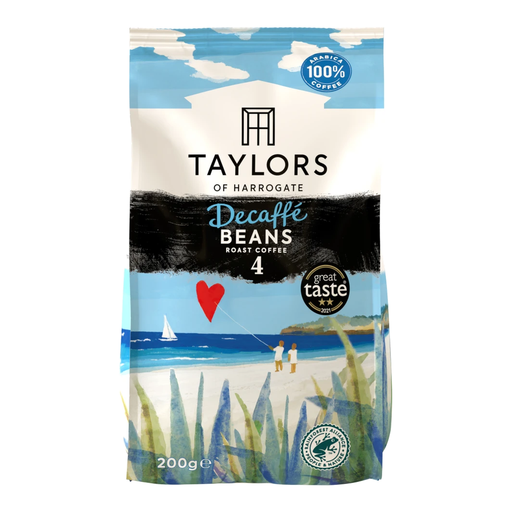 No image available
The 200 g whole-bean pack is worth considering if decaf is served only occasionally. You will need to grind the beans; check the product’s brewing directions and residual-caffeine statement if either affects your choice.
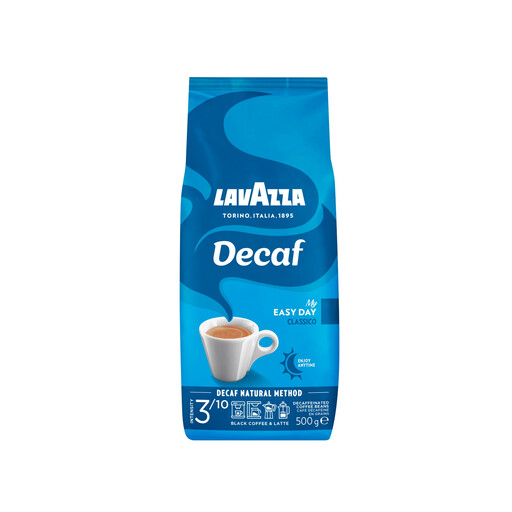 No image available
Consider the 500 g whole-bean pack if your household makes decaf often enough to use it after opening. The beans need grinding; check this variant’s brewing guidance and residual-caffeine statement rather than assuming they match another Lavazza decaf product.
Not necessarily. For example, illy states that its Whole Bean Decaffeinated Coffee contains no higher than 0.1% caffeine. Check the exact bean’s pack or product page if a stated residual-caffeine figure matters to you.
Decaf is an option when a guest wants to reduce caffeine while still having coffee. NHS Borders notes that caffeine can make people more alert and disrupt sleep, but that does not mean every older adult needs decaf or that a decaf drink is caffeine-free.
Check the individual bean’s preparation guidance and make sure you can grind it appropriately. Lavazza lists espresso, moka and filter for Decaf Intenso; illy lists moka, filter, espresso and lungo for its decaffeinated whole beans. Union particularly recommends espresso or bean-to-cup for its Decaf Blend.
Choose a size that fits how often you will make decaf after opening. Taylors offers 200 g and 1 kg Decaffé bean formats; Waitrose advises sealing its listed 200 g Taylors beans and using them within two weeks of opening for the best taste.
Yes. Grind whole beans before brewing, using a grind suited to your equipment. Waitrose’s guidance for its No.1 Peru Decaf specifies coarse for cafetière, medium for filter and fine for espresso or moka.