For a coffee-and-biscuits break, choose decaf beans by the flavour you enjoy: caramel or malt notes offer a gentler starting point for buttery biscuits, while chocolate-led or brighter citrus-accented descriptions offer different contrasts. Make sure you can grind whole beans for your brewer, choose a pack size that suits how often you drink decaf, and check the exact product’s caffeine statement rather than assuming decaf means caffeine-free.
Who are decaf beans for?
Evening coffee-and-biscuit drinkers
If you prefer decaf later in the day, start with the cup you want beside your biscuits. Taylors’ caramel and malt description, Union’s chocolate-led profile and Waitrose No.1’s lemon-accented notes point to different flavour choices, not guaranteed pairings.
People who grind beans at home
Whole beans make sense when you have a grinder and can adjust the grind for your espresso, filter or cafetière equipment. Check the preparation guidance for the particular beans you choose.
Shoppers reducing caffeine
Decaf is worth considering if you want a less caffeinated coffee, but it should not be assumed to contain none. illy UK lists its decaffeinated whole beans at no higher than 0.1% caffeine; Waitrose & Partners lists Lavazza Decaf Classico at no higher than 0.10%. Check the statement for the exact product you buy.
What should you check before buying?
Choose the flavour direction first, then check caffeine information, brewing format and how quickly you are likely to use an opened pack.
| Priority |
What to check |
Your needs |
| Flavour with biscuits |
Read the stated flavour notes as well as the roast description. Taylors is described with caramel and malt, Union with a darker chocolate-led profile, and Waitrose No.1 with lemon acidity and caramel; pairing remains a matter of taste. |
For buttery biscuits, I would start with caramel or malt. With chocolate biscuits, I might prefer a darker cup; if I enjoy a brighter contrast, citrus-accented notes are another option. |
| Caffeine statement |
Read the exact pack’s caffeine statement rather than treating “decaf” as “caffeine-free”. illy UK states no higher than 0.1% for its decaffeinated whole beans, while Waitrose & Partners states no higher than 0.10% for Lavazza Decaf Classico. |
I want to reduce caffeine, so the amount stated for the particular beans matters more to me than the word “decaf” alone. |
| Grinder and brewer |
Confirm that you have a grinder and check the named bean’s preparation guidance. The Waitrose No.1 listing describes coarse grinding for cafetière, medium for filter and fine for espresso or moka. |
My beans need to work with the equipment I use at home; if I cannot grind them, I would look for a suitable pre-ground decaf instead. |
| Opened-pack use |
Compare pack size with how often you make decaf, and follow the product’s storage directions. The Taylors and Waitrose No.1 listings advise using their beans within two weeks of opening. |
If coffee with biscuits is an occasional treat, I would choose a pack I can use within its stated post-opening guidance. |
What is easy to overlook?
-
Assuming decaf means no caffeine
The caffeine limits stated for illy’s decaffeinated whole beans and Lavazza Decaf Classico are not zero; those statements also do not establish the amount in every other decaf product.
Read the caffeine statement on the exact pack, particularly if the amount is important to your decision.
-
Buying whole beans without a way to grind them
Whole beans need grinding before brewing, and the grind should suit the brewer.
Check your equipment and the product’s preparation guidance, or choose an appropriate pre-ground decaf.
If you do not already have a grinder, whole beans require that extra piece of equipment.
-
Choosing a pack without considering how often you drink decaf
Taylors and Waitrose No.1 advise using their beans within two weeks after opening, which matters if coffee with biscuits is only occasional.
Compare pack size with your likely use, and reseal and store the beans as directed.
-
Choosing by intensity alone
An intensity figure does not describe the whole flavour. Lavazza Decaf Intenso is described with woody and tobacco notes, whereas Waitrose No.1 has caramel and lemon-acidity notes.
Read the flavour and roast descriptions together, then decide whether you want a softer accompaniment or a more assertive contrast to the biscuits.
Brand references for decaf beans
These descriptions concern the named decaf products, not every coffee sold by each brand; choose by the particular beans and their label.
Lavazza
Lavazza describes Decaf Intenso as a medium-dark Arabica-and-Robusta blend with a fuller-bodied cup.
- Its listing names woody and tobacco notes and identifies espresso, moka, filter and French press preparation.
- Those assertive notes may be less appealing if you want a mild coffee beside plain biscuits.
illy
illy’s 250g decaffeinated whole beans offer a 100% Arabica option with a more aromatic flavour description.
- illy UK describes caramel, orange blossom and jasmine notes and states caffeine content no higher than 0.1%.
- If you want a chocolate-led or darker-tasting cup, its stated flavour direction may not be the one you prefer.
Taylors of Harrogate
The 200g Decaffé whole beans are described by Waitrose & Partners as smooth, with caramel and malt notes.
- The listing states a water decaffeination method and gives preparation guidance for espresso, filter and cafetière.
- Its stated two-week post-opening guidance is worth considering if you drink decaf infrequently.
Union
Union describes its whole-bean Decaf Blend as a dark-roast choice for espresso or bean-to-cup preparation.
- Union’s product description emphasises chocolate and caramel flavours for shoppers who prefer a darker cup.
- That fuller-bodied direction may dominate a delicate biscuit if you prefer a subtle accompaniment.
M&S
Marks & Spencer lists Roast and Ritual Decaf Coffee Beans in a 227g pack alongside other decaf formats.
- The whole-bean format gives shoppers an option to grind for their own brewer.
- Check the individual pack for roast, flavour, caffeine and preparation details before deciding how it fits your coffee-and-biscuits break.
Waitrose No.1
The Organic Fairtrade Peru Decaf Coffee Beans are a 227g, medium-roast whole-bean option described by Waitrose & Partners.
- The listing describes caramel with lemon acidity, offering a brighter flavour direction than a dark chocolate-led description.
- Consider whether you enjoy acidity beside biscuits, and note the listing’s two-week post-opening guidance.
Decaf bean options on Joybuy
These whole-bean decaf options give you a caramel-and-malt direction for sweet biscuits and a caramel-and-chocolate direction for richer ones. Both need grinding before brewing; check the individual pack when a precise caffeine statement matters.
 No image available
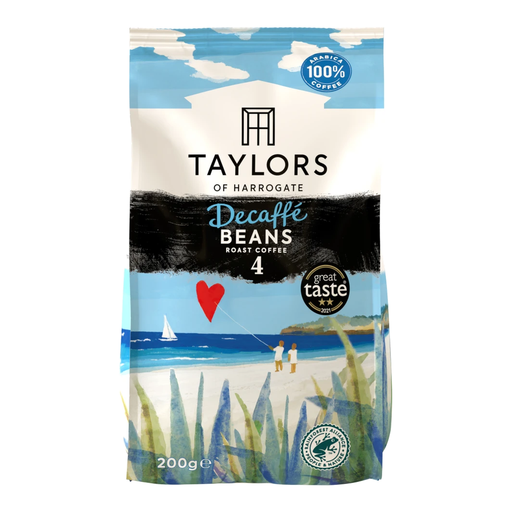
Taylors Decaf Coffee Beans 200 g
The stated caramel and malt notes make these a starting point if you like a softer-tasting coffee with buttery or sweet biscuits.
The 200 g whole-bean coffee is described as 100% Arabica and water-method decaffeinated. Espresso, filter and cafetière preparation are listed; grind the beans to suit your brewer. The product guidance advises use within two weeks of opening. Check the pack’s caffeine statement if the precise amount matters to you.
View on Joybuy
 No image available
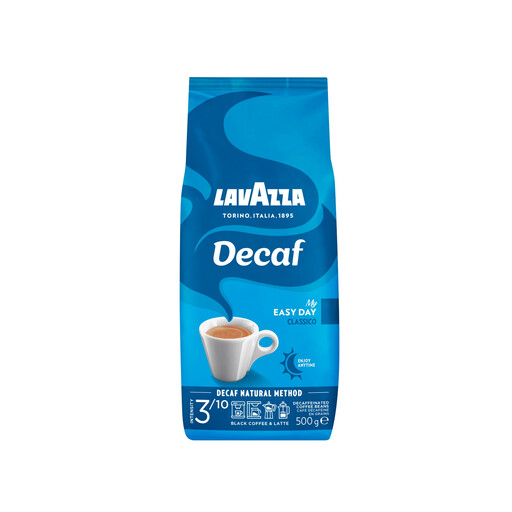
Lavazza Decaffeinated Coffee Beans 500g
The stated roasted-caramel and chocolate notes offer a flavour direction to consider with chocolate biscuits or richer bakes.
This 500g whole-bean coffee is described as 100% Arabica and carbon-dioxide decaffeinated. It needs grinding before brewing; check preparation guidance for your brewer, follow the pack’s storage directions and read its caffeine statement if the precise amount matters to you.
View on Joybuy
Questions about decaf beans
Which decaf flavour goes with biscuits?
For buttery or digestive-style biscuits, caramel and malt descriptions are a useful starting point; Taylors’ beans have those stated notes. If you prefer a darker contrast with chocolate biscuits, Union describes its Decaf Blend with chocolate and caramel notes. Neither pairing is guaranteed to suit everyone’s taste.
Does decaf mean caffeine-free?
No: check the statement for the individual product. illy UK states no higher than 0.1% caffeine for its decaffeinated whole beans, and Waitrose & Partners states no higher than 0.10% for Lavazza Decaf Classico; those limits should not be assumed for other beans.
Do I need a grinder for whole-bean decaf?
Yes, whole beans must be ground before brewing. The Waitrose No.1 listing specifies coarse grinding for cafetière, medium for filter and fine for espresso or moka. If you do not have a grinder, look for a pre-ground decaf suited to your brewer.
How long should I keep an opened pack?
Follow the directions on the particular pack. The Taylors and Waitrose No.1 listings advise resealing or storing their beans airtight and using them within two weeks of opening, so consider a smaller pack if you make decaf only occasionally.


