Evening coffee hosts
Decaf offers a way to serve coffee after a Bonfire Night gathering without choosing a standard caffeinated brew. It can still contain some caffeine, so it is not a zero-caffeine choice.


Choose whole-bean decaf by the drink you plan to serve: a richer profile may suit espresso or coffee with milk, while a medium roast with brighter notes offers a different choice for black coffee. For Bonfire Night, check that you can grind the beans for your brewer, choose a bag size you can use after the gathering, and remember that decaf does not guarantee zero caffeine.
Decaf offers a way to serve coffee after a Bonfire Night gathering without choosing a standard caffeinated brew. It can still contain some caffeine, so it is not a zero-caffeine choice.
If you have a grinder or bean-to-cup machine, whole beans let you prepare coffee for your equipment. Check the roaster’s brewing suggestions and choose a flavour profile that suits the drink you intend to make.
Decaf beans need not all taste alike. The researched product descriptions range from Taylors of Harrogate’s caramel-and-malt notes to Union’s dark-roast caramel profile and Waitrose’s lemon-acidity and caramel notes.
Start with the drink and brewing equipment you will use, then pick a pack size that makes sense beyond one evening.
| Priority | What to check | Your needs |
|---|---|---|
| Caffeine | Look for beans described as decaffeinated. Do not treat that description as a guarantee of zero caffeine; check product-specific information if the amount matters to you. | I want decaf for an evening coffee, but I need to know whether any residual caffeine matters for my circumstances. |
| Flavour | Compare the stated roast and tasting notes. Union describes its Decaf Blend as a dark roast; Waitrose describes its Peru Decaf with lemon acidity and caramel notes. | For coffee with milk, I may prefer a more pronounced profile. If I drink it black, I might choose the brighter notes instead. |
| Brewing | Confirm you have a grinder and set it for your brewer. Union recommends its Decaf Blend for espresso; check other beans’ instructions for the method you plan to use. | My whole beans need to work with the grinder and brewer I will use on the night. |
| Pack size | Compare the amount in the bag with likely use after Bonfire Night. The National Coffee Association advises keeping beans airtight and away from moisture, heat and light. | Will I keep making decaf, or would a smaller bag leave less open after this gathering? |
Decaffeinated coffee can contain residual caffeine. The label alone does not establish that a cup contains none.
If complete caffeine avoidance is necessary for you, do not rely on the word “decaf” alone; seek advice appropriate to your circumstances.
Taylors describes a water-based process, while other researched beans use different methods. A process description does not tell you which roast or flavour you will prefer.
Use the method as one preference, alongside the stated tasting notes, intended brewer and bag size.
Beans left after the gathering still need protection from air, moisture, heat and light. A larger pack makes more sense if you expect to use it regularly.
Choose a quantity that fits your plans, seal it well and grind only what you need for each brew.
Whole beans need grinding before brewing, and the grind suited to a cafetière differs from one used for espresso.
Follow your brewer’s instructions as a starting point rather than using the same setting for every drink.
These brand examples describe particular decaf beans, not every coffee each brand makes.
Lavazza UK lists Decaf Intenso in a 500 g bag for several home-brewing methods.
Illy lists a whole-bean decaffeinated coffee in its UK beans catalogue.
Taylors describes its Decaffé beans with caramel-and-malt flavours.
Union presents its Decaf Blend as a dark-roast option for espresso.
M&S describes Roast & Ritual Decaf Coffee Beans as a 227 g, 100% decaffeinated Arabica product.
Waitrose No.1 Organic Fairtrade Peru Decaf is listed as a 227 g single-origin Arabica bean with lemon-acidity and caramel notes.
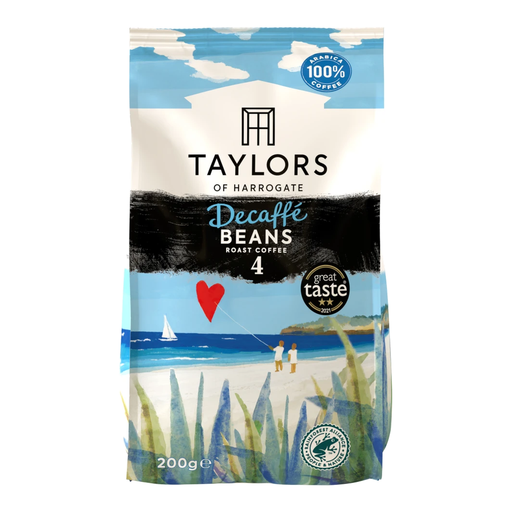
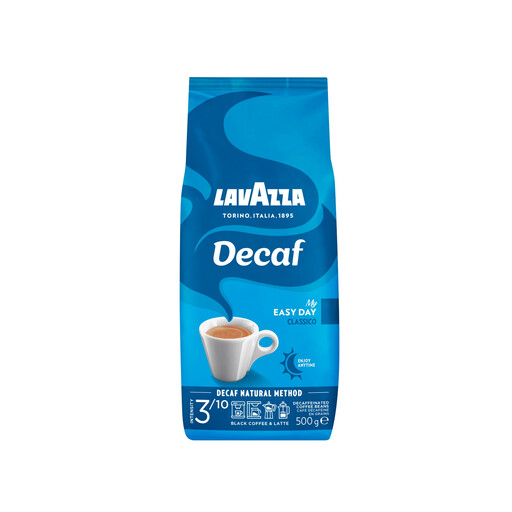
These whole-bean decaf options include a 200 g Taylors bag for those wanting caramel-and-malt notes and a 500 g Lavazza bag to consider if decaf will be used beyond one gathering.
 No image available
Consider this 200 g bag if you want the caramel-and-malt notes described for Taylors Decaffé and do not expect to use a larger quantity after Bonfire Night. These are whole beans, so you will need a grinder; follow the pack’s opened-bag storage guidance.
 No image available
The 500 g bag is worth considering if you expect to make decaf beyond a single gathering. You will need a grinder for these whole beans; check the exact pack’s roast, flavour and brewing guidance before choosing it for a particular drink.
No. Decaf coffee can contain residual caffeine, so do not treat its label as a guarantee of zero caffeine. If complete avoidance matters for your circumstances, seek appropriate individual advice.
Start by considering a richer profile if you want the coffee flavour to remain pronounced with milk. Union recommends its dark-roast Decaf Blend for espresso, while Lavazza describes Decaf Intenso as rich and full-bodied; check the exact beans and brewing method before buying.
Yes. Whole beans must be ground before brewing. Choose a grind appropriate to your equipment rather than assuming one setting will suit a cafetière, filter brewer and espresso machine alike.
Keep opened beans airtight and away from moisture, heat and light, and grind them as needed. The National Coffee Association advises buying smaller batches that you can use within roughly one or two weeks; also follow any guidance on your particular pack.