Breakfast drinkers with a grinder or bean-to-cup machine
If you want decaf as part of a regular whole-bean routine, check that your equipment can grind the beans for your chosen brewer. Whole beans cannot be used directly in a pod machine.


For weekday breakfast, start with whole beans explicitly labelled decaffeinated, then choose a roast and stated flavour profile that suit the way you brew. A smaller pack makes sense if you use beans slowly; a 500 g pack is more practical if your household finishes it promptly. Whole beans also require a grinder or bean-to-cup machine.
If you want decaf as part of a regular whole-bean routine, check that your equipment can grind the beans for your chosen brewer. Whole beans cannot be used directly in a pod machine.
Brand and retailer descriptions distinguish smoother caramel-and-malt profiles, citrus-and-caramel notes and darker espresso-oriented options. Use those descriptions to choose a direction, rather than treating roast strength as a measure of caffeine.
If breakfast means only one or two coffees a day, compare pack sizes with how quickly you finish an opened bag, and follow that product’s storage instructions.
Check the decaf label and your brewing equipment first; then narrow the choice by flavour and the amount of coffee you will use after opening.
| Priority | What to check | Your needs |
|---|---|---|
| Decaf labelling | Look for an explicit decaffeinated description on the exact pack. Check any product-specific caffeine statement if a stated limit matters to you; roast intensity is not that statement. | I want decaf for my regular breakfast coffee, not simply beans described as dark or intense. |
| Brewing equipment | Confirm that you can grind whole beans and produce a grind suited to your brewer. Check the product’s brewing guidance rather than assuming every bean listing names your machine. | My grinder or bean-to-cup machine needs to fit the way I make coffee each morning. |
| Roast and flavour | Compare the stated roast and tasting notes. Waitrose & Partners describes Taylors Decaffé with caramel and malt notes and Waitrose No.1 Peru with lemon acidity and caramel; Union Coffee recommends its dark-roast Decaf Blend for espresso. | I would choose a smoother cup, a brighter cup or a darker espresso-style coffee according to what I enjoy at breakfast. |
| Pack size and storage | Compare the pack weight with your rate of use and read its own after-opening instructions. The researched options include packs from 200 g to 500 g; Marks & Spencer gives specific refrigerated or frozen storage guidance for its Roast & Ritual beans. | When I use beans slowly, a smaller pack may be easier to finish. A larger bag makes more sense when several people drink it regularly. |
Words such as dark, rich and intense describe the coffee’s character; they do not establish its decaf status.
Filter for beans explicitly labelled decaffeinated before comparing roast and flavour.
Whole beans cannot go straight into a pod machine, and different brewing methods call for different grinds.
Check your brewer and grinder setup before buying, then use a grind appropriate to that brewing method.
If you do not have a grinder or bean-to-cup machine, using whole beans requires access to one.
A 500 g bag may remain open longer than a smaller pack in a household that makes only occasional coffees.
Choose a size you expect to finish promptly and follow its specific storage instructions after opening.
Decaffeinated coffee can retain some caffeine. For example, illy describes its whole-bean decaf as containing no higher than 0.1% caffeine.
If a stated caffeine limit matters, check the information for the exact product rather than relying on the word decaf alone.
These descriptions concern the named decaf products, not every coffee sold by each brand.
Lavazza UK lists Decaf Intenso as a 500 g whole-bean option and describes a rich profile with tobacco and woody notes.
illy UK describes its 250 g Whole Bean Decaffeinated Coffee as a classic roast with caramel, orange-blossom and jasmine notes.
Waitrose & Partners lists Taylors Decaffé as 200 g of 100% Arabica beans decaffeinated using a water method.
Union Coffee describes Decaf Blend as a dark roast and recommends brewing it as espresso.
Marks & Spencer describes Roast & Ritual Decaf Coffee Beans as a 227 g pack made with 100% decaffeinated Arabica beans.
Waitrose & Partners lists No.1 Organic Fairtrade Peru Decaf as a 227 g, single-origin Arabica option.
These two whole-bean decaf options offer a 200 g pack and a 500 g pack for different weekday rates of use. Check the exact listing and your brewing setup before choosing.
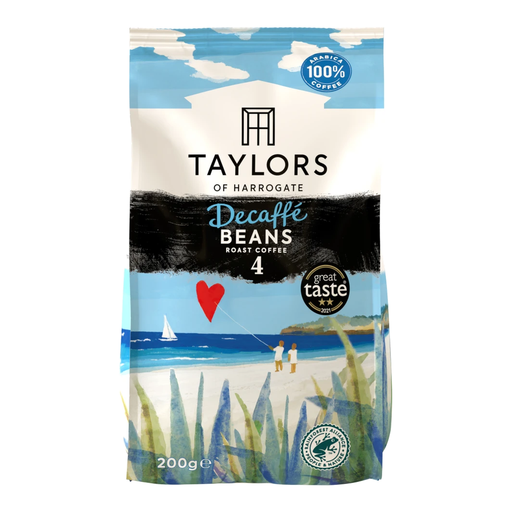 No image available
Consider this smaller pack if your household uses whole beans slowly at breakfast.
You will need a grinder or bean-to-cup machine; confirm that your setup can produce the grind required by your brewer.
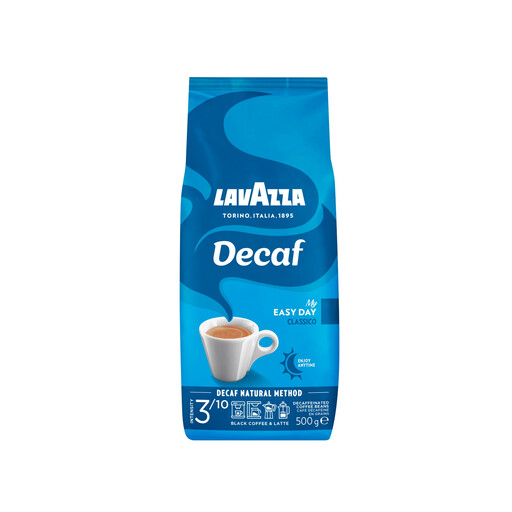 No image available
Consider this larger pack if several people make decaf at breakfast or you expect to use the beans promptly.
Whole beans require a grinder or bean-to-cup machine. Check the listing’s storage and brewing directions for this exact product.
No. Decaffeinated coffee can retain some caffeine; illy, for example, describes its whole-bean decaf as containing no higher than 0.1% caffeine. Check the exact product information if a stated limit matters to you.
No. Whole beans need a grinder or bean-to-cup machine and cannot replace pods directly. Match the grind you produce to your brewer; Waitrose & Partners gives coarse guidance for cafetière, medium for filter and fine for espresso or moka with its No.1 Peru beans.
Do not use roast colour to decide whether beans are decaf. Choose an explicitly decaffeinated product when that is your requirement, then use its roast and flavour description to decide whether you would enjoy drinking it.
A smaller bag is worth considering if you use beans slowly; a larger one may fit a household that finishes it promptly. Compare pack size with your rate of use and follow the chosen product’s after-opening directions.
Follow the directions for the particular pack rather than applying one rule to every brand. For its Roast & Ritual decaf beans, Marks & Spencer advises an airtight container for two weeks in the refrigerator or four weeks in the freezer after opening.