Hosts with a grinder
Whole beans give you the option to grind for the equipment you are using. This matters when brunch might involve espresso for one guest and filter coffee or a cafetière for another.


Choose whole-bean decaf for Sunday brunch if you can grind it to suit the brewer, then match the roast description and pack size to the drinks and number of guests. Lavazza lists its Decaf Intenso for espresso, moka and filter coffee, while Union recommends its Decaf Blend for espresso; illy states a caffeine maximum for its own decaf beans. Decaf is not necessarily caffeine-free, so check the particular pack when the amount matters.
Whole beans give you the option to grind for the equipment you are using. This matters when brunch might involve espresso for one guest and filter coffee or a cafetière for another.
A decaf label alone does not specify how much caffeine a particular coffee contains. If that amount matters, look for a product-specific figure on the pack rather than assuming it contains none.
If most orders will be espresso or milk drinks made with an espresso machine, start with beans whose maker gives guidance for that brewing method, then consider whether the stated roast and flavour notes suit your guests.
Start with the brewer and grinder you will use, then compare the caffeine information, flavour descriptions and amount you are likely to finish.
| Priority | What to check | Your needs |
|---|---|---|
| Brewing setup | Check that you have a grinder and that the beans suit your brewer. Waitrose gives fine-grind guidance for espresso, medium for filter and coarse for cafetière on its Taylors listing. | I might make different drinks during brunch, so I need to be able to grind the beans for each brewer. If I cannot grind them, I should choose an appropriate pre-ground format instead. |
| Caffeine information | Read the caffeine statement for the exact product. illy states that its Whole Bean Decaffeinated Coffee contains no higher than 0.1% caffeine; that figure does not describe other beans or a finished cup. | If I need to keep track of caffeine, a named product with a stated maximum gives me more to check than the word ‘decaf’ alone. |
| Roast and flavour | Compare the maker’s roast description and tasting notes with the drinks planned. Lavazza describes Decaf Intenso as medium-dark with woody and tobacco notes; Waitrose describes its Peru decaf with lemon acidity and caramel notes. | For black coffee, I may want the brighter profile described for Waitrose Peru. If brunch centres on espresso, Union identifies espresso as its recommended method for Decaf Blend. |
| Pack size and storage | Consider how many people you will serve and whether you will use the rest. The named options include smaller 200 g, 227 g and 250 g packs alongside a 500 g Lavazza Decaf Intenso pack; Waitrose advises using opened Taylors beans within two weeks. | A smaller pack may be easier for me to finish if I only make decaf on occasional Sundays. A larger pack makes more sense if the remaining beans will be used promptly. |
Whole beans still need to be ground for the intended brewer; the grind guidance for espresso, filter and cafetière is different.
Check your equipment before ordering. Without a grinder, choose decaf sold pre-ground for your brewer or ask for a suitable grind.
Buying whole beans may also mean needing a grinder you do not already own.
illy states a maximum of 0.1% caffeine for its own whole-bean decaf, rather than zero. A decaf label should not be used as a caffeine figure for every product.
Check the exact pack when caffeine intake matters. For pregnancy, the NHS states a limit of 200 mg of caffeine a day from all sources; seek individual clinical advice where needed.
A roast description helps set flavour expectations, but it does not tell you whether the beans are recommended for your brewing method. Union, for example, recommends its Decaf Blend for espresso.
Check brewing guidance first, then use the maker’s or retailer’s flavour description to choose between suitable options.
A pack that serves one gathering may leave beans for later. Waitrose advises using its Taylors decaf beans within two weeks of opening for best taste.
Estimate the coffee needed for brunch and consider how soon you will use what remains.
These examples describe particular decaf bean products or ranges, not every coffee made by each brand.
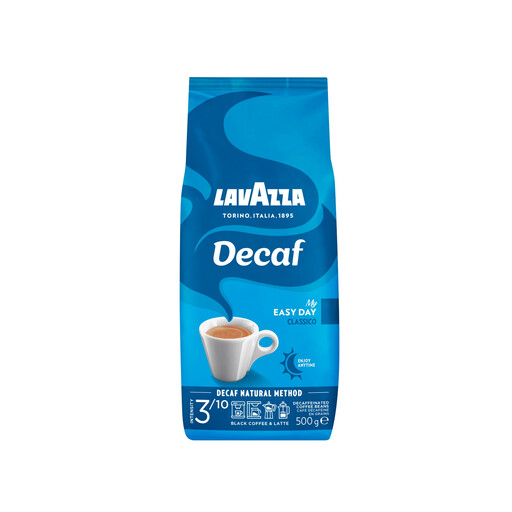
Lavazza lists Decaf Intenso as a 500 g whole-bean option for espresso, moka and filter coffee.
illy describes its 250 g whole-bean decaf for moka, filter, espresso and lungo coffee.
Union presents Decaf Blend as an espresso-oriented whole-bean option, with pre-ground choices also listed.
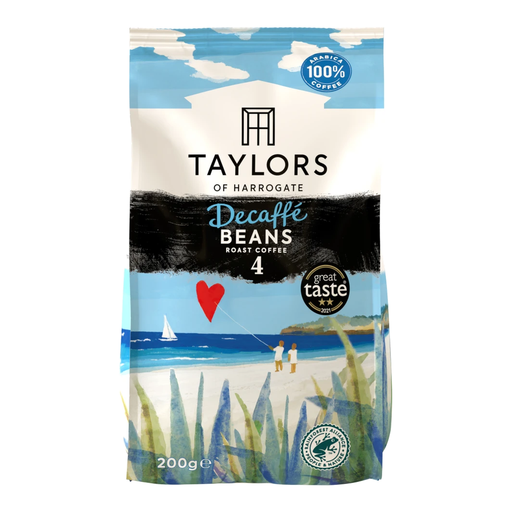
Waitrose lists Taylors Decaffé Beans with guidance for grinding for espresso, filter coffee and cafetière.
Waitrose lists No.1 Organic Fairtrade Peru Decaf Coffee Beans as a 227 g whole-bean option.
M&S lists Roast and Ritual Decaf Coffee Beans in a 227 g pack alongside other decaf coffee formats.
These whole-bean options offer a 200 g Taylors pack and a 500 g Lavazza pack for brunch. Choose by the amount you expect to use, and check the exact product’s brewing guidance before ordering.
 No image available
A 200 g pack of decaf whole beans to consider if you make decaf occasionally and have a grinder. Check the pack for its caffeine information if you need a product-specific amount.
 No image available
A 500 g pack of decaf whole beans to consider for a larger gathering or regular use after brunch. Check the brewing guidance and caffeine information for this exact product; do not assume that details for Lavazza Decaf Intenso apply to it.
Not necessarily. illy states that its Whole Bean Decaffeinated Coffee contains no higher than 0.1% caffeine, not zero. Check the exact product label if the amount matters to you.
Lavazza lists Decaf Intenso for espresso, moka and filter coffee, while illy lists its whole-bean decaf for moka, filter, espresso and lungo. With either product, you still need to grind the beans to suit the brewer.
Waitrose’s Taylors Decaffé listing specifies fine for espresso, medium for filter and coarse for cafetière. Follow your brewer’s instructions when setting the grinder.
Decaf should not be assumed to contain no caffeine. The NHS states that caffeine intake during pregnancy should not exceed 200 mg a day; caffeine from other food and drinks counts too. A guest who needs individual guidance should speak to their midwife or another healthcare professional.
Waitrose advises using its No.1 Peru decaf beans within two weeks of opening for best taste and gives the same two-week guidance on its Taylors Decaffé listing. Reclose and store the beans as directed on the particular pack.