Commuters keeping a bean-coffee routine
If you grind beans before leaving home but want decaf, check that the pack says whole beans rather than ground or instant coffee. Flavour descriptions and pack size can then help narrow the choice.


For a repeatable coffee before travelling, choose decaf whole beans by the flavour you prefer, how often you brew and the pack size you will use. A 500 g option may mean fewer purchases for frequent use, while a smaller bag makes sense when trying an unfamiliar coffee. Decaf does not necessarily mean caffeine-free, so check the individual product information if its residual caffeine matters to you.
The useful starting point is how you make coffee before travelling, not a single flavour or pack size for every commuter.
If you grind beans before leaving home but want decaf, check that the pack says whole beans rather than ground or instant coffee. Flavour descriptions and pack size can then help narrow the choice.
Match the coffee format to your machine and the bag size to how quickly your household uses beans. A larger pack can mean fewer purchases; a smaller one limits your commitment to a new flavour.
Decaf can still contain residual caffeine. If you need a defined limit, look for information about the exact product rather than assuming all decaf beans have the same caffeine content.
Confirm the bean format first, then compare flavour descriptions, bag size and any caffeine information that affects your choice.
| Priority | What to check | Your needs |
|---|---|---|
| Whole-bean format | Check that the individual pack is labelled decaffeinated whole beans. Ground coffee, instant coffee, pods and capsules are different formats. | I want to keep grinding beans for my usual machine before I leave home. |
| Flavour direction | Compare the maker’s roast and tasting descriptions with the way you drink coffee. Union describes its Decaf Blend as rich and full-bodied; illy identifies its whole-bean decaf as a classic roast. | For a rushed morning, I would rather choose a familiar-sounding profile than rely on a processing method to predict the taste. |
| Pack size | Compare the stated bag size with your household’s usage. The product information identifies Lavazza beans in a 500 g pack and illy whole-bean decaf in a 250 g pack. | A smaller bag suits me when trying a different decaf; with regular use, I may prefer fewer repeat purchases. |
| Caffeine information | Look for a statement about the exact product, noting what it measures. illy states that its whole-bean decaf contains less than 0.1% caffeine; this is not a caffeine amount per brewed cup. | Residual caffeine matters to my choice, so I need more than the word “decaf” on its own. |
| Decaffeination method | Check the method stated for the specific coffee. Lavazza describes carbon-dioxide decaffeination for Decaf Intenso; a method alone does not establish how another coffee will taste. | I have a process preference, but I still need beans that fit my brewing routine and flavour preference. |
Decaffeinated coffee can retain caffeine. illy’s statement of less than 0.1% caffeine for its whole-bean decaf, for example, is not a zero-caffeine claim or an amount per cup.
If you need a particular caffeine limit, check the exact product information before choosing it.
A brand may offer ground and whole-bean coffee. A ground product will not replace beans in a bean-to-cup or grinder-based routine.
Read the individual listing and pack for “whole beans” rather than relying on the brand or a general decaf category.
An incompatible format may leave you with coffee you cannot use in your usual machine.
A stated carbon-dioxide or water method describes processing; it does not establish whether you will like the flavour or whether a product meets your caffeine requirements.
Confirm the bean format, then consider the flavour description, pack size and product-specific caffeine information alongside the method.
Bag size affects how much of an unfamiliar flavour you commit to and how often you need to buy beans again.
Consider a smaller pack for a new decaf; choose a larger one when its flavour and your usage rate make sense together.
Smaller bags mean more frequent purchases for regular users, while a larger bag takes longer to finish.
These references describe particular decaf products or shopping routes; a brand name alone does not confirm that every item is sold as whole beans.
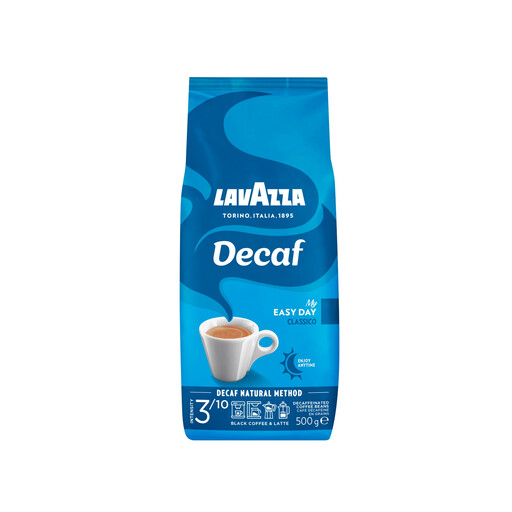
Lavazza Decaf Intenso is a whole-bean option for buyers considering a 500 g bag.
illy offers classic-roast decaffeinated whole beans in a 250 g pack.
Union’s Decaf Blend is an option for buyers interested in a flavour-led whole-bean coffee.
Waitrose lists its No.1 Organic Fairtrade Peru Decaf Coffee Beans as a whole-bean option.
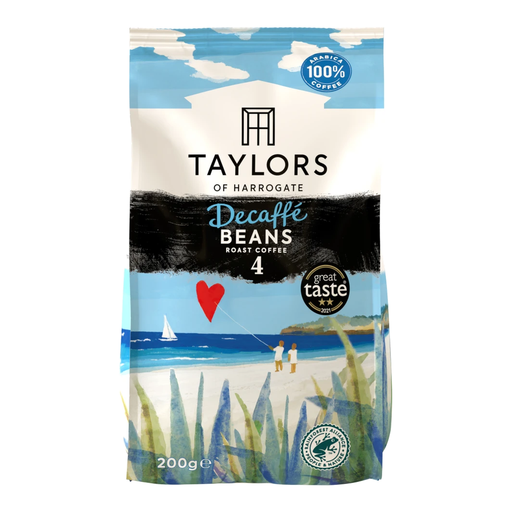
Taylors is worth checking if a stated water-based decaffeination method interests you.
M&S has coffee-bean and decaf ranges for shoppers considering its grocery selection.
These whole-bean decaf options cover a larger bag for regular use and a smaller bag for trying a different coffee.
 No image available
A 500 g whole-bean decaf pack to consider if your household makes coffee regularly before travelling.
The listing describes a carbon-dioxide decaffeination process and roasted-caramel and chocolate notes. If you need a defined residual-caffeine limit, check the information for this product.
 No image available
This 200 g whole-bean decaf pack limits the amount you commit to when trying a different coffee.
The listing describes 100% Arabica beans, a natural-water decaffeination process and caramel and malt notes. It advises using the beans within two weeks of opening; check the product information if you need a defined residual-caffeine limit.
No. Decaf coffee can contain residual caffeine. illy states that its whole-bean decaf contains less than 0.1% caffeine, which is not a zero-caffeine claim or an amount per brewed cup. Check the exact product information if residual caffeine affects your choice.
Match the bag to how often you use beans and whether you already know the flavour. A smaller pack limits your commitment to a new decaf; a 500 g pack may mean fewer purchases if your household uses beans regularly. Size alone does not establish coffee quality.
Choose a product labelled whole beans if your machine uses beans, then follow the machine’s instructions for grinding and brewing. Check the individual listing: ground decaf, instant coffee and capsules are not substitutes for whole beans in a bean-to-cup routine.
No. A stated method tells you how the product is described as being processed, not whether its flavour will suit you. Compare the coffee’s own roast and tasting description as well, treating those descriptions as the maker’s account rather than a guaranteed result in your cup.