Caterers running espresso or bean-to-cup stations
Match the decaf beans to the grinder and machine, and plan how staff will replenish or change beans during a short, busy break.


Choose whole-bean decaf that suits the venue’s machine and the busiest coffee break, then select a pack size the team can replenish and use after opening. A 1 kg espresso-focused option may mean fewer bag changes during repeated service, while 500 g or smaller packs can suit mixed brewing methods or uncertain decaf demand. Label the offer as decaffeinated, not caffeine-free, and keep the exact product information available to staff.
Match the decaf beans to the grinder and machine, and plan how staff will replenish or change beans during a short, busy break.
Make the decaffeinated option easy to identify without suggesting that it contains no caffeine. Keep the product details to hand for delegate questions.
Choose a quantity that covers the event without opening substantially more beans than the team expects to use.
Start with the brewing equipment and service plan; use those decisions to narrow down pack size and storage requirements.
| Priority | What to check | Your needs |
|---|---|---|
| Clear decaf labelling | Check that the exact pack identifies the beans as decaffeinated. Keep its caffeine and ingredient information available for staff enquiries. | I want delegates to recognise the decaf option without being told it is caffeine-free. |
| Brewing method | Compare the supplier’s preparation guidance with the venue’s espresso, bean-to-cup or filter setup. Test the grind and decaf changeover before service. | Our team needs to make decaf with the equipment available at the event. |
| Break-time service | Plan for demand during the busiest break, not just across the whole day. Check hopper arrangements, bean changes and the machine’s drink output. | I need staff to keep serving when several delegates request decaf at once. |
| Pack size and storage | Compare pack sizes with expected use and replenishment frequency. Follow the selected product’s instructions after opening. | With uncertain demand, I would rather open beans in manageable amounts than leave a large bag partly used. |
Preparation guidance for filter coffee does not establish how a bean will fit an espresso or bean-to-cup workflow. Changing a shared hopper during a busy break also takes planning.
Check the supplier’s brewing guidance, test the grind and decide whether to use a separate grinder, a dedicated decaf hopper or scheduled bean changes.
A larger pack may mean fewer changes during service, but opened beans can remain after the event if decaf demand is modest.
Use previous event demand where available, keep contingency bags sealed until needed and follow the chosen pack’s storage instructions.
Decaffeinated beans can retain caffeine: illy states that its whole-bean decaf contains no more than 0.1% caffeine.
Use “decaf” or “decaffeinated” on signs and keep the exact pack available for questions about caffeine content.
Information on a previously used pack may not describe the beans served at this event.
Keep the current packaging or supplier specification for each product and check the exact label when a delegate asks about ingredients or allergens.
These brand examples illustrate different pack formats and brewing guidance; check the exact product chosen for the event.
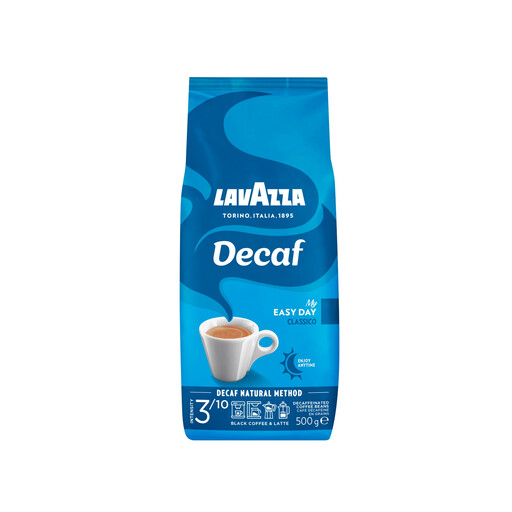
Lavazza UK lists 500 g whole-bean decaf products for different brewing plans.
illy lists a 250 g whole-bean decaf made from 100% Arabica coffee.
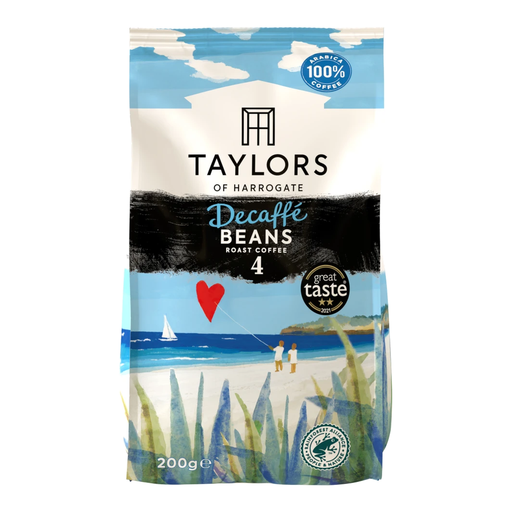
The Taylors Decaffé Beans listing describes a 200 g, 100% Arabica product decaffeinated using a water method.
Union offers its Decaf Blend as a 1 kg whole-bean option and recommends it for espresso or bean-to-cup brewing.
M&S lists Roast and Ritual Decaf Coffee Beans in a 227 g pack within its coffee range.
Waitrose lists No.1 Organic Fairtrade Peru Decaf Coffee Beans in a 227 g pack.
These whole-bean options cover a 500 g Lavazza pack and a smaller 200 g Taylors pack. Check the venue’s machine setup and expected decaf demand before choosing between them.
 No image available
A 500 g whole-bean decaf option to consider when planning replenishment for conference service. Confirm the exact pack’s bean composition and the venue’s brewing and grinder setup before ordering; describe it as decaffeinated rather than caffeine-free.
 No image available
The 200 g pack offers smaller replenishment quantities when conference decaf demand is uncertain. Check its preparation guidance against the venue’s machine and allow for bag changes if many delegates request decaf during the same break.
No. Decaffeinated coffee can contain residual caffeine: illy states that its whole-bean decaf contains no more than 0.1% caffeine. Describe the conference option as decaf and consult the exact product information for caffeine enquiries.
Not automatically. Match the product’s preparation guidance to the machine and test the grind before the event. Lavazza lists its Decaf Coffee Beans for espresso, moka and filter, while Union recommends its Decaf Blend for espresso or bean-to-cup brewing.
Follow the instructions for the exact product. Waitrose advises keeping its Peru Decaf Beans in an airtight container and using them within two weeks of opening; the Taylors Decaffé Beans listing also advises use within two weeks.
Keep the current packaging or supplier specification for each coffee served. Check the exact product label when answering a delegate’s question rather than applying another coffee’s ingredient or allergen information to it.