Choose decaf beans for the coffee you make at breakfast: check the maker’s brewing guidance first, then choose a roast and flavour profile you enjoy black or with milk. Lavazza lists its medium-roast decaf beans for espresso, moka and filter, while Union positions its darker Decaf Blend for espresso. Decaf does not necessarily mean caffeine-free, so check the current pack if residual caffeine matters to you.
Who is this for?
Espresso and moka breakfast hosts
If you make short coffees for guests, start with beans whose maker lists your brewing method. A medium roast and a dark roast offer different flavour directions; choose according to the drinks you plan to serve, including whether guests add milk.
Households using more than one brewer
If breakfast sometimes calls for espresso and sometimes filter coffee, look for beans with guidance for both methods. You will also need to adjust the grind: Coffee & Health describes very fine grounds for espresso and coarse grounds for cafetière.
Shoppers keeping track of caffeine
If residual caffeine affects your choice, read the current product label rather than using roast darkness or a flavour-intensity score as a guide. For example, illy states that its UK whole-bean decaf contains no more than 0.1% caffeine; that is not a claim of zero caffeine.
What should you check before buying?
For a continental breakfast, settle the brewing method before comparing flavour notes and pack sizes. That keeps a bean chosen for one style of coffee from becoming an awkward fit for the equipment on your counter.
| Priority | What to check | Your needs |
|---|
| Brewing method |
Check which methods the maker names for the beans. Match the grind to your equipment: Coffee & Health describes coarse grounds for cafetière and very fine grounds for espresso. |
I make espresso or moka at breakfast, or I switch between short coffee and filter. I want a bean with guidance for the methods I actually use. |
| Roast and flavour |
Read the stated roast and flavour notes rather than treating an intensity score as a caffeine measure. Union describes its Decaf Blend as dark-roasted with dark-caramel notes; Waitrose describes its Peru decaf as medium-roasted with lemon acidity and caramel notes. |
For coffee with milk, I may prefer a darker, roast-led profile. If I drink it black alongside fruit or lighter pastries, I may want to try a brighter profile instead. |
| Residual caffeine |
Look for a product-specific caffeine statement on the current pack. Do not read “decaf”, roast level or flavour intensity as a promise of zero caffeine. |
I want to know what the label says about residual caffeine before choosing my breakfast coffee. |
| Pack and storage |
Compare pack size with how quickly you use beans, then follow the product’s storage instructions. Waitrose advises using its 227 g Peru decaf beans within two weeks of opening for the best taste. |
A smaller pack may suit my occasional breakfasts; for a table served more often, I would check whether I can use a larger bag promptly. |
What can go wrong?
-
Assuming decaf means no caffeine
Decaffeinated beans can still contain residual caffeine. A flavour-intensity number does not tell you how much caffeine is in the coffee.
Check the current pack for a product-specific statement if caffeine exposure matters to your choice.
-
Buying beans without a way to grind them
Grind size changes how coffee brews. Coffee & Health describes coarse grounds for cafetière and very fine grounds for espresso, so one grind is not suited to every method.
Check that you can grind the beans for your brewer. If you cannot grind at home, consider a ground decaf product labelled for your equipment instead.
-
Choosing a bag too large for your routine
A larger bag is less useful if it stays open longer than the maker recommends for its preferred taste. Waitrose advises using its Peru decaf beans within two weeks of opening.
Consider how often you make breakfast coffee, compare pack sizes and follow the storage directions on the beans you buy.
-
Confusing a brand’s ground coffee with its beans
The Taylors Decaffé listing at Waitrose describes ground coffee; its cafetière and filter guidance should not be assumed to apply to a different whole-bean product.
Check the exact product’s format and brewing instructions, particularly if your machine requires whole beans.
Brand and product-line references
These examples show different bean formats and flavour directions; the details belong to the named products, not every coffee sold under each brand.
Lavazza
Its Decaf Coffee Beans offer a medium-roast option with preparation guidance for espresso, moka and filter.
- Lavazza lists a 500 g pack and fruity notes for this product.
- Check the current pack’s blend composition if it matters to your choice.
Illy
Its 250 g whole-bean decaf is listed for moka, filter, espresso and lungo.
- Illy describes caramel, orange-blossom and jasmine notes and states caffeine no higher than 0.1%.
- A 250 g tin may need replacing more often when serving a larger breakfast table.
Taylors of Harrogate
The Taylors Decaffé product described by Waitrose is ground coffee recommended for cafetière or filter.
- That ground product is described with caramel and malt notes.
- Check the format and brewing guidance of a Taylors whole-bean product separately; the ground-coffee listing does not establish them.
Union
Union positions its dark-roast Decaf Blend whole beans for espresso.
- The brand describes a fuller-bodied coffee with dark-caramel notes.
- Its espresso-led, dark-roast profile is a different choice from a citrus-led breakfast coffee.
M&S
M&S lists Roast and Ritual Decaf Coffee Beans in its decaf range.
- The listed bean format gives shoppers another product to consider alongside named blends.
- Check the specific pack for roast, ingredients and preparation guidance before comparing it with other beans.
Waitrose
Waitrose No.1 Organic Fairtrade Peru Decaf Coffee Beans offer a medium-roast, 227 g option.
- Waitrose describes lemon acidity and caramel notes and advises grinding to suit the equipment.
- Waitrose recommends using these beans within two weeks of opening for the best taste.
Decaf beans on Joybuy
These whole-bean options suit shoppers choosing coffee for a continental breakfast. Check the individual pack and brewing guidance against your equipment; the two products do not have the same stated preparation details.
 No image available
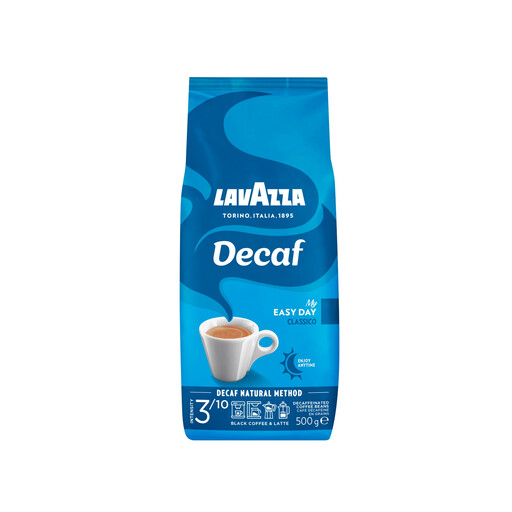
Lavazza Decaffeinated Coffee Beans 500 g
Consider this 500 g bean pack if you make breakfast coffee regularly. Lavazza lists its Decaf Coffee Beans for espresso, moka and filter and describes a medium roast. Check the current pack’s blend composition if that affects your decision, and look for its residual-caffeine statement if needed.
View on Joybuy
 No image available
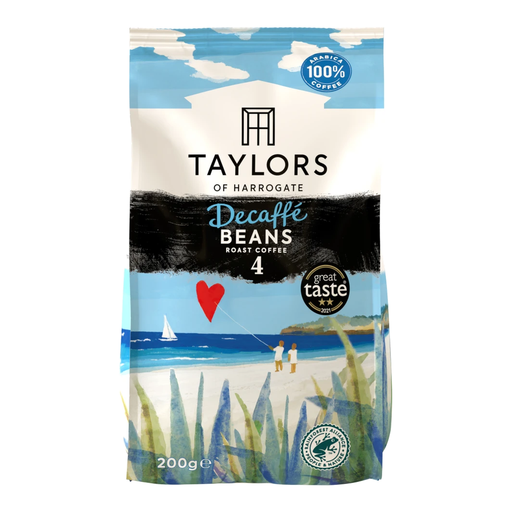
Taylors Decaf Coffee Beans 200 g
The 200 g whole-bean pack is an option if you prefer to buy a smaller quantity for breakfast. Check the current bean pack’s brewing guidance before choosing it for espresso, moka, filter or cafetière; guidance for Taylors ground coffee does not establish compatibility for these beans.
View on Joybuy
Frequently asked questions
Are decaf coffee beans caffeine-free?
No: decaf does not necessarily mean zero caffeine. Illy states that its UK whole-bean decaf contains no more than 0.1% caffeine. Check the current pack for a product-specific statement if the amount matters to you.
Which decaf beans can I use for espresso or moka?
Choose beans whose maker names your brewing method. Lavazza lists its Decaf Coffee Beans for both espresso and moka, as does illy for its whole-bean decaf; Union recommends its Decaf Blend for espresso. Check your equipment’s grinding instructions as well.
Should I choose a dark or medium roast for breakfast?
Choose by the flavour you want in the drink you make, rather than assuming one roast suits every breakfast. Union describes its dark-roast Decaf Blend with dark-caramel notes, while Waitrose describes its medium-roast Peru decaf with lemon acidity and caramel notes.
Do I need to change the grind for different brewers?
Yes. Coffee & Health says grind size should suit the brewing method and describes coarse grounds for cafetière and very fine grounds for espresso. Follow your brewer’s instructions when grinding whole decaf beans.
How should I keep decaf beans after opening?
Follow the directions for the beans you buy. Waitrose advises reclosing its Peru decaf beans, storing them in an airtight container and using them within two weeks of opening for the best taste; other products may give different instructions.


